By Nnasom David
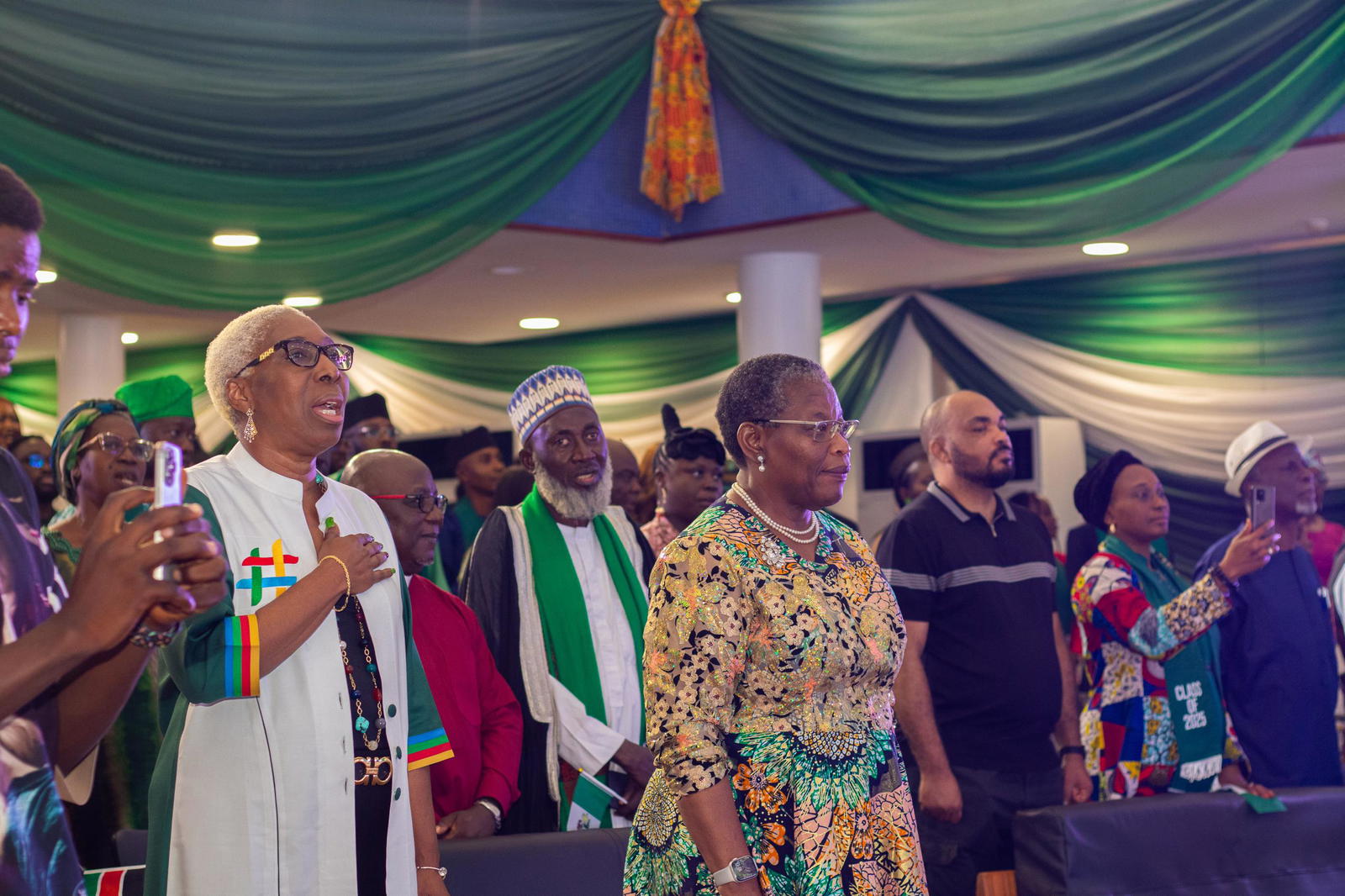
The FixPolitics movement has celebrated its fifth anniversary with a renewed call for values-based leadership, gender inclusion, and greater youth participation in governance.
The event, held in Abuja, also featured the official launch of the Political Accountability and Democracy Index (PADI) Nigeria, a homegrown tool designed to measure the nation’s political health and promote accountability.
Headlined by Dr. Phumzile Mlambo-Ngcuka, former Deputy President of South Africa and ex-UN Women Executive Director, the conference focused on building a citizen-driven system for tracking political performance.
Bunmi Lawson, Co-Coordinating Chair of WSG 3, described the PADI initiative as a crucial shift from dependence on foreign assessments, noting that Nigeria “needs its own measure to properly diagnose and track political health.”
Explaining the concept, Tito Aderoju, Co-Coordinating Chair of WSG 1, said the name PADI—borrowed from the Nigerian Pidgin word for “friend”—poses an essential question: “How friendly is our government?” She emphasized that citizens must move beyond passive civic engagement, adding that “the only sustainable solution is for citizens to enter the political space and control the distribution of public resources.”
Alero Ayida-Otobo, CEO of SPPG Africa, shared insights on the movement’s progress, revealing that while 55 SPPG graduates contested in Nigeria’s last primaries, only 16 succeeded—evidence that “the political system is more broken than we realise.” She added that the PADI Index aims to extend its methodology across Africa, with Nigeria’s first official report set for release in 2026.
A fireside chat between Dr. Obiageli ‘Oby’ Ezekwesili and Dr. Mlambo-Ngcuka explored leadership values and gender equality.
Dr. Mlambo-Ngcuka urged leaders to act with integrity and purpose: “If you step forward to be a leader, it must be because you intend to do good; otherwise, don’t become one.” She cautioned against cultural norms that suppress critical thinking, warning that “if we continue to groom silence as respect and intimidation as tradition, we should not be surprised when people grow up afraid to question those who govern them.”
Reflecting on Africa’s development, Dr. Ezekwesili stressed that solving the continent’s challenges requires intergenerational collaboration. She emphasized that gender parity is not charity but an economic necessity: “When we ensure an inclusive society, we are not just advocating for women — we are advocating for national progress.”
Dr. Mlambo-Ngcuka further highlighted the need for families and communities to support women to thrive in their chosen fields.
Mr. Frank Nweke II, Chair of FixPolitics, praised the dynamism of Africa’s youth but urged them to channel their energy into political leadership. “More young Africans are making an impact in private and civic spaces than in public leadership… This must change,” he said. “We cannot outsource politics. If our young people don’t show up, others certainly will.”
He called for shared responsibility and collaboration in leadership, echoing Dr. Mlambo-Ngcuka’s reminder that societies must stop mistaking silence for respect.
A panel session featuring SPPG graduates, moderated by Ayobami Olunloyo, showcased innovative ideas for governance reform.
Zimchim Andrea encouraged young people to “organize solutions without waiting for permission.”
Musibau Lasisi cautioned that “technology is not the solution but an enabler,” urging governments to stop restricting internet access.
Clementine Usman-Wamba introduced the CAP App, a civic tech platform giving citizens a voice, and called for the use of technology to democratize information and combat misinformation.
The panel concluded with a call to close the gap between citizens and power by fostering curiosity and making civic participation “digital by default.”
Delegates from Ghana, Kenya, Senegal, South Africa, Cameroon, and other African countries joined in celebrating FixPolitics’ five-year milestone.
The event ended with a renewed commitment to building principled leadership and advancing a unified movement for Africa’s transformation.
Disclaimer
Comments expressed here do not reflect the opinions of Vanguard newspapers or any employee thereof.