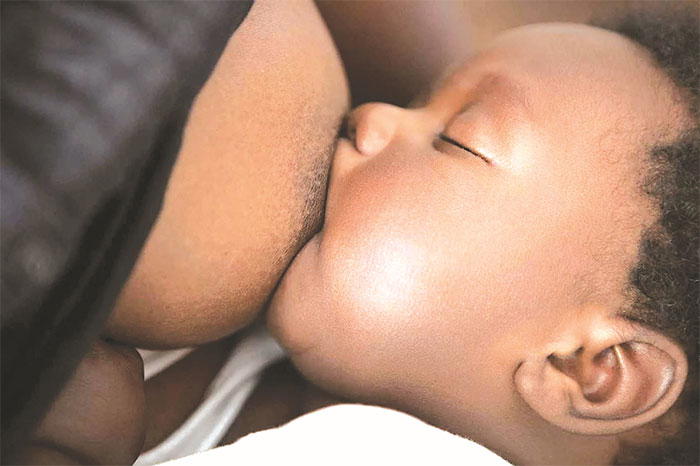
...as UNICEF harps on Optimal Breastfeeding Practices, others
By Peter Duru, Makurdi
A retired Assistant Director of Nursing Services at the FMC Makurdi, and Matron, Foundation Hospital Makurdi, Mrs. Felicia Ameh has disclosed that there is sustained campiagn on exclusive breastfeeding as well as ensuring that nursing mothers initiate breastfeeding of their new born after one hour of delivery in Benue state.
She said the pracitice is in line with the campaign of the United Nations Children’s Fund, UNICEF, to ensure that babies consume the highly nutritious first milk from the breast “known as Colostrum which is like the first vaccine that the baby takes.”
The retired Assistant Director of Nursing Services who spoke to lend her voice to the World Breastfeeding Week campaign with the theme “Prioritize Breastfeeding: Create Sustainable Support Systems,” noted that even mothers who deliver their babies through cesarean section are supported to have their babies suckle after one hour of delivery.
She explained that exclusive breastfeeding is different from initiating the baby to breastfeeding stressing that while exclusive breastfeeding entails breastfeeding your baby for six months without water and artificial milk, initiating the child to breastfeeding is putting the baby on breast to feed one hour after delivery.
“What UNICEF is talking about now is that when a woman delivers a baby even if it’s through cesarean section despite the fact that she might be weak, she should be assisted and supported to put the baby to breast after one hour of the delivery and nothing more. And that we have been doing.
“And again the first breast milk that comes out of the mother’s breast after delivery which is yellowish is called colostrum. It is very rich and it is the first milk for the baby. It plays an important role in building your baby’s immune system. it does not secrete for long. So we ensure we initiate babies early so that they benefit from that yellowish milk.”
Mrs. Ameh state that before delivery, mothers are sensitised on the importance of initiating children into breastfeeding and exclusive breastfeeding and “from the beginning of the World Breastfeeding Week we recorded over 15 women who delivered through cesarean section and normal delivery here and we initiated all of them into immediate breastfeeding of the babies.”
A mother, Ajuma Emmanuel who delivered a baby boy through cesarean section few hours earlier also lauded the nurses at the hospital who she said assisted her to commence the breastfeeding of her baby, one hour after delivery despite being weak after the surgery.
At the FSP Clinic Quararafa Quarters, Makurdi, the Head of the Clinic, Mrs. Deborah Verve, noted that the initiation of babies to breastfeeding at birth and practice of exclusive breastfeeding sensitisation campaign was a routine that the facility carries out on a daily basis.
She said “Anytime we have pregnant mothers, during their ante natal we educate them on the need to breastfeed their babies from zero to six months. We give them the health talk even after delivery.
“We make them know that first milk is the best for babies because it makes them develop very well and protects them from sickness. We give the health talk to nursing mothers and pregnant women so they are very many of them that have benefitted from the talk and are practising it.”
Meanwhile the Executive Secretary of the Benue State Primary Health Care Board, Mrs. Grace Wende also urged mothers to practice and sustain exclusive breastfeeding and early child breastfeeding initiation to ensure that grow heathy and intelligent.
Meanwhile UNICEF has continued to harped on mothers practising what it termed Optimal Breastfeeding Practices which involves early initiation within one hour of birth, exclusive breastfeeding for the first six months, and continued breastfeeding alongside complementary foods up to two years of age or beyond.
UNICEF Communication Officer, Enugu Field Office, Dr. Ijeoma Onuoha-Ogwe who made this known while addressing a virtual Zonal Media Dialogue on Dissemination of Key Advocacy Messages on 2025 World Breastfeeding Week, organized by UNICEF Field Office Enugu in collaboration with Broadcasting Corporation of Abia State, noted that though 90 percent of Nigerian women have ever breastfed their babies “only one in three babies are given breastmilk in the first hour after birth and only one in three babies is exclusively breastfed for up to six months.”
She also observed that “rates have declined for early initiation of breastfeeding from 42 percent in 2018 to 36 percent in 2023. And exclusive breastfeeding rates have remained stagnant at 29 percent in 2018 and in 2023. While breastfeeding should ideally continue to at least 24 months, as recommended by UNICEF and WHO, many Nigerian babies are weaned too early.”
She pointed out that healthcare workers play a vital role in supporting breastfeeding, but many lack the tools, time and training to provide adequate care.
Accrdoing to her 26 out of 36 states in Nigeria have not created enabling environment which includes paid maternity leave, breastfeeding breaks, and workplace facilities, for effective breastfeeding, therefore undermining mothers’ ability to sustain breastfeeding practices. And most workplaces, both in formal and informal sectors, lack policies and facilities favourable for effective breastfeeding.
She emphasized that mothers need sustainable support systems to successfully breastfeed, at home, work, and in the community while government and employers must invest in coordinated support for breastfeeding; and also “invest in programmes, workplace practices, facilities and community networks essential to ensure no mother is left behind.”
Disclaimer
Comments expressed here do not reflect the opinions of Vanguard newspapers or any employee thereof.