By Kennedy Mbele
Ahead of the 2027 general elections, a democracy and good governance advocate, Mr. Daberechi Kingsley Ekejiuba, has proposed sustainable insights for transparent, credible, free, and fair elections in Nigeria.
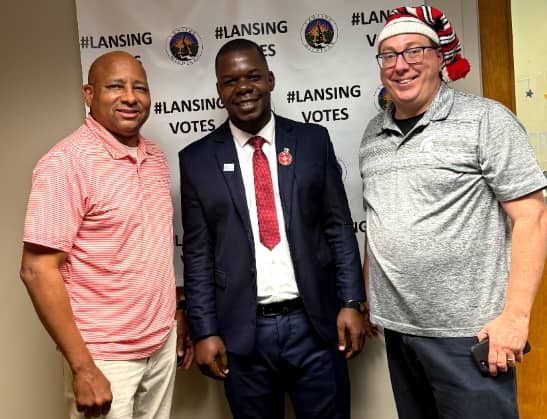
Ekejiuba, a participant at the on-going Mandela Washington Fellowship for Young African Leaders, a flagship program of the U.S. government,funded by the U.S. Department of State and implemented by IREX, said Nigeria can become a good example for other developing countries to emulate if she learns from the Michigan electoral model.
Discussing how electoral reforms, civic engagement, and cross-border collaboration can improve elections every democratic nation, Ekejiube told Lasing’s Deputy Clerk, Brian Jackson at the famous Laasing City Hall reaffirmed the role of youths in strenghteny democracy and advocated global collaboration to engender electoral integrity and civic engagement.
Ekejiuba, who leads youth-driven electoral interventions through his ‘VOTE Africa initiative and Progressive Abia Youths’, seized the opportunity to study systems that ensure electoral integrity and voter participation in Michigan and compare them to the current challenges facing Nigeria and other African countries’ electoral process.
He observed that the key lessons Nigeria can adopt to build a freer, fairer, and more inclusive electoral process include: making voter registration fun, easy, and continuous for youths.
His words: “Cumbersome processes, last-minute deadline pressures, and lack of youth-friendly engagements remain key barriers that we have to deal with to improve the electoral system and outcomes in Nigeria and across Africa.
He said, adding that the need to strengthen political parties to be more active at polling points.
“Political parties in Nigeria and across the continent must exist beyond statutory electoral gains to represent ideological positions, ensuring they have clear responsibilities—not just during rallies, but at polling units and in ongoing civic engagement. There is also an urgent need to upgrade technological systems and defend against hacks with trials implemented before the main elections.
Citing the 2020 U.S. election, he said: “Michigan employed robust cybersecurity defenses, real-time incident reporting, and multi-factor authentication for election administrators. These efforts helped prevent tampering and secured over 5 million votes cast in the state.”
Advocating the use of single ballot system, he said: “Multiple elections are capital-intensive and mostly confusing for voters. Adopting a Unified Ballot Approach (UBA) could streamline elections and reduce manipulation of elections in Nigeria and across Africa. We should also allow voting before election day to increase participation. Early voting and absentee voting have become central to American elections…..
He added that the use of paper ballots could validate electronic votes.
“While the call for electronic voting is germane, using physical audit trails (paper ballots) alongside digital systems will preserve credibility, especially in close contests. More so, we must restrict courts to interpretation—not election results. To avoid judicial overreach and political bias, courts should be restricted to adjudication. Let the judiciary interpret electoral laws—not determine who wins elections.”
He also outlined how technology (electronic scanners) play a crucial role in counting ballots in Lansing. U.S. jurisdictions like Michigan use high-speed optical scanners to count millions of ballots on election day, with results often announced within hours. The manual collation of results in Nigeria and other African countries is time-consuming and vulnerable to interference. Deploying automated scanning technology with open verification protocols would ensure transparency and speed, he said.
The good governance crusader advocated for the election rather than the appointment of high-ranking election officials to increase accountability and public trust. In Michigan and Lansing, in particular, key electoral officials—including Secretaries of State and city clerks—are elected by the public, ensuring direct accountability.
“We need a new model where top electoral managers are elected and publicly accountable to the people they serve.” He said, calling for global civic exchange and electoral solidarity in dealing with emerging issues.
While acknowledging geographical and economic differences and demographic gaps that may affect the pace of his proposed reforms.
He emphasized the importance of intentional global collaboration, particularly between African democracies and mature electoral systems like the U.S. to improve outcomes.
“I believe that the integrity of democracy anywhere strengthens democracy everywhere. As a Mandela Washington Fellow, I am committed to building bridges across nations to make elections work for the people—not the powerful because democracy is for the people.”
With Nigeria preparing for off-cycle elections and a critical 2027 general election around the corner, these insights from Lansing and continuous civic engagement by young leaders could help ignite meaningful reforms, restore public trust, and inspire the next generation of civic actors in Africa and the world to stay the course.
Disclaimer
Comments expressed here do not reflect the opinions of Vanguard newspapers or any employee thereof.