By Udeme Akpaqn, Energy Editor
As the Federal Government strives to find lasting solutions to its domestic energy problems, experts in the gas sector have identified Autogas as a good strategy for achieving a cleaner future.
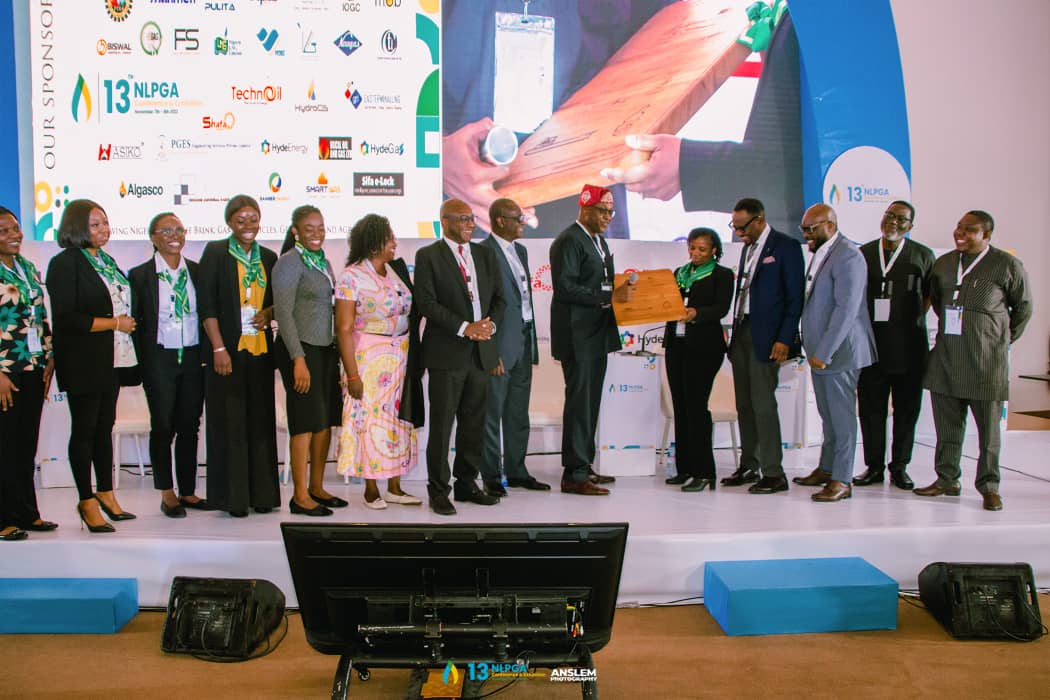
Speaking at the just-concluded 13th Nigeria LPG Association Conference and Exhibition in Abuja, the President, of NLPGA, Mr. Felix Ekundayo, stressed the indispensable role of LPG in Nigeria’s evolving energy scenario, citing a remarkable 2.167% growth in LPG utilization between 2006 and 2022.
He projected the industry’s continuous growth, particularly with the Federal Government’s renewed focus on gas, contributing to a turnover of approximately N2 trillion.
He identified Autogas as any gas suitable for running vehicles or internal combustion engines, pointing out the need for robust policies across the gas value chain.
Similarly, the Minister of State (Gas) Petroleum Resources, Ekperipe Ekpo, reiterated the government’s commitment to addressing the energy transition gap while acknowledging NLPGA’s efforts, targeted at contributing to the growth of the sector.
According to him, the nation has recorded impressive growth in the LPG sector, generating over 150,000 jobs and increasing LPG consumption from 60,000 tonnes in 2007 to over 1.3 million tonnes in 2021.
On his part, Michael Oluwagbemi, Chief Executive of the Presidential Compressed Natural Gas, CNG Initiative, emphasized the need for Nigeria to pursue cleaner energy sources, advocating for partnerships and a transition to various fuels, including LNG.
He supported the government’s initiatives, including the National Transportation Mass Transit Policy, requiring all commercial vehicles to run on gas by 2024.
Also, Akachukwu Nwokedi, President of the Nigerian Gas Association, NGA, identified Autogas as a key contributor to a greener and more decarbonized transportation sector.
He stressed the vital role of gas in achieving “net zero” by 2060, calling for increased offtake to support these goals.
Sekhar Vajalla, a gas business development expert, stressed the role of government intervention and the necessity of regulations for licensing and certifications in the sector.
Also, Abel Igheghe, an expert, expressed the government’s commitment to making Nigeria a gas-based economy while stressing the need to review guidelines in collaboration with regulators towards creating a more enabling environment for stakeholders.
Tolu Longe, Head of Process Control at Nigeria LNG Limited (NLNG), provided an insightful presentation on the road to achieving the five million tonnes of LPG consumption target, highlighting NLNG’s intervention from nearly 60,000 tonnes in 2007 to over a million tonnes today.
Longe emphasized NLNG’s public campaigns promoting LPG’s benefits over other energy sources, contributing to the growth of the entire LPG ecosystem, stressing that 100% of NLNG’s LPG output is now infused directly into the domestic market, supplying about 40% of Nigeria’s total LPG consumption.
According to her, the NLNG plans to boost new volumes, with a capacity to inject 650,000 to 700,000 tonnes of LPG into the domestic market.
She stated that the NLNG Train 7 Project is aiming to increase capacity by about 35%, translating to approximately 1 million tonnes per annum.
On her part, Joy Shaiyen, the Coordinator of the Women in LPG Global Network, Nigeria Chapter, delivered a comprehensive presentation on LPG Interventions: Past, Present, and Future, providing an insight into the sixteen-year trajectory of LPG in Nigeria.
She underscored the impact of subsidy removal on kerosene, leading to a decline in imports and a subsequent shift in favor of LPG.
She emphasized the critical role of government intervention, policy, and the private sector as success factors in LPG initiatives while highlighting the often-overlooked aspect of gender mainstreaming and the necessity to consider the rural population, constituting 46% of Nigeria’s inhabitants.
She also recommended the active involvement of rural women in the transition, subsidizing cylinder acquisition for rural communities, utilizing the Midstream and Downstream Infrastructure Fund for conversion funding, and ensuring a minimum percentage of women involvement in intervention programs.
Tayo Akinkunmi, a gas expert, while addressing the challenge of achieving five million tonnes, emphasized the need for a thinking overhaul, security improvements to combat pipeline sabotaging, and streamlining regulatory processes.
On his part, Adebayo Adedeji, an expert, stressed the importance of LPG in agriculture, stressing the need for challenges in power, storage, irrigation, and processing in the agricultural sector.
Alain Deleuse, another expert provided insights from Belgium and France, where LPG is used as a weeding agent for potato farming and to power generators for processing, storage, and irrigation.
He stressed the need for government intervention, incentives, and ensuring the total consumption of locally produced gas to meet growing demand.
Elvis Duruji, a panel member, spoke on the collaborative effort required for a successful roll-out.
He discussed the openness of the Petroleum Industry Act (PIA) to various gas options, stating that there is a need for sustainability and strategic choices.
Prince Bambo Ademuluyi, a panelist, suggested deploying autogas for commercial purposes initially, offering incentives for the conversion of tricycles and mini-buses.
Similarly, Adeoye Adefulu, a panel member, highlighted the responsibilities placed on the Nigerian Midstream, Downstream Petroleum Regulatory Authority, NMDPRA, covering licensing, competition, and pricing.Dapo Akinosun, SAN, emphasized the need for regulations on consumer protection to avoid arbitrary price increases and monopolies while harping on the need for dispute resolution mechanisms and environmental standards.
Disclaimer
Comments expressed here do not reflect the opinions of Vanguard newspapers or any employee thereof.