.
By Chioma Obinna
Precisely in January 2022, the Centre for Social Justice, CSJ, Nigeria, a knowledge institution with a vision of Nigeria where social justice informs public decision-making published a manual on budgeting for gender-based violence, the first of its kind in Nigeria.
The publication which is part of a project funded by the European Union under the British Council’s Agents for Citizen-driven Transformation, ACT, will see the publication of a thousand copies of the gender-based violence budgeting manual by the end of its first quarter.
The EU-ACT project is designed to make the Federal Capital Territory Abuja fully responsive to gender-based violence. In the end, it is expected that ministries, departments and agencies of government and partner Civil Society Organisations, CSOs, acquire strategic knowledge, skill and competences on budgeting to respect, protect and fulfill the state’s obligations on gender-based violence.
This programme is relevant to the United Nations 2030 Agenda for Sustainable Development and will contribute to the progressive achievement of SDG 16 but also promotes progress towards SDG 5. The overall objective of the programme is to contribute to more inclusive, effective, accountable and gender-responsive development in Nigeria.
It will complement sectoral programmes by contributing to the strengthening of a strong, vibrant, and independent civil society which can further good governance through policy analysis and advocacy, by monitoring government performance and the action and behaviour of public officials. There will be a specific focus on mobilising Nigerians, including women and girls, vulnerable and marginalised groups especially at the grassroots level, to participate more fully in politics and public affairs towards improving accountability and effectiveness of government.
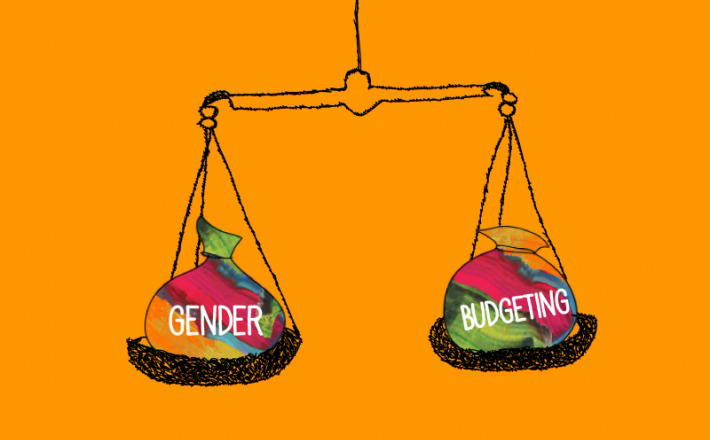
In recent years, gender-responsive budgeting (GRB) initiatives have gained traction and currency. The concept examines the budget of a country to see how it affects women and men, girls and boys. They analyse how the government raises revenue and spends money to see whether it promotes gender equality or increases inequality.
They focus on budgets, because without money, the government cannot implement any other policy successfully. They ensure the needs and interests of individuals from different social groups are addressed in the budget, particularly women and men, girls and boys. They focus on gender rather than only on women.
They are not about separate budgets for women or men, but about mainstreaming gender awareness into all policies and budgets of all ministries and agencies.
GRB work recognises women’s unpaid contributions to society and the economy, suggesting ways to relieve this burden and improve its effectiveness and efficiency.
Last week, the Lead Director of CSJ, Eze Onyekpere, at a capacity building workshop on Budgeting for the Reduction of Gender-Based Violence organized by CSJ said that gender budgeting is an approach to budgeting that can improve the economic prospects of Nigeria when fiscal policies and administrative procedures are structured to address gender inequality.
He also said that a gender transformative budgeting process is imperative for the reduction or eradication of GVB.
“Now, the overall aim and goal of this training are that it’s been quite a while that we’ve been discussing issues of gender-based violence, discrimination against women, but we have been discussing not from the standpoint of trying to provide practical solutions and practical responses and we know that every law or policy requires resources to implement within the context of the policy, plan budget continue.
“So, for every policy and plan you have, you must put down money otherwise it will not be properly implemented. And we discovered that very few resources go to issues around gender discrimination and gender-based violence.
“Even the little resources that come in are not properly targeted, so, this workshop was to interact with MDAs, after producing the manual to say this is the best way, we can count your request from the authorities because the resources are very scarce and limited, so government or whoever is taking decision must find a very cogent reason why he should put money into Gender-Based Violence than for instance building a new road, and building schools.
“How do you present your budget request so that it can become imperative and compelling for the authorities to listen to you? So that is the thrust of the discussion we have been having over the last two days,” Onyekpere said.
He also said that the government is already doing some tangible things but what is lacking is that they have not been sharpened and people are not working collectively on it.
Also speaking at the close of the workshop, Onyekpere said the training was scheduled to coincide with the period of the International Women’s Day (IWD), and that it has become necessary for government officials in gender-related units to present their budgets in a more convincing way.
International Women’s Day (March 8) is a global day celebrating the social, economic, cultural, and political achievements of women. The day also marks a call to action for accelerating women’s equality.
He said, “For every policy and plan you have, you must put down money otherwise it will not be properly implemented. And we discovered that very few resources go to issues around gender discrimination and gender-based violence. Even the little resources that come in, are not properly targeted.”
Also, in a follow-up training by CSJ, Civil Society Organisations (CSOs) in Nigeria agreed to spotlight the gender-friendly budgeting systems across government ministries, departments and agencies.
The training was aimed at presenting the developed manual on budgeting for the reduction of gender-based violence, reviewing the stages of the budgeting process, and strengthening the capacity of CSOs to effectively mainstream principles of gender-based violence prevention and redress in the budget, advocate and demand accountability in budget allocations, as well as releases and monitor utilization.
The workshop provided a relationship between the social contract theory and the state’s obligation to attain the rights and needs of citizens and residents within its territory. This obligation flows from the basic necessities of life to more complex demands.
It reviewed both the legal and constitutional obligations of the state to not only provide and protect the rights of citizens but to also make a budget that shows the revenue expenditure estimates as well as the developmental priorities of the government in any given year.
The CSO participants at the training committed to budget analysis using previous or extant budgets with a view to extrapolating how they reflect on gender equity.
They will also be employing budget tracking and monitoring to ensure allocations are properly and effectively disbursed to the priority gender-based violence expenditure items.
They also agreed to use lobbying and participation in legislative hearings as a means to bring the challenges and needs of actual and potential survivors to the attention of lawmakers and convince them of the need to take action favourable to the rights holders.
CSOs at the training generally work to promote budget awareness- improved understanding of budget data for legislators and other CSOs, budget transparency- independent scrutiny, dissemination and improved access to government data and participation in the budget process which involves improved legislative engagement.
Introducing gender budgeting at the federal government level is important because budgetary decisions on both revenue and expenditure are made at this level. At the same time, state and local governments’ proximity to people’s everyday lives means there is potential to respond more directly to women’s and men’s needs when it comes to public policy and service delivery. At these levels, there is great potential to use participatory gender budgeting approaches involving the local population.
Indeed, the effective implementation of gender budgeting requires political commitment matched with a technical capacity for gender mainstreaming. Engaged leadership is of particular importance to ensure that gender equality is integrated into the planning and budgeting processes and that public budget revenues and expenditures benefit women and men equally.
There are several important principles underlying a high-quality budget process. Modern standards of public financial management include principles such as performance orientation, transparency, accountability, participation, etc., that can only be applied if a gender perspective is integrated.
Since an important part of gender budgeting is analysing the impact of budgets on women and men, it is also considered to be an important part of monitoring how the budget is working towards meeting gender equality goals in a country. Researchers therefore consider gender budgeting to be ‘a mechanism for establishing whether a Government’s gender equality commitments translate into budgetary commitments’.
If applied in a systematic manner, gender budgeting can contribute to increasing participation in the budget process and thereby also increase transparency. Increased participation in the budget process can be achieved by establishing a practice of public consultation and participation in budget preparation, or of public participation in monitoring the budget.
More so, a true performance-oriented approach to budgeting only happens when gender budgeting is integrated in performance budgeting. This is because gender budgeting provides evidence on performance from gender perspectives that will promote the most effective and efficient allocation of resources and implementation of policies.
In this direction, gender budget analysis contributes to improved information on the potentially different situations and needs of women and men, as well as on distributional effects and the impact of resources on women and men. Thus, gender budgeting provides the basis for better and more evidence-based decision-making. This in turn contributes to ensuring that public funds are being used more effectively.
From all points of view, it is evident that gender equality is not just a fundamental human right because achieving gender equality also brings tremendous socioeconomic benefits. Several studies have shown that reducing gender inequality has many positive effects and leads to higher growth rates, healthier children, improved labour productivity and a more responsive government. Thus, gender responsive budgets, and related policies, will contribute towards achieving gender equality and will simultaneously improve the population’s welfare and lead to more sustainable and inclusive growth and employment
Disclaimer
Comments expressed here do not reflect the opinions of Vanguard newspapers or any employee thereof.