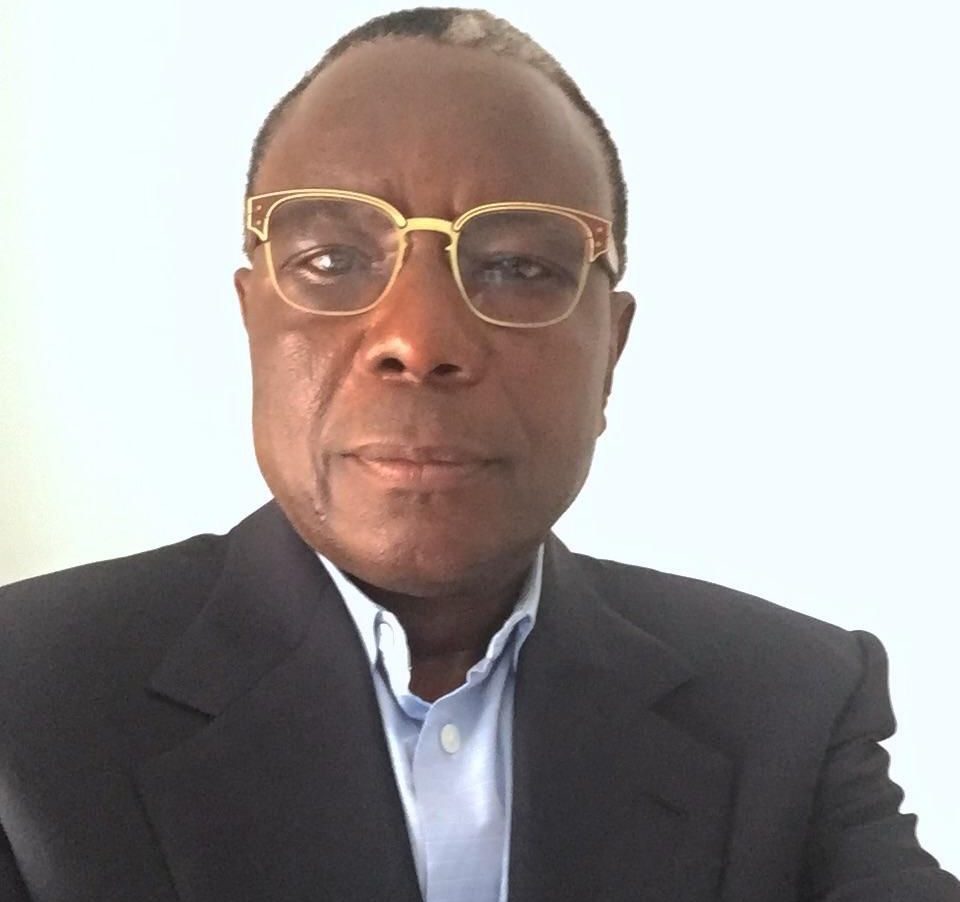
Philip Obazee
By Philip Obazee
“Public debt is incurred in the name of the people. Public debt is serviced from resources that belong to the people. Public debt constrains future policy choices available to the people. Therefore, public debt must be explained to the people.”
The Demand for Intelligibility
Perhaps the most useful thing the Nigerian government can do in the present fiscal climate is not simply to defend borrowing, deny criticism, or accuse citizens of misunderstanding public finance. It should instead make the borrowing intelligible. It should identify, project by project, what has been borrowed, why it has been borrowed, what infrastructure it supports, what the expected economic and social returns are, and how the debt will be repaid over time. That is not an unreasonable demand. It is the minimum standard of democratic fiscal accountability.
Nigeria’s problem is not simply that the government borrows. Developing countries often need to borrow. A country with weak infrastructure, inadequate power supply, congested ports, poor logistics, insufficient rail connectivity, fragile health systems, and underdeveloped industrial corridors cannot realistically build everything from current revenue alone. Infrastructure has a long life; if properly conceived and executed, it benefits not only the present generation but future generations as well. There is therefore a defensible intergenerational logic to borrowing for long-lived productive assets.
Productive Capital versus Fiscal Drift
But that argument only holds if the borrowed funds are tied to productive public capital. Debt used to build infrastructure that expands national productivity is analytically different from debt used to finance waste, patronage, consumption, recurrent expenditure, or politically motivated white elephants. The first can improve the economy’s future capacity to generate income. The second simply transfers today’s irresponsibility into tomorrow’s burden. The distinction is fundamental.
The Current Debt Position
As of December 31, 2025, Nigeria’s Debt Management Office reported total public debt of about $110.97 billion, equivalent to about ₦159.28 trillion, with external debt accounting for 46.73 percent and domestic debt accounting for 53.27 percent of the total. These numbers are not small abstractions. They represent claims on future public revenue. They represent obligations that will have to be serviced from taxes, oil receipts, customs revenue, non-oil revenue, public enterprise dividends, or new borrowing. They therefore deserve explanation at a level citizens can understand.
The government should not simply say, “We borrowed for infrastructure.” That statement is too broad to be meaningful. Which infrastructure? Where? At what cost? Under what procurement process? With what completion timeline? Financed by what instrument? At what interest rate? With what grace period? With what repayment source? With what expected rate of economic return? With what maintenance plan? With what independent audit mechanism? These are not hostile questions. They are the natural questions of a serious republic.
What the Fiscal Responsibility Act Already Requires
Indeed, Nigerian law already motions toward this discipline. The Fiscal Responsibility Act requires governments or public agencies seeking to borrow to specify the purpose of the borrowing and present a cost-benefit analysis detailing the economic and social benefits of the intended borrowing. It also provides that borrowing proceeds should be applied toward long-term capital expenditure and that the Debt Management Office should maintain a comprehensive, reliable, current electronic database of public debt with public access. The principle is therefore not alien to Nigeria’s fiscal architecture. The issue is whether the principle is being practiced in a form that ordinary citizens, analysts, civil society, investors, and legislators can verify.
A Public Infrastructure Debt Ledger
A serious government should publish a public infrastructure debt ledger. The ledger should list every major project financed wholly or partly by borrowing. For each project, it should disclose the total project cost, amount already disbursed, amount borrowed, lender or bond instrument, currency denomination, interest rate, maturity profile, grace period, repayment schedule, contractor, procurement method, completion stage, expected economic benefit, estimated maintenance cost, and expected revenue channels. This information should be updated quarterly, not hidden in scattered press releases, budget speeches, legislative letters, and technical documents that only specialists can interpret.
Such a ledger would change the quality of public debate. Nigerians would no longer have to argue in the fog. They could distinguish between legitimate infrastructure financing and fiscal recklessness. They could see whether a railway line is moving from announcement to construction to completion. They could see whether a highway loan corresponds to an actual transport corridor. They could see whether a power sector intervention is reducing outages or simply refinancing old inefficiencies. They could see whether the debt stock is matched by an asset stock.
Highways as Economic Arteries
Take highways as an example. A well-designed interstate highway is not just a road. It is an economic artery. It connects producers to markets, workers to jobs, farms to cities, ports to inland distribution networks, and manufacturers to consumers. It reduces travel time, lowers vehicle operating costs, improves market integration, supports food distribution, and can reduce regional price dispersion. In a country like Nigeria, where logistics costs are a major constraint on trade, a functional highway system can increase commerce in ways that eventually broaden the tax base.
When goods move more efficiently, trade expands. When trade expands, firms sell more, workers earn more, transporters operate more, warehouses fill, markets deepen, and local economies become more connected. Those activities generate taxable income. They can increase company income tax, personal income tax, value-added tax, customs-related flows, and levies on transport linked goods and services. Infrastructure, when properly designed, does not simply consume public money; it can alter the productive frontier of the economy.
There are also revenue instruments naturally associated with transport infrastructure. Fuel levies, vehicle registration fees, tolls where appropriate, excise taxes on petroleum products, taxes on tires, spare parts duties, road-use charges, and logistics-related business taxes can all contribute, directly or indirectly, to road maintenance and debt service. The important point is not that every road must immediately pay for itself through tolls. That would be too narrow. Some roads produce broad social returns rather than direct cash flows. The point is that the government should identify the relevant fiscal logic before borrowing, not after criticism arises.
For instance, if the government borrows for a major highway, it should say whether repayment will come from general revenue, toll revenue, a dedicated infrastructure fund, a fuel levy, a public-private partnership structure, or some combination of these. It should also say whether the projected economic benefits are direct, indirect, fiscal, social, or strategic. A road that connects agricultural belts to urban markets may reduce post-harvest losses and food prices. A road that links industrial clusters may increase productivity. A road that integrates neglected regions may have national cohesion benefits. These distinctions matter because they allow citizens to evaluate the project on its own terms.
The Sokoto–Badagry Loan as a Test Case
In April 2026, President Bola Tinubu asked Nigeria’s parliament to approve a $516 million foreign loan for sections of a roughly 1,000-kilometer highway linking Sokoto through Niger and Kwara to Badagry in Lagos; the stated rationale was to deepen north-south links, reduce travel times and haulage costs, support trade and food security, and promote national integration. That is precisely the kind of project for which the government should publish a full project-level fiscal and economic statement. The public should not have to rely on general language. It should be able to examine the corridor’s cost-benefit logic.
A project of that scale should be accompanied by a transparent development case. How much freight currently moves along the relevant routes? What are existing travel times and haulage costs? What reductions are expected? Which agricultural, industrial, and commercial zones will be affected? What is the projected effect on interstate trade? What is the expected construction employment? What is the maintenance structure? What is the procurement framework? What is the debt-service obligation in each year? What happens if exchange rates move adversely? These questions are not anti-development. They are pro-development because they order execution.
The Logic of Public Investment
Nigeria’s fiscal debate too often folds into two unhelpful extremes. On one side, government defenders imply that any criticism of borrowing is ignorance or sabotage. On the other side, critics sometimes imply that borrowing itself is evidence of failure. Both positions are analytically weak. Borrowing can be justified. Borrowing can also be reckless. The relevant question is not whether debt exists. The relevant question is whether the expected present value of the public benefits plausibly exceeds the expected present value of the costs, including debt service, maintenance, execution risk, corruption risk, exchange-rate risk, and opportunity cost.
A government that borrows for infrastructure must therefore make a case in terms of public investment theory. At the simplest level, let the project cost be C, expected annual benefits be B, expected annual maintenance costs be M, and debt-service obligations be D. The project is fiscally and economically defensible only if the discounted stream of net social benefits is sufficiently positive and robust under plausible adverse scenarios. Citizens do not need to see every technical model, but the government should be able to summarize the logic honestly: What are the benefits? When will they arrive? Who receives them? What assumptions are being made? How fragile are those assumptions?
Debt as a Trust Problem
Transparency is especially important because Nigeria’s debt problem is not only a balance-sheet problem. It is also a trust problem. Citizens are not skeptical simply because they dislike government. They are skeptical because the historical record has taught them skepticism. Since independence, Nigerians have heard promises of transformation, modernization, industrialization, poverty reduction, power-sector renewal, refineries, railways, roads, schools, hospitals, and jobs. Some projects have been delivered. Many have been delayed, abandoned, inflated, poorly maintained, or converted into instruments of political theatre. A citizen who asks for evidence is not being cynical. He is being rational.
Trust cannot be commanded by press conference. It cannot be manufactured by slogans. It cannot be obtained by telling people to be patient while refusing to provide verifiable information. Trust is a cumulative institutional product. It emerges when public statements are matched by public evidence, when budgets correspond to delivery, when cost estimates are credible, when procurement is competitive, when audits have consequences, when officials explain trade-offs, and when government admits difficulty without insulting the intelligence of citizens.
This is why public education must be part of fiscal governance. Government should not assume that citizens cannot understand public debt. They can understand it if it is explained with seriousness. Nigerians understand debt in their own lives. They understand the difference between borrowing to build a business and borrowing to fund consumption. They understand the difference between a loan used to acquire an income-generating asset and a loan wasted on ceremony. They understand the danger of owing money in a currency in which one does not earn income. They understand that repayment matters.
What they often lack is not intelligence but access to organized information. Government documents are frequently too fragmented, too technical, too late, too defensive, or too vague. A democracy should not operate as if fiscal information belongs to officials and technocrats alone. Public debt is incurred in the name of the people. Public debt is serviced from resources that belong to the people. Public debt constrains future policy choices available to the people. Therefore, public debt must be explained to the people.
The World Bank Diagnosis and the Revenue Question
The World Bank’s recent Nigeria analysis underscores the importance of fiscal transparency in the reform environment. It noted that Nigeria had made progress in areas such as growth, revenue mobilization, and external balances after major reforms, but it also emphasized that high food prices and poverty remain heavy burdens on households and recommended improving fiscal transparency and aligning public spending with development goals. That is the political economy challenge: reforms may look coherent in macroeconomic tables, but if citizens cannot see tangible benefits, legitimacy weakens.
Revenue improvement alone does not solve the trust problem. The World Bank’s April 2026 Nigeria Development Update presentation reported that FAAC revenues rose from ₦17.1 trillion in 2024 to ₦37.4 trillion in 2025, while deductions remained sizeable. This is precisely why citizens deserve clearer fiscal explanation. If revenues are rising, why is borrowing still increasing? If deductions are large, what are they funding? If infrastructure is being built, where is the asset register? If reforms are working, when and how will citizens observe the gains? These are not simply economic questions. They are democratic questions.
Refinancing and the Power Sector
The same logic applies to the power sector. Nigeria approved a plan in 2025 to refinance about ₦4 trillion in electricity-sector debt, owed primarily to generation companies for outstanding invoices from 2015 to 2023, with the stated aim of stabilizing the power industry and improving supply. That may be necessary. But citizens should be told what problem the refinancing solves, what incentives it changes, what obligations it creates, and what measurable improvements should follow. Otherwise, refinancing old obligations may appear indistinguishable from rolling forward systemic failure.
Seven Elements of a Credible Framework
Nigeria’s fiscal communication must therefore move from assertion to demonstration. It is not enough to say, “This project will boost trade.” By how much? Through which channel? Over what period? Relative to what baseline? It is not enough to say, “This borrowing is concessional.” What are the terms? What is the currency risk? What is the grace period? What is the repayment schedule? It is not enough to say, “The National Assembly approved it.” Legislative approval is necessary, but it is not equivalent to democratic understanding.
A credible public infrastructure debt framework should contain at least seven elements.
First, project identification. Every loan should be attached to a clearly named project or set of projects. No vague labels. No generic “infrastructure financing” language. If the debt finances highways, rail, ports, power, irrigation, hospitals, schools, or digital infrastructure, the specific assets should be listed.
Second, cost disclosure. The government should disclose the estimated total cost, contract sum, variation history, disbursement status, and expected completion cost. Nigerians need to know whether projects are staying within budget or drifting into inflated cost overruns.
Third, financing terms. The public should know whether the financing is domestic or external, concessional or commercial, fixed-rate or floating-rate, naira-denominated or foreign-currency-denominated, short-term or long-term. Exchange-rate risk should be plainly explained. A foreign loan may look manageable at one exchange rate and dangerous at another.
Fourth, benefit analysis. The government should publish a concise cost-benefit statement for each major project. This need not be a hundred-page technical document for the general public, though technical versions should exist. A summary should identify expected economic, fiscal, social, and regional benefits.
Fifth, repayment plan. Every project financed by borrowing should have an explicit repayment logic. If repayment will come from general revenue, say so. If tolls, tariffs, levies, or user charges will contribute, say so. If the project has no direct revenue stream but produces broad public benefits, say so honestly.
Sixth, implementation tracking. Citizens should be able to see whether a project is on time, delayed, completed, abandoned, or revised. Photographs and speeches are not enough. There should be milestone reporting, independent verification, geotagged progress documentation, and public expenditure tracking.
Seventh, maintenance financing. Nigeria has often suffered from the politics of commissioning without the discipline of maintenance. A road is not truly delivered if it cannot be maintained. A railway is not truly delivered if operations cannot be funded. A hospital is not truly delivered if equipment, staffing, and supplies are absent. Infrastructure debt should therefore include lifecycle-cost planning.
Such transparency would not eliminate disagreement. Nigerians would still debate whether a particular project is worthwhile. They would argue over priorities: highways versus rail, power versus roads, agriculture versus urban transport, federal projects versus state-level needs. That is normal. Democracy is not the absence of disagreement. Democracy is disagreement disciplined by information. The problem now is that too much debate occurs without sufficient information.
The government should welcome this discipline. If a project is truly defensible, transparency strengthens it. If the economics are sound, publish them. If the procurement is clean, disclose it. If the financing terms are favorable, explain them. If the project will generate employment, show the estimates and the methodology. If the project will reduce logistics costs, publish the baseline and target. A government confident in its development program should not fear scrutiny.
Conversely, if the government resists project-level disclosure, citizens will reasonably infer that something is being hidden. In a low-trust society, opacity is not neutral. It is interpreted as evidence of possible abuse. Even when the government has a good case, poor disclosure weakens that case. Silence invites suspicion. Vague language invites disbelief. Defensive communication invites resentment.
The Ethical Burden and How a Serious Democracy Borrows
The moral dimension should not be ignored. Public borrowing imposes obligations on people who may never have voted for the officials incurring the debt. It binds future taxpayers. It reduces future fiscal space. It may require higher taxes, lower spending, inflationary financing, currency pressure, or further borrowing. Therefore, borrowing carries an ethical burden. A government that borrows must be prepared to justify the burden it places on the public.
That ethical burden is higher in Nigeria because government credibility is historically fragile. Citizens have heard too many promises that did not become public goods. They have seen too many projects announced with ceremony and forgotten without accountability. They have watched public officials speak with certainty while basic services remain unreliable. In such an environment, the demand for transparency is not hostility. It is a survival mechanism.
Nigeria’s democracy would work better if the government spent less time bluffing and more time educating. Public education is not propaganda. It is not the repetition of official talking points. It is the disciplined explanation of choices, constraints, costs, benefits, and risks. It means telling citizens not only what the government wants to do, but what trade-offs are involved. It means admitting that infrastructure takes time, that debt must be serviced, that not every project will produce direct cash flows, and that maintenance is as important as construction.
A transparent government would say: here is the road; here is the cost; here is the loan; here is the repayment schedule; here is the expected reduction in travel time; here is the projected trade effect; here is the maintenance plan; here is the audit mechanism; here is the website where citizens can track progress. That is how trust is built. Not by demanding belief, but by making belief unnecessary because evidence is available.
Nigeria does not need a politics of blind trust. It needs a politics of verifiable accountability. The government should stop treating citizens as people to be managed and start treating them as principals whose resources are being committed. Citizens are not spectators in public finance. They are the ultimate guarantors of the fiscal state.
Debt is not automatically bad. Infrastructure borrowing is not automatically irresponsible. But opaque debt is dangerous because it destroys the informational link between public obligation and public benefit. When citizens cannot see what debt is financing, debt becomes politically toxic. When they can see the projects, costs, benefits, risks, and repayment plans, borrowing can be debated rationally.
Nigeria’s government should therefore publish the ledger. Identify the projects. State the costs. Disclose the financing terms. Explain the benefits. Show the repayment path. Track the execution. Audit the results. Educate the citizens.
That is how a serious democracy borrows. That is how a government earns trust.
Dedication: This article is dedicated to my late cousin, Felix Omorogbe, who loved Nigeria wholeheartedly and whose insights about Nigeria helped shape this article.
_____
Philip Obazee retired as a managing director and head of derivatives from Macquarie Asset Management – a global asset management company with an office in Philadelphia, PA, USA, and currently, he is the founder and chief executive officer of Polymetrics Americas Research.
Disclaimer
Comments expressed here do not reflect the opinions of Vanguard newspapers or any employee thereof.