…Launches investigators’ guide
By Favour Ulebor, Abuja
The Country Representative of the United Nations Office on Drugs and Crime, Cheikh Toure, has raised concerns over the poor handling of forensic evidence in sexual and gender-based violence (SGBV) cases, warning that it is weakening prosecutions, particularly in Northeast Nigeria.
Toure noted that many survivors are being denied justice because critical evidence is often lost, contaminated, or poorly preserved during investigations.
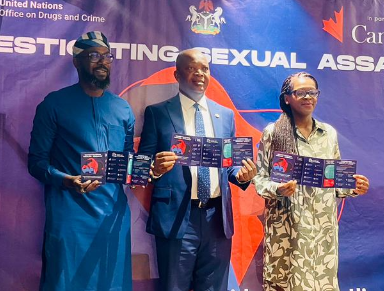
He spoke on Thursday in Abuja at a one-day workshop themed “Strengthening the Forensic Capacity of Nigeria to Support the Effective Investigation and Prosecution of Sexual and Gender-Based Violence (SGBV) Linked to Terrorism in Borno State,” where the SGBV Investigator Aide-Memoire Card was also launched and disseminated.
According to him, the newly introduced Quick Reference Guide for Investigating Sexual Assault is designed to address gaps in evidence handling and improve justice delivery for survivors.
Toure stressed that forensic evidence remains central to successful prosecution, warning that many cases collapse due to lapses at the early stages of investigation.
“Without evidence that is properly identified, collected and preserved, cases can collapse before they ever reach a courtroom,” he said.
He explained that the guide provides a practical, field-ready framework for frontline responders, outlining key steps from reporting to case file preparation, while ensuring survivors are linked to necessary support services.
Toure added that UNODC is also strengthening the forensic laboratory capacity of the Force Criminal Investigation Department in Abuja to enhance the secure transfer and scientific analysis of evidence, which is crucial in linking suspects to crimes.
Also speaking, Justice of the Federal High Court, Obiora Egwatu, described SGBV as a widespread problem affecting communities across Nigeria and beyond.
He listed forms of SGBV to include sexual assault, rape, domestic violence, child marriage, female genital mutilation, sexual harassment, and economic abuse.
Egwatu noted that the crime is often sustained by silence and stigma, discouraging victims from reporting.
He added that although women and girls are most affected, boys and men also suffer abuse but are less likely to report due to fear of shame and societal judgment.
The judge further identified weak reporting systems, poor investigations, and inadequate support services as key barriers to justice for survivors.
On her part, Senior Project Manager at Global Affairs Canada, Wilma Eyang Endamne, said the SGBV Investigators Aide-Memoire Card was developed as a practical tool to support frontline responders operating in complex and high-risk environments.
She explained that the tool is designed to guide investigators in handling cases in a manner that ensures accountability while protecting survivors from further harm, adding that it promotes improved coordination within the criminal justice system.
Presenting the tool, National Programme Officer, Counter Terrorism Unit, UNODC, Aminat Tope, said the aide-memoire card aims to standardise investigative procedures and improve the quality of SGBV case handling.
She noted that it can serve both as a training aid during capacity-building sessions and as a post-training reference tool.
According to her, the initiative is expected to improve investigation quality, increase prosecution success rates, reduce harm to survivors, and strengthen public trust in the justice system.
She also called for the integration of the tool into existing programmes, continuous training of officers, and user feedback to support future improvements.
The event was organised by UNODC in collaboration with the Federal Ministry of Justice and funded by Global Affairs Canada.
Disclaimer
Comments expressed here do not reflect the opinions of Vanguard newspapers or any employee thereof.