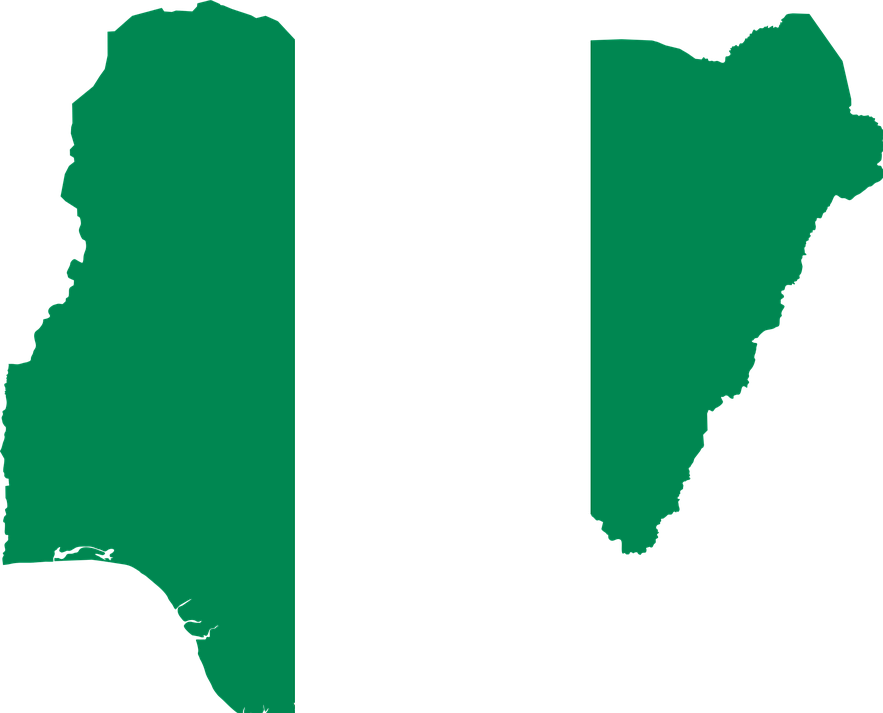
A map of NigeriaNigeria is charting the right path to economic growth and recovery.
Nigeria recently moved up the ranks to reclaim its place as Africa’s biggest economy, putting the country’s gross domestic product at $476 billion or $402 billion, depending on whichever exchange rate used.
This development is a result of a stifling economic crackdown that has befallen South Africa leading to two recessions since 2018 and a recent one expected to last two years. Several arguments rely on the fact that it may necessarily not be a win for Nigeria, considering the fact that both economies are the largest in Africa by far.
As much as that’s the case, the truth is it could have been worse for Nigeria too, considering that the country just plunged itself out a 15 months recession since 2016, an aftermath of the crash in oil prices, sluggish global economic growth and tensions.
READ ALSO: Insecurity: Governors back Buhari on State Police
If the Nigerian government wasn’t adopting the right policies and strategies to fix its distressed economy, we may not have recorded growth in the last two quarters of 2019 and an increase in GDP growth from 1.9% in 2018 to 2.3% in 2019. The GDP is now projected to rise to 2.9% in 2020 and 3.3% in 2021.
Nigeria’s recession which is unquestionably still felt by many Nigerians marked a cutback in the conditions of living and an increase in the poverty rate.
The economic crisis led to the depletion of government revenue, deepening unemployment, poverty, stock market losses, inflation, infrastructural decay, lightening of loan policies and poor standards of living.
When President Muhammadu Buhari won the presidential election in 2015, his victory was met with excitement and hope.
Nigerians wanted a leader who was capable of saving it from a looming economic depression sparked by mismanagement of public funds and corruption across all levels of government.
The Buhari-Osinbajo candidacy identified fighting corruption, increasing security, tackling unemployment, diversifying the economy, enhancing climate resilience, and boosting the living standards of Nigerians as main policy priorities his government seeks to address.
So far, Nigeria has doubled down on its plan to diversify the economy, particularly around agribusiness and manufacturing.
It is also investing in critical infrastructural projects in power, roads, and rail across the country. Diversification presents the most competitive and strategic option for Nigeria in light of her developmental challenges and given her background.
The administration’s Economic Recovery and Growth Plan (ERGP) has focused on restoring monetary and fiscal stability, investments in the Nigerian people via health, education, youth-focused employment initiatives and social inclusion schemes for the vulnerable population.
The government is keen on exploring and encouraging interests in more sectors, improving the ease of business and promoting digital-led growth to attain a globally competitive economy.
It is also expanding her export earnings and production base away from the oil sector through wise investments in non-oil sectors with seemingly high multiplier effects.
The finance bill which was recently signed into law by the president will help block loopholes in the current tax administration and bring about drastic changes to Nigeria’s antiquated corporate tax laws.
The role of the Central bank of Nigeria under the leadership of Godwin Emefiele cannot be soft-pedaled.
From cutting the monetary policy rate (MPR) to 12.5 per cent to the regular mopping up of excess liquidity and the recent upward review of the cash reserve requirement to 27.5 percent, it can be said that the apex bank has been alive to its responsibilities, especially in ensuring price stability and containing inflation. CBN’s aggressiveness to grow the loans to deposit ratio which mandates banks to lend 65 percent of their deposits to the real sector in order to reignite the economy.
READ ALSO: Chibok Girls: USNLG honours US Congresswoman, RCCG pastors for supporting rescued girls
On the issue of security, the government isn’t relenting in its efforts to restore normalcy in the North-East and resolving the IDPs situation in the region.
More defense measures are implemented to put an end to the farmer-headsmen crisis in some parts of the country as well as e sabotage of oil infrastructure in Niger-Delta.
By driving agriculture and agro-based industries, technology and innovation, solid minerals, and our vibrant creative sector, Buhari-Osinbajo’s government is constantly harnessing the energies of our entrepreneurial youth to deliver the promise of our future.
Things may seem slow as many had expected a miraculous turnaround, however, Nigeria is tirelessly working to stimulate its economy and generate more jobs to foster inclusive growth. Indeed and without doubts, there is hope for Nigeria.
Richard Ogundiya is a journalist and researcher based in Lagos, Nigeria.
Disclaimer
Comments expressed here do not reflect the opinions of Vanguard newspapers or any employee thereof.