With human trafficking becoming a global menace, threatening the fiber of our humanity, it has become imperative for authorities to devise new methods to tackle human trafficking.
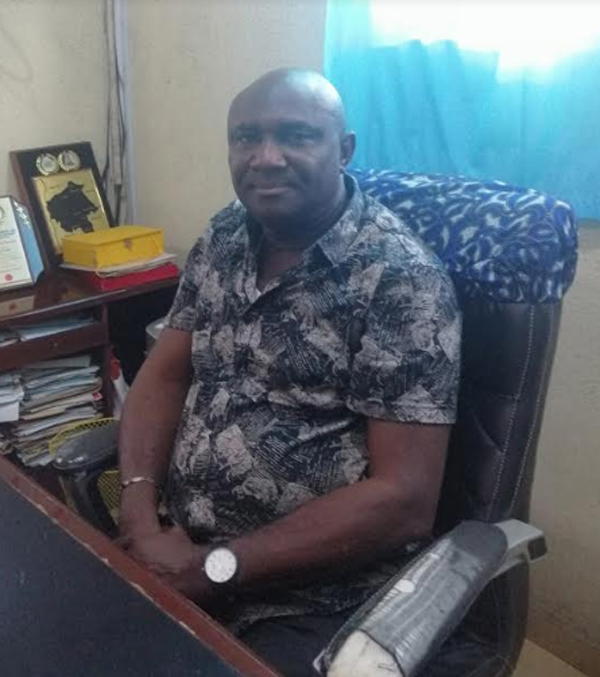
In this interview with the Lagos Zonal Commander, National Agency for the Prohibition of Trafficking in Persons, NAPTIP, Daniel Atokolo; he talks about issues militating against the war on human trafficking, why Lebanon has suddenly become the latest destination of traffickers from Nigeria, how reluctant mothers’ fuel baby sales; what the agency is doing to sensitize young people on the evil behind human trafficking and how they could be lured and their organs harvested in the Middle East and Asian countries. Excerpts:
Esther Onyegbula
What are the issues militating against war on human trafficking in Nigeria?
There are so many issues militating against the war on human trafficking. One of such issues is a victim refusing to come to court to testify against the trafficker.
It is a major issue. But we have devised another method of winning the war. We allow victims to speak on camera. In fact, we got a conviction that way. Another factor is hostile witness. Once in a while, we come across hostile witnesses, but there are ways we try to circumvent it. Another challenge is cultural pattern. Some cultures still believe that the girl-child should be used to feed the family. A man is 50 years old and has a child who is 18, and he chooses that girl to go overseas to work, send money and buy jeep for him and build house for him.
Some people, states and cultures don’t believe in what NAPTIP is fighting for and until most of them begin to buy in, we may still have a problem. We have had instances where a victim tells you that whatever she does, in a situation like that there is little or nothing you can do more especially when she is not underage.
We are seeing more cases of victims trafficked for servitude, does this mean trafficking for sexual exploitation has reduced?
Sexual exploitation comes with its own stigma. Nigerian girls who were recently deported from Libya, all denied being trafficked. They don’t want NAPTIP to pursue their cases. Some claimed that those that trafficked them were in Italy or other countries. They preferred to say they were trafficked into servitude than to confess that they were abused or raped. There is sexual deceit and it is because of our society, which likes stigmatising people.
What is the agency doing to address these issues?
In NAPTIP, we believe that a victim is entitled to a second chance at life. This is why we take them to rehab, counsel and rehabilitate them. We have also discovered that some victims, after going through rehab and everything, would rather die, than return to their homes because of some problems they left behind.
Sometimes our agents trace and locate their homes; their parents would say they don’t want to set eyes on them because they stole their money or sold family land to facilitate their journey out of Nigeria.
NAPTIP has to do a lot of work in order to make peace and reconcile the victims and their families. If you go to these victims to come as witnesses in court, they tell you not to remind them of their past. If not for such victims, prosecution would have been one of the greatest tools to control human trafficking.
Lebanon has suddenly become the latest destination of traffickers from Nigeria, why?
There are many Lebanese in Nigeria, especially Kano State. Some have been in Nigeria since 1914. There are six and seven generations of Lebanese in Nigeria. They are traders. Nigerians can get visa on arrival at Beirut.
Taking a housemaid from Nigeria to Beirut is like taking a girl from Lagos to Abuja. Labour is cheaper here than there. It is because of cheap labour in Nigeria that Lebanese, who are in Nigeria, are outsourcing. They take a girl from Nigeria to Lebanon. Also, people now see Lebanon as a trending destination, and so they follow others to Lebanon.
There’s nothing really happening in Lebanon. I can’t think of any industry there. Let’s also not forget that some of these foreigners don’t like blacks. They treat Nigerians as slaves. One of the victims NAPTIP rescued from Lebanon told us that immediately she got there, her ordeal started.
We heard that Lebanon has mostly menial jobs?
Yes, menial jobs! Nothing is happening there. That is also why sexual exploitation is very high over there. This is the same situation in Saudi Arabia and Oman. There is no general template for human trafficking. If you follow the story of slave trade, you will discover that raping was one of the avenues of subjugating people. Back then, men and women were raped.
Does NAPTIP have an idea the number of Nigerian girls in Lebanon?
No one can give empirical figure on that. Nobody has gone to take a census. All of a sudden, we are hearing outcry about our girls being trafficked to Lebanon. It’s too early to start putting a figure on Nigerians stuck there. When our Director- General, Dame Julie Okah-Donli talked about Mali, she said that there were about 20,000 Nigerian girls stuck in Mali. When she went with some Nigerian officials to Mali to rescue the girls, men in Mali came to resist the girls’ leaving. Like I mentioned before at a television programme, there are some of our girls who were trafficked in their uniforms, young girls. They were returning from school and someone pushed them into a vehicle.
Is that not abduction?
Yes, it is! Some people are here, posting pictures of missing children on the net, not knowing they had been abducted and trafficked out of the country.
What about the ladies trafficked to Libya?
There are several Nigerians in some prisons in war-torn countries and nobody can reach them. Different warlords are in charge of different enclaves. Trafficked victims, who are lucky to buy their freedom, come out alive.
Dangerous terrains
The Nigeria Ministry of Foreign Affairs is trying, but one must go to Libya and work with the government of Libya in order to rescue these victims. We can’t say we are NAPTIP or Nigerian government official and we cross into dangerous terrains.
We have a case of a girl that was trafficked to such war-torn countries. She was trapped in one of their prisons for six months before she came out. It was actually a guy that assisted her to get out. She started living with the guy. One thing led to another and she got pregnant. She had a baby boy; the guy promised to marry her. But most of these guys in those countries are criminals. The guy was killed in a shootout. She was eventually deported. She returned with the baby.
What eventually happened to her and the baby?
When we asked her, who and how she was trafficked to Libya, she refused to say. She insisted that nobody trafficked her. We allowed her to leave, but I gave her a phone number in case she changed her mind and wanted to talk. She called me often because she needed help. I used to assist her with money from my pocket because I knew the baby needed help. She belongs to the categories of girls I term ‘reluctant mothers.’ She called one day to say that she was about to get married. She said that the guy asked her to discard her SIM card; he didn’t want anything or anyone that would remind them of her past life. She had already told him about her past. Since then, we’ve not heard from her.
What do you mean by ‘Reluctant Mothers’?
They are mothers who don’t and didn’t want their children. Most of them are involved in sales of their babies. It is because they didn’t want those children that they end up selling them. They don’t need a lot of inducement before accepting to sell their babies.
Baby sales are so rampant these days that traffickers sell and buy at ridiculous prices
Yes, babies are now being sold for as low as N150, 000 and N200,000. These reluctant mothers see their babies as an embarrassment. Some of them feel the child came to disrupt their lives. For every market to thrive; there must be a willing buyer and seller. If you don’t want your baby and you sell it, it becomes an offence.
Is it that some buyers do not know that buying babies is a criminal offence?
They know! There’s nobody in Nigeria, even in the whole world who does not know that buying of a human being is a criminal offence. Human beings cannot be bought and sold. The baby trafficking syndicate is all about taking advantage of the vulnerable and those who don’t know what they are doing. How can you sell a human being?
NAPTIP works with ministries of Women Affairs in Nigeria, there are departments in those ministries that are in charge of adoption processes. These are the legal and genuine institutions to deal with. If you want to adopt a child, you go to the institutions and apply. It’s a specialist field. When you get there, they’ll profile you.
The profiling is to know what your temperaments are like. They want to know the child you’re interested in and if you can bond with the child. The ministry will give you a time of bonding, allow you to be coming to see the children; it’s a period of bonding. The officials will start vetting you, checking your background. Then there are legal documents involved. If you come from another country to adopt a child, you need endorsement from a judge. It is because of the cumbersome nature of adoption, that some people are beginning to exploit the gap.
READ ALSO: People not happy with me on fight against human trafficking — Royal Father
Let’s talk about the child adoption process in Nigeria
NAPTIP as an agency doesn’t get involved in adoption process. When we rescue victims, our first assignment is to stabilise them. This usually takes a lot of time, especially with the degree of trauma. Some of these victims come into our shelter totally angry with the system. They are angry and aggressive, depending on the degree or how they were trafficked and dehumanised. We work on them and eventually they become stabilised and then they tell their stories.
What about stigma that comes with child adoption in Nigeria?
We can’t run away from the issue of stigma in Nigeria. Most couples do not want people to know that they adopted the child. As legal as adoption is, some people don’t want to be identified with it because of ego. Some move to another clime for a while, take a stimulant, which makes their stomach to start growing and claim they’re pregnant. They know they’re not pregnant, but they’ll go on social media, flaunt their bumps and do all manner of things in preparation to the buying of a baby. It’s a set within a subset. There’s something they want to do.
Some of them will say they want twins. I remembered when we arrested a woman going to Ghana with twins. She was arrested and the twins taken for DNA. Do you know that the children were not twins? They were not even born on the same day and are not from the same parents. The children were born four days apart. But she passed them off as twins. She wanted twins, it is a legitimate desire, but she decided to make it happen. There was no genetic connection between her and the children and none also between the two babies. The case is in court.
What is NAPTIP doing to check our girls being trafficked to the Middle East?
The most important is sensitisation, which is what we have been doing and what I’m doing right now. We are also seriously into advocacy. As we speak now, states’ anti-human trafficking taskforce are working. We have also established anti-human trafficking at Agege. We are also heading to Alimosho Local Government, from there to Boundary, Ajegunle and then to Badagry. Members of the anti-human trafficking taskforce include NAPTIP’s zonal heads, states’ commissioners for justice and attorneys-general. Other members are Nigerian Immigration Service, Nigeria Security and Civil Defence Corps, Department of State Service, Nongovernmental Organisations, Nigerian Prisons, Media, school teachers, school counsellors, the Nigeria Police and artisans. We also tell Nigerians to shine their eyes in order to avoid being trafficked. They need to look beyond the adverts traffickers display and the fantastic salaries. Again, if you see such adverts and you’re interested in such a job and you have doubts, please talk to NAPTIP.
We’ll check for you. There’s no law in Nigeria, which forbids a full grown Nigerian, who has the requisite skills and certificate from working overseas. All NAPTIP wants to do is to ensure that the person has taken the necessary caveats. But we have a way of checking these employment agencies; do they have the necessary certifications to employ? Who are their contacts over there? What safeguards are in place for a job seeker? What are the safeguards to bring him back? These are the things that NAPTIP wants to be sure of. We don’t want our people to go over there and run into trouble.
Organ harvesting is becoming an issue…
In Nigeria, everyone is looking for ways to better their lives. They believe they would get what they are looking for when they get overseas. If you want to leave Nigeria to go overseas to play football, you have to do medical tests. Nigerians willingly submit themselves to all sorts of medical tests. The truth, however, is that among those that came shopping for footballers in Africa or Nigeria is a man, who is linked to a sick person overseas. It’s a mafia. The sick person might need a liver transplant. If it is kidney, good luck to you; the person might take one and leave the other. But if a very rich man is looking for a liver transplant, are you not a dead man walking?
They check you medically to see if you’re compatible. The man that thinks he’s going overseas to play football, is not really going there for football. His liver or kidney is what is at stake. If you don’t know the network of organ harvesting and human trafficking, you’ll miss the point. Human trafficking is a crime that is fuelled with heavy dose of deceits. Along the line, they collect your passport and travelling document and then tell you that they want to carry out another medical test on you.
They’ll inject you, and you would no longer be aware of yourself. The rich man probably needs a liver and amongst all the people taken overseas, yours is the one that matches. They take your liver and that ends your life. They wouldn’t leave your body on the road. They’ll shred it. There wouldn’t be any trace of you; after all, you’re an unregistered migrant.
Disclaimer
Comments expressed here do not reflect the opinions of Vanguard newspapers or any employee thereof.