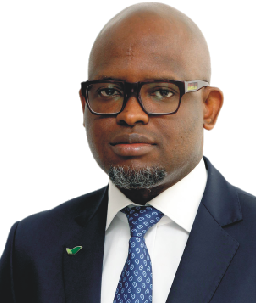
Akin Akinfemiwa, is the Group Chief Executive Officer of Forte Oil Plc, a foremost indigenous petroleum marketing company, with a substantial stake at Geregu Power Plant. In this interview with Sebastine Obasi, he talks about the challenges in the power sector, as well as the intricacies in the petroleum sector. Excerpts:

Akin Akinfemiwa
One of the subsidiaries of Forte Oil Plc, Amperion Power Distribution Company Limited, has substantial shares in the Geregu Power Plant; Why the interest to invest in the power sector at this period?
Well, we see the power sector as the nexus of Nigeria’s development within the next few years. Traditionally, one of the issues we have had with the growth and development of the small and medium scale enterprises,SMEs’ and also foreign direct investments into Nigeria has been as a result of lack of infrastructure of which power has a large share. Basically, when there is steady power supply, the cost of production will be reduced, particularly when it comes to manufacturing of goods and services. If we have stable power supply in Nigeria, it will also improve economic growth and enhance the objective of social inclusion in Nigeria.
It is the next phase of growth and something that is urgent and needs to be done in Nigeria, so as to attract the kind of investments that we need in the country. Ensuring a steady power supply is a crucial objective that Nigeria needs to achieve at this point in time. That is the drive for us. We have taken a long term view as a people with a vision to put our best in that sector so as to be a strong player.
The DISCOs have been complaining about not making profit in the sector since they took over. How do you break even as a GENCO?
As a GENCO, we are generating for the DISCOs to buy. For the DISCOs, the problem has been not only in terms of making losses, but the tariff has been traditionally low. Those kinds of tariff we have cannot encourage the kind of investments we need to upgrade the infrastructure of the DISCOs. The current increase in tariff will turn things around andcreate an enabling environment for the power industry. At Geregu, we are operating profitably. We are able to cover our cost of production, cost of generation and cost of machinery. We are doing quite well in that regard.
Transmission networks are said to be weak. As a result, they don’t take all that is generated and this affects the power situation in the country. Does this not affect your capacity as a GENCO?
It does affect us because everybody has to go through the control centre where the power that is generated is been shared. Without doubt, there is an urgent need to upgrade the transmission infrastructure in Nigeria to be able to cope with the level of generation that is being anticipated or even being generated at the moment. However, the good thing about us is that we have a dedicated transmission line to Abuja. That is where the advantage of investing in Geregu Plant lies.
What is Geregu generating now and what are the efforts being made to expand the scope?
Geregu is currently generating between 138 megawatts and 276 megawatts, when two turbines are working. Geregu has an installed capacity of 414MW with three turbines, GT11, GT12 and GT13 of maximum capacity of 138MW each. Now, the challenge we have is that the three turbines had attained their extended operating hours at the point of our takeover and were due for complete overhaul. We have commenced a major overhaul, as you may be aware with Siemens AG as our technical partners. The overhaul is costing about $90 million in the first instance. At the end of the overhaul, we will have about 435MW and this is expected to be completed by July this year.
Do you have plans for expansion?
We sure have plans for expansion but we need to take it step by step. Yes, it is not novel, but at the same time, you want to ensure that there is an enabling environment where you will not lose your investments. Definitely, there is opportunity to expand, or build new plants. We may also look at building synergies with our neighbours, Geregu 2, where we can have a combined cycle to increase generation. Obviously there are plans for expansion;we have to take one step at a time. We are still resting from the $90 million major overhaul. Of course, we are still resting from the cost of acquisition as well.
You talked about enabling environment. What sort of enabling environment are you looking at?
First of all, the one in which all the agreements that we had at the purchase of the plants are being put in place, all the PPAs, GTAs, GSAs and of course, the enabling tariff structure for the enhancement of the entire power structure. If those things are not properly put in place, it will be very difficult for anybody to put in their money without seeing an opportunity or seeing some vision of where they will reap the benefits of those investments. That is what I meant by enabling environment in the energy sector.
Gas supply has been identified as an impediment to regular power generation. What is Amperion doing to ensure that gas is supplied regularly to Geregu Power Plant?
Gas has never being an issue for Geregu. First of all, we have a dedicated line running from Oben, and we also have very strong relationship with our gas suppliers. In addition to that we also have alternatives. The only problem we can have is if there is damage to the gas pipeline infrastructure, which is a national problem. However, I believe that the government is doing a lot to ensure that pipeline vandalism does not happen anymore. Once we can control the damage to the pipeline infrastructure, then for Geregu, it is not a major problem at all.
In Europe and America, people invest in pipelines. Do you have plans to invest in pipeline infrastructure in Nigeria?
Of course, if the government decides to privatise the pipelines, we will definitely be a participant, not only for power, but even for other petroleum products. We have the ability, the expertise as well as the capacity to manage pipelines without doubt.
You are the new Chairman of Major Oil Marketers Association of Nigeria, MOMAN. The federal government said they are engaging the Central Bank of Nigeria, CBN, to raise foreign exchange for marketers to import petroleum products. What is your perspective on this?
As a major marketer, I am aware that we have had shortage of foreign exchange in the country due to the fall in crude prices. We do not have enough foreign exchange not only for importing petroleum products, but our day to day activities. We are an importing country. Hardly do we produce.
As it pertains to fuel scarcity, it has had a lot of impact with respect to fuel supplies. Traditionally, the oil majors have been doing approximately 50 percent of the country’s import. But since last year, we have been having some kind of hindrances with the issuance of letters of credit, LCs, as a result of the banks not being able to finance import LCs for the supply of petroleum products. This negatively impacted on the supply on our own side. The Minister of State for Petroleum Resources has done quite a lot by intervening in the procurement of FOREX for marketers generally. For the major marketers, we have had quite a lot of positive response in that regard and we have been able to finance our imports. This is coming directly from the NNPC anyway. We have agreed with the Minister to step up our supplies and we expect to have additional allocation so long as we are backed with the requisite FOREX.
The Minister of State for Petroleum Resources said the government will privatise petroleum products pipeline networks. Do you think that will curb the issue of pipeline vandalism in the country?
Of course, it will. If the private sector takes over the pipelines, the way they will manage the pipelines will be different from the way the pipelines are being managed now. There will be more investment in security. Also, there will be investment in corporate social responsibility as well as in the upgrade of the pipelines to ensure more efficiency.
The Minister also mentioned privatising the refineries since they have been producing below capacity for a long time. Do you think that will solve the problem of products supply in the country?
It will solve the problem because again, privatisation will attract the kind of investments we require to operate the refineries. If you look at it, even without the refineries not being privatised, Dangote has made a giant step in establishing the first private refinery in West Africa. What that means is that if a man can establish such an investment, it means that government should hand over the refineries to capable hands to upgrade the entire infrastructure for the benefit of the populace.
Do we expect a refinery from Forte Oil Plc soon?
Our vision is to be the foremost integrated energy solutions provider. Where we can, we shall. Where we cannot, we shall form partnerships.
As the new Chairman of MOMAN, what do you want to achieve?
It tells of the confidence my colleagues in the industry have on me to achieve set objectives for MOMAN. As an organisation, MOMAN ensures that there is uninterrupted fuel supply in the country. As major marketers, we have the wherewithal;we have the people;we have the philosophy. We have the processes and the skills to first of all ensure that there is even distribution of petroleum products across Nigeria. The reason why we have this is that we have invested in depot infrastructure, transportation by way of trucks. We have invested in retail outlets. We have the spread and in the remotest part of Nigeria, you will find us.
As Chairman of MOMAN, I have a responsibility to ensure that there is uninterrupted product supply in the country. This responsibility is to ensure a mutually beneficial working relationship between MOMAN and the Ministry of Petroleum Resources, as well as the Federal Government of Nigeria. I will also ensure that MOMAN is actively involved in policy formulation such that we can enhance the potential of the downstream industry in Nigeria.
Forte Oil is a member of the United Nations Global Corporate Responsibility Initiative. What does this entail?
We have gone through a transformation phase in the last four years. We have a pedigree and one of the things we decided to do is to build a long term company that will benefit our stakeholders. We decided that we must have bedrock of solid corporate governance and do business on a solid foundation of strong business ethics, disclosures and all of that. We try to ensure that our activities are transparent. We have put all that in place with a lot of policies and disclosures, particularly when it comes to timely release of our financial statements. We have done all that in the last four years and so we decided that we should take it to the next level by subscribing to the UN Global Impact Initiative, where our corporate governance principles and practices are subjected to the UN Convention. We have been proven and tested and we have been admitted. On that basis, there are certain things that are expected of us when it comes to doing business, particularly, as an ethical company. That is why you see us
Disclaimer
Comments expressed here do not reflect the opinions of Vanguard newspapers or any employee thereof.