By Obi Nwakanma
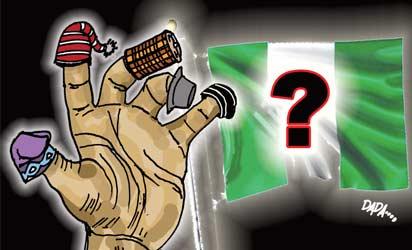
It is very true that Nigeria’s elite – its political, business and intellectual leadership – has much to answer for its regard of its historical role in shaping a better Nigeria for posterity. Part of the crisis of Nigeria is elite incoherence where it matters.
A profound, disturbing and perhaps unanswerable question is what they’ve done with the sovereignty secured for Nigerians on “a platter of gold,” by the generation that led the struggle for African liberation in the 20th century. I think it has often been hinted, and I find it now very true, that the manner by which Nigeria secured its freedom from European colonialism complicates the basic Nigerian attitude to this nation.
In other parts of the world, people went into the bushes to fight for their freedom; they suffered death and imprisonment; families and communities were devastated, many of them razed and erased by the colonial forces.
The Kenyans engaged in the armed struggle using the Mau-Mau resistance; in South Africa, the long-drawn battle for freedom took a huge toll on the people and on the land; the Zimbabweans fought an armed Guerrilla war against Ian Smith and his descendants; there are so many examples in Africa and across of the world of how people had to make terrible sacrifices in order to gain freedom.
China’s great Cultural Revolution led by Mao Tse Tung and his guerrillas immediately comes to mind. In spite of Gandhi’s “peaceful resistance,” even the Indians also fought the British in various armed skirmishes and defiant campaigns. To fight for individual liberties has always been at great human cost.
This is not to dismiss the sacrifice made by the leaders of the anticolonial liberation movement in Nigeria, particularly between the inter war years and the emergence of home rule in 1951/2. However, compared to other parts of the world, Nigeria gained her freedom and independence literally without firing a shot.
There was that one attempt at an armed struggle in 1949/50 by the Zikist movement which began with the failed attempt to assassinate the Colonial Secretary, Hugh Foot, by that Igbo clerk and Zikist at the Government Secretariat which saw him sent to the Yaba mental hospital where he was confined, and where he died forgotten; and there was the attempt by Zikists to begin an armed defiance movement which was quickly nipped in the bud, and the key leaders of the Zikist movement rounded up and jailed, and dismissed from their jobs.
The leaders of the Independence movement chose the path of negotiations and constitutionality, perhaps because of the pragmatist politics of the key leader of that movement, but certainly, and without question, Nigerians did not shed much personal blood for their freedom from colonialism.
I suspect that because Nigerians got their freedom by a relatively sanitized process, they take Nigeria – this fraught inheritance – for granted. They take freedom for granted. They seem not to know what to do with the nation they have inherited.
They also sit around and moan mostly about the various lacks of “our leaders; what they” have failed to provide; they do hardly anything to organize and press for the good government they deserve as a nation. There are occasional street marches. Quite a lot of rhetoric about the situation. But no clear push; nor well organized alternative towards creating a national movement to reduce power to service. Nigerian intellectuals for instance are great public critics.
But they lack that oomph that rises above mere pedantry and impotent soliloquy. They succumb very quickly to melancholy. Nothing demonstrated the inferiority of the Nigerian intellectual class better than its quick and remarkable surrender and dismantling under the military dictatorship that governed Nigeria from 1983 to 1999.
Indisciplined and self-serving, a good many chose to escape from the nation into exile at the first hint of difficulty and hardship rather than fight for a nation of their own. I see them here in exile in various stages of decay and disillusion – and we are still full of impotent soliloquy. Those who could not leave succumbed and became conscripts to the social conditions and the morass that have reduced the validity of the Nigerian state.
The more cynical ones joined in the party at the trough, and this is largely because, frankly as citizens, Nigerians, including their intellectuals have an ambivalent relationship with Nigeria. It is writ large in Soyinka’s independence play, A dance of the Forest, whose close reading signifies not only the playwright’s deep moral skepticism but also his cynical disrespect, disdain, and ambivalence for postcolonial Nigeria, burdened, he claims, by unresolved history. Nigerians are discontent – but it is hollow discontent founded on self-indulgence and groundless self-regard.
For many years, Nigerians consoled themselves with their own self-image as the “giant of Africa” -an empty shibboleth spawned from cant. Nigeria could well be the Giant of Africa – but it is a giant baracoon of people reduced to a slave and colonial mentality; religious extremism and ethnic intolerance; primitive acquisition and fetishistic materialism – that love for shiny and inferior things. A people who were offered freedom on a gold platter but have no idea what to do with freedom. The greatest failure of the nation is not simply the failure of public leadership.
I do not wholly agree with Achebe here. It is the failure of citizenship and the civilizing impact of a self-reliant and self-aware public guided by a national spirit. This is where the Nigerian intellectual has failed eminently. Leadership does not emerge from a vacuum; it is the product of citizenship. Before he was president, Goodluck Jonathan was a regular citizen. After his presidency, he will return to his place as an ordinary citizen.
Nigerian leadership flows from the quality of its citizenship, and thus, it is imperative to question the “Nigerian Mind” – the total structure of values that generates the kind of citizenship that produces the kind of leadership that we have circulated.
What quality of citizenship for instance, could make President Jonathan this week cancel his proposed visit to Chibok and instead head to Paris to discuss Boko Haram with the “International Community?” Does he in fact comprehend or even care about the symbolism of that action? As president of Nigeria, to whom is he answerable: to the grieving mother in Chibok or the “International Community?”
How can Nigerians force him to account for both his presidency and his actions? Why have Nigerians failed consistently to force its leaders to such accounting but instead always call on the “International Community” to aid their civic struggles? The answer seems pretty clear to me: Nigerian citizenship is inferior citizenship.
Nigerians have never really, truly fought for anything in their lives. They want a perfect nation, but are unwilling to do the real heavy lifting. We weep and pray and are discontent. But it is impotent, melancholic discontent. It is the kind that seeks pity rather than redemption.
Disclaimer
Comments expressed here do not reflect the opinions of Vanguard newspapers or any employee thereof.