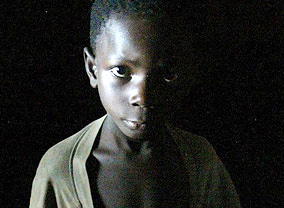
Child-slavery
By Morenike Taire
Do You Indulge in Child Slavery?
In the days when it was fashionable for first ladies to have pet projects, the wife of earstwhile wife of the Vice President Hajiya Titi Abubakar and earstwhile governor of Edo State Mrs. Eki Igbinedion, were notable in their fight against trafficking in persons.
For Mrs Igbinedion, perhaps due to the State of her domicile or perhaps because of the times, much of the attention had been on the trafficking of women and girls to big Italian cities for purposes of selling their bodies.
Thanks in part to their work, this trend has more or less been doused , but it seems trafficking in general has become escalated. Modern day slavery has taken over, from the sweatshops of China, India and other Asian countries to homes in the Nigerian cities of lagos, Abuja and Port Harcourt.
This form of slavery typically begin with the transportation or trafficking of children from their birth homes to places where they are treated not as children who ought to be cherished, nurtured and cared for but tools in the hands of their ‘masters’ or ‘mistresses’ who use them as mere machines.
Various global organizations have joined the fight against child trafficking and slavery, but without much success, notable of which is the Cable News Network (CNN) which has continued to deploy its extensive communications network to exposing child labour/slavery where it exists with the general aim of stopping isolated cases in the remotest corners.
Recently, a 42 year old Nigerian livng in the United States was convicted and jailed for child trafficking. Bidemi Bello, formerly of Suwanee, Georgia, was convicted in June of charges including forced labor, trafficking with respect to forced labor, document servitude and harboring for financial gain.
Over the last few years, coinciding with the rise in economic migration of Nigerian women to the UK and USA, there have been many reported, albeit mostly unconvicted cases of citizens taking other Nigerian citizens abroad to be used in various forms of manual labour.
Most cases of child slavery, however, occur here at home in Nigeria, right in the homes of educated, well bred women who would never think of themselves as being guilty. They are the underaged houseboys and housegirls in your home.
Nigeria is a source, destination, and country of transit for trafficking of children. Children are trafficked to and from Cameroon, Gabon, Benin, Equatorial Guinea, Togo and other West African countries to work in agric
ultural enterprises, as domestic servants, or as prostitutes.
Of these, the majority end up in the homes of the affluent and not so affluent as domestic servants, joining millions already in the streets of Lagos and Kano as area boys, bus conductors, street hawkers, mechanic assistants and apprentices.
The Labor Act of 1974 prohibits the employment of children under the age of 15 in commerce and industry and restricts labor performed by children to home_based agricultural or domestic work.1275 The Labor Act of 1974 stipulates that children may not be employed in agricultural or domestic work for more than eight hours per day, and that children under the age of 12 cannot be required to lift or carry loads that are likely to harm their physical development.1276 The Labor Act of 1974 also prohibits forced labor.
These include, naturally, any child under 18 whose labour has been paid for in domestic situations. In most cases, the children involved in the labour never see the money they earn, making them slaves of the househelp agent, their parents who often get a cut, and you.
Many children working in the homes of enlightened people who ought to know better are forced to look after children they are barely bigger than. They get beaten or punished when they make a mistake, though their employers knew they have had little to prepare them for such specialized assignments.
They are kept out of school, while children of their employers have the best education. They are often deprived of sleep and good food and exposed to unnecessary danger in the kitchen, stairways and other parts of the home. It goes without saying that they are unnecessarily exposed to sexual molestation.
If the practice I so pervasive, the question is, why is there such a huge silence protecting it? Why are people not being prosecuted in the courts? Why is the whole society looking the other way?
Kick Germs from your House
There is an old foreign saying that says if you can see it, it really can’t do you much harm. There is also the local saying that says it is those closest to one that have the power to really harm one.
Both sayings apply to germs. You can’t see them, but they cling close to you and threaten your well being more than anything else. Maybe you can’t completely get rid of them, but you can certainly reduce their numbers to the minimum.
*Change cleaning equipment regularly
*Brooms, cleaning gear, mops, buckets, napkins should be changed regularly
*Disinfectants are good, but don’t go overboard
Disinfecting cleaning liquids that claim to rid your home of germs might not be lying, but might not be doing you much good either. It is in the interest of everyone for ‘familiar’ germs to be around the home for the sake of your immunity.
*Go overboard with bathrooms and toilets.
Everyone knows this is where all the germs are. If there is any part of the house you can overdo the disinfectants, here it is. Also, pour chlorine bleach down bath and kitchen drains at the close of every day.
*Dispose of Waste properly. Disinfect waste disposal areas such as dustbins, laundry baskets, etc.
The area around your dustbin is easily one of the dirtiest spots in your home. Scrub and disinfect at every opportunity.
*Have flooring you can clean.
The floor is the singular most vulnerable part of the house where germs are concerned. It must be cleaned everyday in a light way and every week heavily. Avoid carpets in high traffic areas such as living rooms and passages and go rather for hard flooring and/or small rugs.
*Keep pests out
Rats, cockroaches and other pests are the vectors that carry germs around your house that people in the household can not carry. Engage in regular pest control measures that don’t interfere with your health.
For obvious reasons, the floor is the easiest place to find germs. Every time you go out the door and return, you come back in with some unseen, unwanted company
White, Red and Black
No classy and classic wardrobe can survive without the three colours.
White, Red and Black scan the whole spectrum of what a woman’s emotions, passions and aspirations are or ought to be_ peace/purity, fire and sobriety.
Disclaimer
Comments expressed here do not reflect the opinions of Vanguard newspapers or any employee thereof.