By Ochereome Nnanna
FOR, perhaps the second “season”, the Lagos State Government,LASG, has decided to run the poor hustling for a living off the streets. In “season one”, former Governor Babatunde Fashola carried out what was widely referred to as “deportations” of fellow Nigerians who happened to be non-indigenes to their perceived states of origin, using the Kick Against Indiscipline,KAI, an outfit that has now earned the notoriety of the LASG’s “bad man” anti-poor brigade.
It raised a big hoopla, and Fashola, sensing a political backlash, openly and gamely apologised to the Igbo people who made much heavy weather out of the event, though some mendicants of Northern origin had also suffered the same fate.
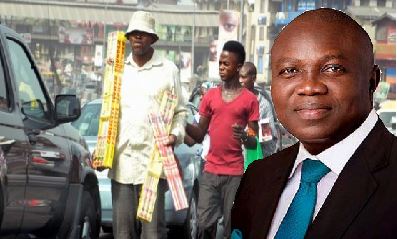
His successor, Akinwunmi Ambode, who rode on a crest of “Lagos for All” mantra, has also decided it is time to take streets hawkers out of business. He invoked the 13 year-old Lagos State Street Trading and Illegal Markets Prohibition Law 2003, and once again, KAI was deployed to do the dirty job.
The first day the implementation of the dusted-up law went into force – 1st July 2016 – produced a tragedy. A young man (a hawker escaping the KAI enforcers) was run over by vehicles in the Maryland axis of Ikorodu Road and like a flash a mob emerged and destroyed 49 Bus Rapid Transport ,BRT, buses. The Governor claims it will take N139 million to repair them.
There is a problem here, and we need to look into it properly. The Lagos State Government wants to develop the state and make it conducive for business – big business. Successive regimes from Bola Ahmed Tinubu through Fashola to Ambode, have been striving to exit Lagos from the ranks of Abuja-dependent, indolent and unimaginatively-governed states. They have capitalised on the solid infrastructural foundation which the Federal Government laid with Nigeria’s oil money when Lagos was still the capital. They are building on the advantages conferred on it by its new standing as the economic melting pot of the nation to raise the status of the metropolis to world class levels.
It is a legitimate and acceptable ambition. To achieve this, bold steps have to be taken. Radical steps were taken by Fashola, for instance, to sanitise Oshodi, the symbol of the old decrepit and lawless Lagos. You cannot sanitise Lagos without creating an atmosphere for the free flow of traffic and removal of perceived miscreants and criminals from the major highways. Obviously, this is where the Lagos anti-street trading law comes in.
But, Lagos is faced with a runaway migration crisis. Everyday, people are pouring in from all parts of the country to take a bite out of this big apple. Most of these are young people, both school leavers and those who never went to school. When they come in and discover there is no such thing as an ‘apple”, they settle down to manage any which way. And that means ending up in the streets as hawkers, okada riders, beggars or criminals – all of whom the LASG does not want to see in the streets of Lagos.
And because majority of these “migrants” are non-indigenes or non-Yoruba speaking, it is so easy to politicise the matter.
Personally, I am fully in support of efforts to make Lagos a modern city. I would probably do the same thing Tinubu, Fashola and Ambode have done. But perhaps, I would do my best to minimise the perception of hostility towards poor non-indigenes who are trying to eke out a living in Lagos. After all, the newfound prosperity of Lagos State is not solely through the contributions of Lagos indigenes or its Yoruba-speaking population. As noted before, the foundation for the prosperity of Lagos was laid by the British colonial masters and the Federal Government of Nigeria with the resources of the Federation derived from outside the Lagos economic zone.
Secondly, the private sector, from which the state makes its humongous internal revenues, has the imprimatur of Nigerians from all sections. The LASG, which is chiefly driven by Lagos indigenes, is providing the visionary leadership to power the development of the city-state. Therefore, we are all partners in this project. Lagos cannot afford to take only from the rich among us and drive away the poor.
Governor Ambode referred fleetingly to a N25 billion Employment Trust Fund which he advised street hawkers traders to “take advantage of”, without spelling out how. How can a school leaver or even school pupil who depends on hawking to feed and pay school fees take advantage of this fund?
Again, I think it is simplistic and a relapse to lazy profiling to say that all street traders work for cartels that import substandard goods. Why are KAI operatives also chasing those hawking walnuts, garden eggs, fruit salads, chewing gums and “pure water”. Are these also adulterated imported goods? Criminal profiling of street trading will only heighten the perception of ulterior political motives. In any case, law enforcement is poor in Lagos. The law goes to sleep as from 4.00pm. The law in Lagos is a civil servant. If the LASG could not effectively ban okada in most parts of Lagos (epsecially the Lagos West zone), how far can it go in sustainably reining in streets traders?
The truth, however, is that we cannot expect the Lagos State Government to carry the socio-economic load of the entire country. It is unrealistic to expect LASG to play the Father Christmas to all flotsam and bobtail from corners of Nigeria, Togo, Benin, Ghana, Burkina Faso, Chad, Niger Republic and others.
The Federal Government under President Muhammadu Buhari must now roll out the mass employment policies for which the young voters (including under-age voters) elected him. The various state governors must emulate Lagos and encourage their people to stay back and enjoy homegrown good governance.
When governors see an army of young people running to other states to “enjoy” the dividends of good governance, they should, at least, feel embarrased and do something about it.
Disclaimer
Comments expressed here do not reflect the opinions of Vanguard newspapers or any employee thereof.