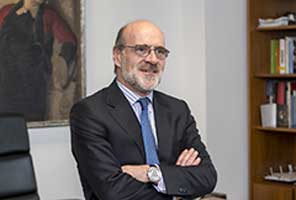
Alfonso-de-Erice
Says home country imports 12% of its oil from host nation, seeks balanced trade
By Victor Gotevbe and Victoria Ojeme
Alfonso Sebastian de Erice is the Spanish Ambassador to Nigeria. In this interview, he speaks on the relationship between Spain and Nigeria.
You have been in Nigeria for quite some time. Can you compare what is happening here with your former post, Namibia, for instance.
In Africa, I have worked in Namibia, Nigeria and Gabon . They are very different countries, with obviously very different histories. In Nigeria, I was most impressed with the immensity of the population, 170million is a lot compared with just the 46million we have in Spain . But also I was impressed by the economic opportunities. Certainly, there are challenges but there are also many opportunities for Nigerians and for foreigners. Nigerians are very dynamic, always trying to do business, thinking about opportunities and I consider this is positive. Nigeria is a country with great potentials.
Can you highlight some of these potentials that your country could likely benefit from?
Well , we are very good at building infrastructures. Let me point to you some sectors in which Spanish companies are leaders: renewable energy, thermo-electric energy, power generation , agriculture, fashion, construction, food and beverages. Some of the world biggest infrastructure projects in the world are being done by Spanish companies or consortiums. For instance, the Mecca-Medina high speed train, the Panama Channel and the biggest wine farm in Europe; that is the Spain that we want to showcase to the world. Like I told you, we are very good in building infrastructures, airports, hospitals, expressways; as an example, the second most extensive high velocity network train in the world is Spanish.
If you are to cooperate with Nigeria in these areas, which specific areas would you want to go into partnership with Nigeria?

Alfonso-de-Erice
I think we can help you wherever you need us. We have strong technology in many areas and sectors. For us I think what is important is to establish a relation mutually beneficial. That means you obtain something and we obtain something in exchange. To achieve peace and stability in Nigeria, you have to create employment and to create employment you have to build infrastructures, invest in agriculture. We can also work with you in the power sector, in renewable energy, elements that are fundamental for the economic development of Nigeria. Our economic relations, I would say, is good. I think it is very important for Nigerians to know that, in 2014, Spain bought a total of 6.5billion Euros worth of oil. Spain is the second or third best client of Nigeria depending on the year. Thanks to the oil sector, we have a very important presence in Nigeria. In 2014, Nigeria became the major supplier of crude oil to Spain . 12% of the oil that is used in Spain comes from Nigeria and 8% of all the gas used in Spain comes from your country. We have strong economic relations, we are buying a lot of oil, gas and it is mutually beneficial. But I think we have to diversify. Nigeria is only importing from Spain 338 million euros. We have trade relations that is unbalanced and we have to work on that.
Currently, what do you say the trade volume between the two countries is?
The trade volume between the two countries is, as I told you, worth 6.5billion Euros and Nigeria is buying just only 330million Euros from us. As you can see, it is unbalanced. I would say it is something that you would have to help us to correct in order to establish a healthier trade relation. That is the message I am trying to pass to the administration. We would be very glad to create a relation that is mutually beneficial for both countries and that will help you to create employment and to acquire the highest technology in a very competitive country. Spain is nowadays the country that is growing the most in Europe . It has a very open economy and exporters and investors are looking abroad for new opportunities.
In what way can the Spanish government assist Nigeria in the fight against terrorism?
Well, I think terrorism is a very important issue because it affects peace and security in Nigeria . Let me start by saying that Spain has a long experience in fighting terrorism. For almost three decades in Spain, we have suffered this blight. ETA was a terrorist group that wanted independence from Spain and killed unfortunately many people. For three decades, we suffered the terrorism of this organisation. In 2004, a jihadist terrorist attack in a Spanish train station killed more than 170 people. We have condemned terrorist attacks by Boko Haram. We are negotiating right now an agreement with Nigeria to foster cooperation in the area of fighting crime that includes terrorism. This agreement might allow us to exchange intelligence and training. We sent a team of experts from different Spanish intelligence units in May last year to help find the Chibok girls. By this gesture you could see the attitude of Spain . We know what terrorism entails and we want to express our solidarity with Nigeria . We have experience and we want to sign an agreement with Nigeria in order to strengthen the cooperation that we already have.
You said the Chibok girls rescue was unsuccessful. Can you give us some factors that made that not to happen?
Well, it is not for me to explain the situation; I am just a foreigner here. We have expressed our solidarity with the families numerous times but the truth is that we haven’t seen the Chibok girls yet. But it is not only about the Chibok girls. There are many other women and girls that have disappeared and also boys. Chibok is just a symbol of the many women and girls and boys that are suffering.
Are you demoralized by that situation?
I think we all must feel very sorry. I hope and I know that the new administration will be keen in using all the means to find all the women and girls that have disappeared because of Boko Haram.
Let’s talk about the new administration; what areas do you think the new administration should focus on?.
Well, I am very optimistic about this new administration. I think they know very well that Nigeria has to face important challenges. President Buhari has expressed many times his concerns about security, about diversifying economy, about agriculture, corruption. These are some areas that the President has mentioned. At the same time, like I said before, Nigeria is full of potentials. We are to start a political change and I am very optimistic. Nigeria did a very good job at the last elections. You held credible elections and you showed the world that you could do the best and you did it. And I think you should be very proud of the current Nigeria. It doesn’t mean that there are no challenges, there are challenges and this administration knows what to do and when to do it.
In the 1980s Spain was a donor-dependent country. But today, it is the sixth largest donor to UN system. Hhow did you do the magic?
Well, the transformation of Spain was very impressive. It has taken a lot of efforts and work, a common aim. I think that is important for a society to have a common objective, a collective project. We learnt to work together. We knew we had to transform our economy, to develop our infrastructures, to improve our educational system. We knew we had to fight terrorism together and united. I am not comparing the situation of Nigeria with the Spain of three decades ago, but some of the problems you have are similar to the ones we experienced back then. We received the economic support of the European Union and that helped us to open up our economy and we started exporting. It is true, 25years ago, we were recipient of aid and today we are one of the biggest donor-countries in the world and we are very satisfied to be able to assist other countries.
How many Nigerians are recently based in Spain ?
There are 40,000 Nigerians based in Spain and there are 257 Spanish based in Nigeria .
There are complaints about how difficult it is to get Spanish visa. Even journalists on mission are often denied visa. Why is it so?
The Spanish consulate has granted about 2,300 visas a year. The present rate of refusal is very similar to other Schengen countries. There are visa requirements to fulfill whether you are a journalist, businessman or you a tourist. Many Nigerians go just with a passport or without sufficient documentation and then their request for visa is rejected. We want Nigerians to go to Spain . We would really want that because tourism is good and making business is good. Nigerians that want to go to Spain and apply for visa have to file an application and bring the documents required by all Schengen countries. W e have many Nigerians travelling to Spain for legitimate purposes. We have smoothened the process since they can now apply in Abuja through VFS offices without having to go to Lagos. We want to make life easy for everybody. But whoever requests for visa has to bring the documentation. One of my main objectives here in Nigeria was to foster people to people relations and the best way to do so is by inviting Nigerians to visit Spain to see what we are doing, how much we suffered from terrorism and how we succeeded.
Disclaimer
Comments expressed here do not reflect the opinions of Vanguard newspapers or any employee thereof.