By Funmi Ajumobi
All consumers deserve the right not just to food, but to healthy food. Despite this right, the rise in diet related diseases such as obesity, diabetes, heart disease and some cancers represents a major international public health crisis. The number of overweight and obese people continues to rise and, to date, not a single country has been successful in reversing the increase.

Nigeria has the highest number of people suffering from diabetes in Africa according to Diabetes Association of Nigeria (DAN).World Health Organisation (WHO); International Federation of Diabetes (IFD) as obesity epidemic has emerged among Nigeria. Why is Nigeria among the top heat countries? The western influences on diet and lifestyle are playing a part in all the health issues the west is already struggling with.
The truth is that more Nigerian are better informed on healthy living through so many health talk being organised by different health, media and religious organisations compared to years back but it always end where they hear it or may practise for few weeks and return to their stereotype ways of living. Many sicknesses that people suffer today is caused by lack of not wanting to adhere to rules of living a healthy life forgetting that health is wealth.
Nigeria is the centre of attraction because of our GDP and that is, every product from every part of the world whether good or bad finds it way into our country. The truth is that government has relevant agencies that every product must pass through to control standard for the purpose of healthy living.
The reality is that many things that man suffers in life is caused by lack of information. We want to eat western foods but we don’t want to read and follow the quantity of calories our body need. My pastor once said Nigerians do not care to know anything about whatever they are doing; forgetting that success is not coincidental. He said, no wonder used clothes from advanced world get to Nigeria and within two to three months, you would not find the trace again. They are fading away. Why? They refused to follow instruction of dry cleaning it. In our country, every cloth is to be soaked with detergents, squeezed and washed.
As the world marks International Day of Consumer Protection Rights, it is a reminder to every consumer on their rights. They are: the right to satisfaction of basic needs, the right to safety, the right to information, the right to choose, the right to redress, the right to consumer education, the right to representation and the right to healthy environment.
These are your rights which you should insist on, and in case of any complaints on what you buy or consume, Consumer Protection Council, an agency of government whose mandate is to provide speedy redress to consumers complaints, remove hazardous products from the market, cause an offending company to protect, compensate and provide relief to injured consumers, encourage the adoption of appropriate measures to ensure that products are safe for either intended or normally safe use and also educate consumers is your best bet to exercise your right.
Vanguard chat with Mr. Tam Tamunokonbia, The Head, Consumer Protection Council, Lagos Office on their roles in protecting consumers in Nigeria.
The statistics of diabetes and Obesity is increasing in Nigeria due to diet issues especially consumptions of sugar. What is your agency doing about protecting consumers?
What the law required is that every product should have labelling standard. Responsibility of the consumer is to check for label which shows the ingredients that make up that product. It is consumer responsibility to look out for the one that has much sugar and less sugar. Health wise, what is good for one person may be bad for another.
Some people need more sugar to shoot up the sugar level if it is so low and others with diabetes, it is an health issue because a diabetes patient will need the products with low sugar or non sugar products. So in manufacturing, what is required by Standard Organisation of Nigeria, SON and The National Agency for Food and Drug Administration and Control, NAFDAC, is that the ingredients that make up that product must be made known and as a consumer protection agency, this come under one of the eight rights of consumer which is the right to information. Consumers have the right for information to know if a product meets the right standard set by these agencies.
What are the Consumer Protection Agency Responsibilities?
CPA responsibility is to protect those standards set for every product. We don’t set standard but we protect consumers by ensuring those standards are met. For example, cigarette as dangerous as it is for some people, has standard in Nigeria and if the standard is not met, CPC will do a surveillance to see and be sure the standard are met and if not, we work with police to take it out of the market because we have to protect the consumers
Is it only when consumers complain that you get information about substandard product?
Our staff do surveillance and found that the products that do not meet standard are taken out of the market. For food products generally, must have NAFDAC number and so, any food product whether the sugar is high or low must have the number but if not, it has failed the Nigeria standard and this is where CPC comes in to maintain the standard set already by the Nigeria system.
I used system because if you go to SON, they will also tell you they don’t set standard. What happens is that there is a standard set by the standard committee who are made up of stakeholders like Manufacturers Association of Nigeria, Standard Organisations of Nigeria, Consumer Protection Council, The National Agency for Food and Drug Administration and Control, representatives of companies, etc.
The big group will come together to set the standard but SON is the custodian of the standard and if CPC needed to carry out enforcement on a product complained by consumers, it also needs to get the standard for the product from SON to be sure it’s doing the right thing. For instance, there was a complaint from a manufacturer that his product is being faked and as a protector, I need to be sure what the other man is saying is true.
I wrote to SON to give me the standard for the product and we carried out a text on the three products and incidentally, all of them passed the text. If I had gone out to carry enforcement to remove other product from the market, it then means I would have brought the guilt on my agency
Nigerians love fast food, how does your agency protect consumers?
Eateries have their own standard but there are set standard for health standard. For examples, their kitchen must be decent, hair covered which is called health certification. We go from time to time to inspect them not only where people buy the products but the hidden places like their kitchen to see how healthy they are, for instance.
What about bukateria, bus stops, car parks where all sorts are sold to consumers. Does CPC carry surveillances to those areas?
What we have been doing is sensitizing the bukateria on the need for decency. We all know that the ‘mama put’ who is selling may not have the financial muscle to build a big structure that is decent by world standard and consumers will tell you they have been operating for years and closing their shops may amount to witch hunting such people, CPC will only continue to sensitise, monitor them on the need to meet health standard and to be fear to them, their health standard are improving over time,
For the motor parks, we see people selling drugs, drinks, etc aside sensitizing them on the drink that are not registered, we do go to all parks to sensitise them to always look at what they are buying and see if it is safe for their health. The second right of consumer is the right to safety and if they are buying any product, it is their right to look and see if it is safe for their health,if not, then don’t buy.
So it is more of sensitization, over time, what we have seen is the issue of habit and habit they say does not die easily There are people who must take one shot before they drive, which road safety has been working on that that if they must drive, don’t drink and if they must drink, they should not drive. But as long as people are patronizing those women, they will still be there.
We don’t have a standard that will make us to go and seize their products. For instance, the roots, it is extremely difficult but traditional practitioner are doing enough in standardizing them. The message we are passing across to Nigerians is that, they should look at the product they are buying and be sincere to themselves if it is safe for their health.
What should consumers expect as the world marks Consumer Right Day?
They should expect Road Show where we will be sensitising consumers on their rights. We will also visit super market and remove products that do not meet standard
Your agency Sale Promotion Registration of companies that want to do promotions on their products involves charges, what happens if you find out later that such product is substandard?
This registration is not about collecting money. What is charged is too minimal. The essence of the charges is to enable us monitor the promotion and ensure that those who won the product are given their prizes. If in the process of monitoring, we find out the product is substandard, we will stop the promotion and the sale of that product and be charged to court but incidentally, we have not seen such cases. The issue of sales promotion is that many Nigerian companies do not see the reason why they should register but the law is that every promotion must be registered for the benefit of the consumers. On the day of their draw, our staff will be appointed to be there to be sure it is genuine, transparent and whether those who won get their prizes. Incidentally, those called on phone will also be followed to be sure the company give them too.
I have seen so many adverts of winning 3000 or 5000 cars, have you witnessed where all those cars are won?
I don’t know but I know I have witnessed where companies advertise winning cars and the winners were given and not all those winning products are branded to be identified on roads. Not all promotions are registered but many will tell you they don’t know and many big companies will be pleading exception but we always warn them that if they go ahead, we will stop them.
The good news is that if you win and you are not given, come and complain we will follow up and be sure you get your prizes and at the end of the day, if the company did not register its promotion, we will start from there.
Dr. Chika Ndiokwelu, Rtd Deputy Director (Nutrition& Dietetics) and currently a Consultant Nutritionist & Dietian, Eastside & Galaxy Urology Hospitals, Enugu spoke on the right diet for Nigerians to live healthy,
Rationale for Campaign on Consumption of Healthy foods worldwide and by Nigerians:
Unhealthy diets are linked to mortality from four of the ten biggest causes of death worldwide:
- Overweight
- Obesity,
- High blood pressure,
- High blood glucose and
- High blood cholesterol.
Obesity alone is estimated to cost huge amount in the cost of days off work, lowered productivity, etc. It is really time Nigerians woke up to the price of unhealthy diets.
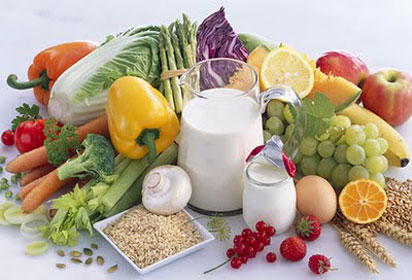
Healthy foods people should eat
Whole grain foods and nuts:
- These include: Whole legumes- all varieties of beans (cowpea, broad beans), pigeon peas, African yam-bean, etc. Whole cereals: brown rice, whole wheat cereals, whole maize and sorghum meals- tuwo, nni-oka, etc and their products ( because they contain dietary fibre.)
- Vegetables (leafy ,coloured ) They provide dietary fibre, vitamins, minerals especially, anti oxidant- beta-carotene and others, potassium and magnesium which help in positive control of blood pressure.
- Fruits (all types): They provide dietary fibre, vitamins and minerals especially anti-oxidants- vitamin C and potassium.
- Healthy fats: plant oils which contain appreciably more (heart-friendly oils) poly-unsaturated fatty acids- soybean, groundnut oil, canola oil, sesame oil, etc. Those containing predominantly more polyunsaturated fats and mono unsaturated fats – olive oil.
- Limit sodium especially salt intake- the little quantity consumed should be iodized.
- Consume about 2.5-3litres of water daily (daily). This includes water from food and other drinks.
Food they should say no to: (Their consumption should be reduced)
- Refined and processed cereals and legumes that are unhealthy because they are energy dense, nutrient poor and high in fat, salt and sugar.
- Energy-dense foods which are high in saturated fats, trans fats, sugars, and salt.
- Salt in the diet can come from processed foods, either because they are particularly high in salt (such as ready meals, processed meats like bacon, ham and salami, cheese, salty snack foods (groundnuts in this country are often over-salted including most roasted and fried snacks), instant noodles, among others.
- Salt is also added to food including dried fish during cooking/drying (bouillon and stock cubes) or at the table (soy sauce, fish sauce and table salt).
- sweetened cereals, juices, long life bread and pastries, spreads and sweeteners are popular at breakfast; sugar sweetened beverages often replace other drinks such as water and milks; high-sugar snack bars and ready-made meals and sauces.
Snacks parents should pack for their children and what they should not
- Healthy snacks: small amounts of home cooked foods (prepared from 2/3-4 food groups)
- Steamed puddings- moi-moi (beans pudding), okpa (Barbara nut steamed pudding)
- Fresh fruits in season, roasted nuts, whole wheat bread with mildly salted peanut spread.
What school and government should be doing
- Government Policy should be put in place to ban marketing of junk foods to children. Bringing of sweetened drinks as snacks for children should be banned in all schools.
- Policy on provision of nutritious school meals should be enacted and implemented (government: private sector driven).
- Schools should monitor compliance and also ban of hawkers who sell unhealthy snacks near all school premises.
- Periodic monitoring and evaluation of meals, snacks children bring to school and their nutritional status by Nutritionists and Dietitians in the country.
- Improvement of quality of foods served in public institutions- schools and hospitals – by ensuring that all foods produced in schools and hospitals are supervised by Nutritionist-dietitians, every hospital should have a dietetic policy which is implemented .
How to solve the problem of food labeling especially in Nigeria
- NAFDAC should ensure that food manufacturers in the country and those producing food s imported in to the country provide clear nutrition labeling to enable consumers choose healthy diets.
- Using traffic light colour- codes for labeling, e.g. red should indicate for example that sugar- is high in a product, amber-medium content, green- low in the offending parameter. This will make it easier for consumers including children to understand. Education on this should start from primary school.
- Manufacturers should be encouraged to change some of their marketing strategies to avoid targeting children for unhealthy foods and thereby compromising their nutritional status especially sweetened drinks in small packs which children take to school.
Disclaimer
Comments expressed here do not reflect the opinions of Vanguard newspapers or any employee thereof.