*
By Udeme Clement
Experts in the housing sub-sector have commended the Federal Government for launching the mortgage re-finance scheme aims at making easy access to loans for housing for the citizens. The new scheme, which will be handled by Nigeria Mortgage Refinance Company (NMRC) is designed to make an average Nigerian own a house by accessing up to 20-year loans from mortgage or commercial bank, for repayment period of 20 years.
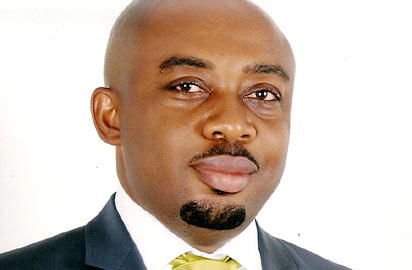
The launching follows government’s approval of $300million loan facility ( N48 billion) to be accessed from the International Development Association (IDA) to boost mortgage financing, in order to address housing deficit in the country. Mr. Robert Ekutmfon Umoette, who is a real estate expert, oil industry player, the managing director and chief executive officer, DURAN Intermediaries Limited (DIL) speaks on Nigeria’s economy, the move by the government to encourage Nigerian made vehicles, the performance of President Goodluck Jonathan and the need for government to diversify the economy and in
vest more in the housing sub-sector to create jobs.
From your years of experience in the housing sub-sector, what will you say is the major challenge impeding the growth of this industry in Nigeria?

*Mr. Robert Ekutmfon Umoette
The major challenge is lack of sufficient finance to boost the growth of this sector and make it work like what obtains in advanced economies. Now, with the launching of the refinance scheme, I believe government will turn attention to this important sector of our economy.
The banking sector has been reformed to help in the growth of other sectors. Are you saying that commercial banks are not giving enough support to this sub-sector in terms of credit facility for capital projects?
What we have in Nigeria is deposit banking, where money is kept in the banks. Nigerian banks do not encourage entrepreneurship by giving credit facility for long term development. Also, the interest rate is very high and even close to 25 per cent now. With this high lending rate, how can the entrepreneurs improve their margin and still stay afloat in business?
What is the solution to high lending rate in the financial sector?
The Central Bank of Nigeria (CBN) needs to intervene and do something to reduce the lending rate to at least 10 per cent. Projects in the housing sub-sector are capital intensive and require long gestation period, but banks are not willing to give long term funding that can last for a minimum of 5 to 10 years. They can only give about two years, which is too short for any tangible output from the business.
What is the role of the mortgage system in this regard?
Our mortgage sub-sector is also facing numerous challenges. At present, there are a lot of people who do not even know that something like the mortgage institution is existing in Nigeria, because the sector is rapidly going under. For this problem to be tackled, there must be increased funding for the federal mortgage system to ensure funding of capital projects for long term growth and sustainability.
What is your view on the move by government to increase tariff on Tokunbo vehicles?
The good thing is that the Minster has come out openly to say that government is not placing any ban on Tokunbo vehicles now but is only putting measures in place to revive the automobile industry that will be capable of producing made-in-Nigeria cars in future. My advice is for government to give a realistic time line for the industry to be fully operational before taking any action.
How many years do you think should be given as the proper time line for the policy to be fully implemented?
At least 10 to 15 years, so that within this period, the industry would have fully awaken itself for Nigeria to have the necessary infrastructure and the technical-know-how required in running a productive automobile industry. Also, within this time line, the industry will be properly seated for massive production to meet the demand in the market.
What do you think will be the economic implications if government decides to enforce the policy within a short time?
If government places ban on tokunbo vehicles without sufficient time line to equip our automobile industry with what is required in terms of man-power as well as modern technology, it will automatically increase the rate of smuggling. This is because a lot of people today depend on tokunbo vehicles due to the exorbitant cost of purchasing new vehicles.
Looking at the economy in 2013, how will you assess Jonathan’s administration?
The president has done well on economic growth despite the security challenge and other issues in the country. A lot of people are comparing his approach to Boko Haram menace to the way former President Olusegun Obasanjo would have handled it, but those people failed to understand that they have different backgrounds. Obasanjo has a military background while Jonathan’s background is academics. The president believes in dialogue, which is good for a fledgling democracy like ours. He addressed the menace systematically starting with dialogue and moving to offer amnesty. When that failed, he declared emergency rule in the affected states and now military intervention.
With time, the economy will take shape because there is relative stability in the system. Jonathan spent only three years and has been able to privatise the Power Holding Company of Nigeria (PHCN), which past governments could not do for many years. This is a great achievement because power crisis has been the major obstacle against the development of Nigeria’s economy for many decades. Realistically, the best way to put our economy on track is to revamp the power sector, which is what Jonathan is doing now.
The sector is privatised now and that will spiral development in other sectors to enhance inclusive growth. Rather than being overly critical, working against Jonathan and sabotaging government efforts in transforming the economy, we should support him on programmes and polices geared towards long term economic growth and sustainability. Also, it is in Jonathan’s administration that the economy received the highest inflow of Foreign Direct Investments (FDIs) which is key to rapid economic growth.
Don’t you think government is indecisive in trying to back out of it plans to privatise the nation’s refineries due to opposition from oil workers?
Privatisation of the refineries is the best way to make them function optimally. Government needs to privatise the plants like the power sector for increased productivity. Government has shown what it intends to do in terms of reviving the plants through privatisation, which is the right thing to do, but the oil workers under the Petroleum and Natural Gas Senior Staff Association of Nigeria (PENGASSAN) and National Union of Petroleum and Natural Gas Workers (NUPENG) went against it. Due to the reaction of these unions government deem it wise to loot at a proper time line for the privatisation to take place. This implies that government is carrying the unions along in the entire process, so that relevant stakeholders can be fully involved in the exercise.
What measures will you advise government to put in place in order to open up new investment windows for rapid development in the economy?
Tapping deeply into tourism potentials will be a good investment window for this country, because we have enormous tourism potentials, which in my opinion have not been fully utilised to boost income flow in the economy. We should explore this sector exhaustively and adequately harness the untapped resources abound in it to make Nigeria a tourism hub in the sub-region. This will promote creation of jobs and increased economic productivity in the country. States should be restructured to enhance more internal revenue generation rather than depending on federal allocation.
With increased unemployment rate of about 70 per cent and abject poverty in the country, don’t you think that government is not doing enough to satisfy the yearnings of the people?
There is unemployment in the system no doubt but in this regard, we must understand that in every country of the world, it is not only government that should create jobs but the private sector. What government should do is to create an enabling environment for businesses to thrive and create jobs for the masses. Now government is putting measures in place to resuscitate the power sector and once the privatisation exercise begins to yield results for us to have stable power supply, every sector of the economy will develop.
The investors companies who took over the power plants must get themselves seated properly to bring about optimum production in the areas of electricity generation capacity, transmission and distribution. When there is constant supply of power, more investors will come into the country, firms that closed shop in Nigeria or moved their operations to neighbouring countries within the West African sub-region will return to the country and this will pave the way for job creation for the citizens.
What is your outlook for the economy in 2014?
I believe there is prospect for Nigeria’s economy this year because the major issue, which is power crisis is being addressed pragmatically. The moment government is able to fix this sector fully the entire economy will be repositioned for greater prosperity. Government should also put more emphasis on the housing sub-sector, which is capable of creating thousands of jobs for the people. The manufacturing sector contributes only 4.5 per cent to the Gross Domestic Product (GDP). Government should invest more in manufacturing for the sector to contribute reasonably to GDP like what obtains in South Africa and other countries.
Disclaimer
Comments expressed here do not reflect the opinions of Vanguard newspapers or any employee thereof.