*Idika
By Udeme Clement
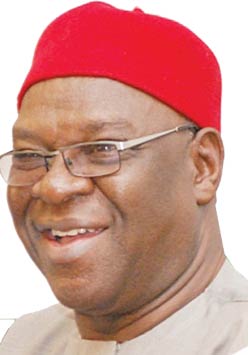
Dr. Kalu Idika Kalu, an economist, was a two-time Minister of Finance. He was also, at different times, Minister of National Planning and Minister of Transport. In January 2012, he was appointed to chair the Special Task Force on refineries. In this interview, Kalu speaks on various programmes mapped out by successive governments to transform Nigeria’s economy in the last 53 years, the reforms in the financial sector and the need for government to revamp agriculture for sustainable development.
You served as Minister of Finance and in other important positions in government. How do you assess Nigeria’s economy at 53 years of independence?
This is the most vexing question. At 53 years of independence, for a nation with the richness and variety of resources, we really should not feel very satisfied at what we have achieved. The growth of the population at 2.5 to 3 per cent remains one of the highest. So also is the unacceptably high mortality rate on the basis of both infant mortality and the mortality of nursing mothers. The extensive presence of morbidity and equally high incidence of diseases, which ought to be totally eradicated by now, example polio and other highly infectious infant and adult diseases are clear evidence of deficiency in the health sector.

*Idika
Are you saying that the health sector has not recorded major achievements in the last 53 years?
Our health sector is in a very poor shape despite the enormous resources committed over the years. Despite the high growth of health institutions from primary to secondary and tertiary, and few highly specialised institutions for dealing with special diseases, it is sad to note that 53 years now, Nigerians are still trooping abroad for health care. The very ugly incidence of migration and health tourism to many lands, both far and near, to Ghana and as far as India is still prevalent in our country today. The constant and wide spread disaffection within the health services community and the clearly evidence inadequacy of facilities, man-power of various categories are still clear evidence of deficiencies in the provision of health care, not only in the cities but also in smaller towns and particularly in the rural areas of this nation.
The question goes beyond just provision of adequate resources in real terms, but to a proper systematic diagnosis of the size of the problem. We also need to take stock and address the real quantum of resources that would be needed to make impact on modernising and expanding the physical structures and upgrading man-power of different levels and refrain from the tendency to speak loosely about so many billions of naira voted without actually identifying the real materials, capacity and volume of services that such funds are intended to bring to bear in relation to the problems identified. Now, we also need to go to the other major social sectors in assessing where we are at 53 years of independence.
Another important sector is education. This sector encompasses training at the nursery levels, which would be greatly affected by the quality of guardianship, families and communities at large in providing the kind of environment for quality education, socialisation, discipline, respect for the environment, inculcating the proper attitude to hard work and infusing the essence of merit and healthy competition from the earliest stages of the child’s development. So that by the time he goes to school, he would develop wholesome habit of learning, be prepared to listen to the teachers and bring to bear those attributes of the rich social and cultural values needed for human-capital development in the society.
We should also make special effort to formally inculcate the essence of our culture, tradition through our local languages, social etiquette, dances, so that we could combat all the undesirable features of primary and secondary education, which go into full blown at the tertiary level, if we are going to be able to change the colouration of our labour force, parents and guardianship of the people who work in public service and those who develop the necessary business etiquette in the private sector. This should be the goals of a totally revamped education sector. Again, it could call for mere talk of billions or even trillions of naira allocation to a systematic and sustained analysis of the real problems of education, facilities, teachers, curriculum and overall administration and supervisor of our academic institutions all the way up the ladder, from the primary stages.
The banking sector has experienced series of reforms to enhance relative stability and higher productivity. For instance, the Central Bank of Nigeria (CBN) just earmarked N420billion to SMEs in Kebbi State to boost agriculture and small scale businesses. Do you think the sector has done well in the last 53 years?
Over the last seven years, I have addressed the issue of reforms in the financial sector and the banking sector. Particularly after recent reforms, we need to go back and identify the factors that kept the resources availability at a continuously short supply in relation to the dynamic growth of demand in all sectors and sub-sectors of the real economy, with the consequence of high cost of funds, poor relative allocation of those funds and the continuing tendency for the public sector to dominate the use of credit and the evidence lack of encouragement to the small household, small corporate and non-corporate small scale operators in the economy.
I must emphasise what we usually miss in this analysis namely, that the vibrancy of medium and small scale operators is usually directly linked to the vibrancy and of high demand coming from the high scale enterprises as well. If we do not make resources available, and if we do not provide the appropriate environment for the high scale producers to create the demand for intermediate and primary goods and services for primary goods, materials and services, which are supplied by the small and medium scale enterprises, that by itself limits the growth of those small and medium scale enterprises.
This inter-industry mix or inter-dependence is really the key to the high growth of both agriculture and manufacturing, as they are all inter-dependent in the demand and supply of primary, semi-finished and final goods, in which each of this production serves as input supply to these various sectors of the production process.
How could this be done to enhance long-term growth in the economy?
Going forward, the banking sector and the financial sector as a whole must seek ways of making resources both domestic as well as foreign much more available to the producing sectors at zero to low credit funds for basic agriculture, mining and other auxiliary processes, to the medium interest financing for innovative entrepreneurship and venture capital to appropriate commercial credit for agric business and manufacturing industries across the entire industrial landscape, to appropriate maturity and long-term structuring of medium and long-term capital. Again, domestic, foreign, bilateral, multi-lateral, medium and long-term bonds needed to meet the massive fund requirements for all key sectors of infrastructure, such as power, water and all grades of transportation, particularly modern railway system and other key infrastructure should be provided.
If Nigeria’s economy is to achieve the kind of growth necessary to move the country into sustainable real growth that would raise our currently abysmal indices of human development, we must look at the growth rate of more than 7 to 8 per cent in agriculture for over five to more years, and industrial growth of 10 to 12 per cent or higher over the medium term. We must also look at the overall services and infrastructure growth of 8 to 10 per cent, which would be necessary to satisfy the demand from the two real sectors of agriculture and industry.
Could you give us more insight into what you mean by zero to low credit interest funds?
Zero to low credit interest funds are usually grants for low interest funds geared to give special encouragement to essential basic economic sectors such as tree planting and re-planting, resource development that would provide basic inputs to industry, but which production requires high capital. The exploitation of which there after requires medium term and higher interest that are fully covered by the higher rate of returns. This low interest credit funding are needed in agriculture, deforestation, heavy capital requirement for development of mines and exploitation of natural resources development.
How could such funds be allocated?
Such funds could be specially allocated directly from the budget by the Central Bank of Nigeria (CBN), by development financing institutions, both domestic and especially international, and be administered through the CBN, commercial banks, community banks, development finance institutions that are close to farmers, the artisans, rural areas, and to those who are involved in the basic production of these essential primary commodities.
This is the first part of the interview, as the second series with the statistical analysis on the economic indices would be published next week.
Disclaimer
Comments expressed here do not reflect the opinions of Vanguard newspapers or any employee thereof.