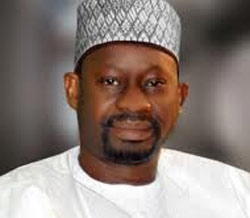
Gov. Dankwambo
By Adekunle Adekoya, General Editor
FORMER Accountant-General of the Federation, Alhaji Ibrahim Hassan Dankwambo was elected governor of Gombe State in the April 2011 elections. After swearing-in, he took stock of the state and declared that the top three items on his agenda for developing Gombe are Education, Education, and Education. Indeed, he has invested heavily in the state’s educational sector, evidenced by the construction and rehabilitation of many primary and secondary schools.
The tertiary sector is also feeling his impact as he is building a college of education and a school of basic and remedial studies. Of course, Gombe State University which he inherited is not left out. In this interview with select newsmen in his office in Gombe, Alhaji Dankwambo laments that it is an uphill task to get refunds when a state government, because of urgent needs, goes out of its way to do a federal road. Excerpts:
WhAT has your experience been like in the past two years?
We are coming from a state that was nowhere in the last 16 years. We are a state among those that receive the least funds from the Federation Account, and without facilities that can generate revenue. What is different in some other states is that facilities were there at inception that can be used to generate revenue. Like Lagos for instance, I don’t need to build Victoria Island again; I don’t need to build Ikoyi again.

Gov. Dankwambo
The houses are there because the government built them. So, anytime I wake up and impose all sorts of taxes, they don’t have choice, they have to pay and that is just it, tell them to pay and they pay. I don’t have such leverage of facilities in this place.
Leverage of faculties
I cannot charge even for water unlike in some other places where water is already provided, dams have been built, water has been piped and all they need to do is take control of revenue collections.
Here in Gombe, I don’t even have water. So, how can I charge water rate?
The most important thing is that we are optimally using the little resources we have to maximize benefit for our people.
It appears you have done much in the education sector and some other areas. What will you focus next?
There are still a lot of things to be done in the education sector because, in some places in Gombe, students are still studying under trees; so, we still have a lot to do. We still have a very poor teacher-student ratio and poor science and arts ratio in terms of personnel in the schools. We still have a lot of gaps because all the ongoing rehabilitation and new constructions will manifest in the future into additional costs of also running the institutions. In the next one or two years, the schools may be due for painting for example, so it is a continuous investment in education.
But the most important investment, going forward, is in teacher-training and re-training; in books investment and supply. Also, we are looking forward to a situation where we will partner, be it PPP or some other forms of financing, for the steady supply of books to children in Gombe State. What is very different about Gombe is that in certain parts, we still have to attract the children to school and keep them. There are some places in Gombe where we have good schools but the children still decline but we still try to attract more. Recently, we attracted some of them back to the schools, including girls.
When we came, we set up an agenda that will run for a long period of time and this agenda was endorsed by Gombe people and the agenda will be carried by anybody that comes to lead Gombe whether I or anybody else and we all agreed that, from time to time, we will sit down and review the agenda for development. It is not only for education, it is the same thing for health, infrastructure, trade and tourism. It is virtually the same thing for all the sectors of the economy. Some of the projects you have seen are the quick and short term deliverables.
How much is your administration supporting the gas power plant in the works for the state?
I am not very familiar with the project because this is some of the problems that we have sometimes. If it is a project or programme of the Federal Government, I may not be in the best position to shed light on it. I know also that the Federal Government has deliberately made effort to develop our coal reserves through the same channel. I am not sure of the arrangement but I know it is in one of the plans that about 1000 megawatts of coal power is in the pipeline.
I am also aware that the Minister of State for Power came to inspect the dam water project and she has made some comments especially on the way the concessionaire handled the project and they are determined to complete the project, which will fetch us about 40 megawatts of power within six months. If we can get 40 megawatts of power in Gombe, I will assure you that Gombe will not need PHCN and we can come out and guarantee power supply.
I also know that there are initiatives with the Germans too on a solar farm and the pattern of financing is still being worked out. But this huge gas reserves within the borders of Gombe and Bauchi is there and I am sure that they are making plans and as soon as they finish, maybe we will know because they will require at least our support and contribution. We are ready to support them to ensure that we don’t have blackout in Nigeria.
What is your administration doing to address the problem of water supply in Gombe State?
Fortunately or unfortunately for us, there are some places where you cannot get borehole water. You will dig as deep as 500 meters in some places in Gombe and not get water. So, the only solution is to get a dam or treated water which is piped. Fortunately, we have a dam in Gombe but it is about 45 to 50 kilometres, so we are drawing the water little by little and it is a huge investment. The first one we did; when the water came into Gombe, we had to distribute in and around Gombe and that cost us about N4.2 billion.
The next thing was to extend it to certain areas. In these areas, if you drive, it is like you are getting to almost the border of Gombe and in Gombe there is no ground water at all. So, we have succeeded in extending up to 78 kilometres of pipeline towards that side and that cost additional N1.8 billion.
Cost of treatment
The Gombe reticulation is almost 90 to 95 per cent completed. Also when you take dam water, you are also adding to the cost of treatment and cost of maintenance. When I came, we ran the dam at about N90 million a month. As at today, the cost of maintenance is about N242 million.
As the Accountant-General of the Federation, sitting over billions of Naira could you tell us what was the attraction for the governorship of Gombe?
(Laughs)I was not the president; it was the president that was sitting over billions. I was only helping him to manage the funds as a custodian. So, I wouldn’t know how to spend it because I did not have that kind of responsibility. On debt, when we came, we attempted to know and reconcile the exact liabilities and I want to tell you that this kind of reconciliation is continuous because the financial management was not as robust as it is now and we do not want to take it as a task to say ‘let us reconcile first, know the exact date and move forward.’
What we have attempted to do is to continue to reconcile as we progress and I am sure as soon as we finish establishing the number because I will soon inaugurate a committee to reconcile pension liabilities. Recently, committees were set up for states and local governments on pension liabilities.
In Gombe alone, pension liabilities are up to N2 billion plus and the local government is almost the same. So, if I say it is this and it is later reconciled and you find out it is lower, it will not be nice. But I assure you that it is not a problem because we have restructured our debt and we are within a very comfortable limit of debt revenue ratio. So we are very comfortable with that.
How are you financing the projects given Gombe State’s meagre resources ?
We have a very pragmatic financial management system and we tie our projects to cash flows. We are not that indebted. We inherited a lot of debt and what we did was to restructure the debt, so that we can create space for development.
We have a robust financial management system and I want to assure you that, as at today, there is no single certificate of valuation that is submitted to Gombe State that is not paid. I am not saying that we have all the funds to pay but we do little financial management to ensure that our obligations are paid as at when due.
Disclaimer
Comments expressed here do not reflect the opinions of Vanguard newspapers or any employee thereof.