By Shina Abubakar, Osogbo
Nigerian universities have been urged to leverage emerging environmental and social challenges to drive groundbreaking innovations that will promote sustainable development and benefit humanity.
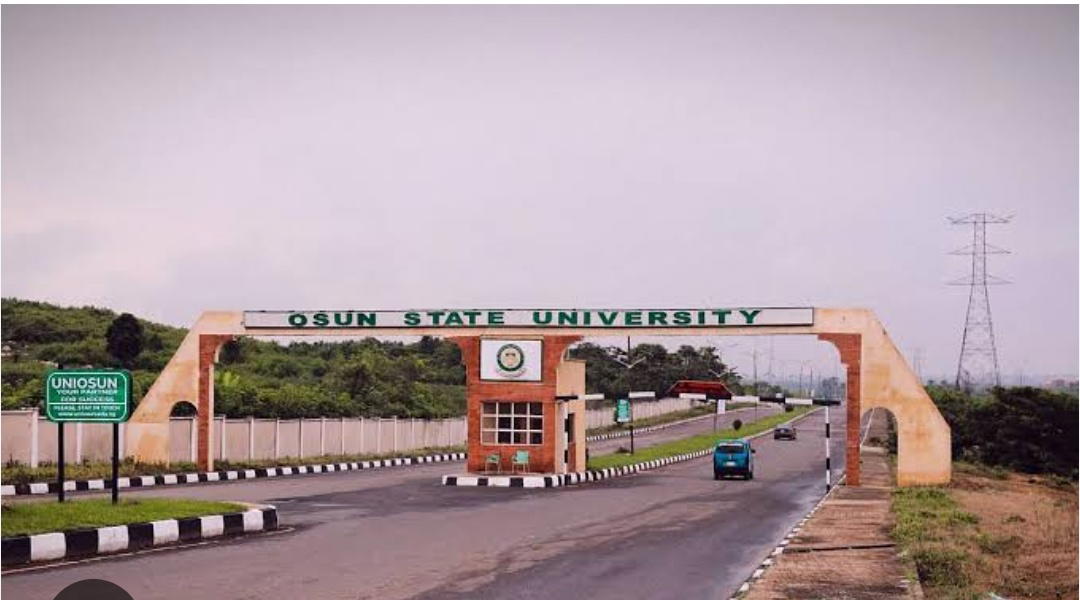
The call was made by Dr. Adesoji Tayo while delivering the Fifth College Lecture of the College of Science, Engineering and Technology at Osun State University (UNIOSUN), Osogbo. The lecture was titled, “Environmental, Social and Governance (ESG) Towards Sustainability: The Role of the University.”
Tayo said the challenges of the 21st century present higher institutions with a unique opportunity to move beyond their traditional roles of teaching and research to become centres for innovation and practical solutions to societal problems.
According to him, the world is grappling with interconnected challenges such as climate change, resource depletion, technological disruption, urbanisation, food insecurity, public health threats and socio-economic inequality, making it imperative for universities to adopt long-term planning and sustainability-driven policies.
He explained that Environmental, Social and Governance (ESG) principles provide a comprehensive framework for institutional transformation and sustainable development.
“The 21st century presents unprecedented challenges and unprecedented opportunities. Climate change, demographic shifts, technological disruption, urbanisation, food insecurity, public health threats and economic uncertainty demand new models of leadership and innovation. Universities cannot remain observers of these transformations; they must become architects of sustainable solutions,” he said.
Tayo noted that ESG is more than a corporate reporting framework, describing it as a philosophy of responsible leadership and a pathway to sustainable development.
“Its successful implementation depends on integrating science, technology, engineering and the built environment, working collaboratively to convert knowledge into innovation and innovation into societal value.
“ESG requires deliberate planning and phased implementation, measurable indicators, periodic evaluation, stakeholder participation and continuous improvement,” he added.
He stressed that universities must seize the opportunity presented by current global challenges to assume leadership in developing solutions that drive national development.
“The future university will be distinguished not merely by the excellence of its teaching or the volume of its publications, but by its capacity to solve problems, inspire innovation, strengthen communities and create opportunities for future generations. Its laboratories will become engines of discovery; its classrooms, incubators of leadership; its campuses, living laboratories of sustainability; and its partnerships, platforms for national and global transformation,” he said.
Earlier, the Vice-Chancellor of UNIOSUN, Professor Clement Adebooye, said the university had established the Global Affairs and Sustainable Development Institute to strengthen its contribution to sustainable development.
According to him, the institution will continue to expand research in renewable energy and other strategic areas capable of supporting national growth.
“The university will continue to expand research activities in renewable energy and other strategic areas capable of supporting national development. However, solutions to existing challenges may also create new ones that must be carefully managed,” Adebooye said.
Disclaimer
Comments expressed here do not reflect the opinions of Vanguard newspapers or any employee thereof.