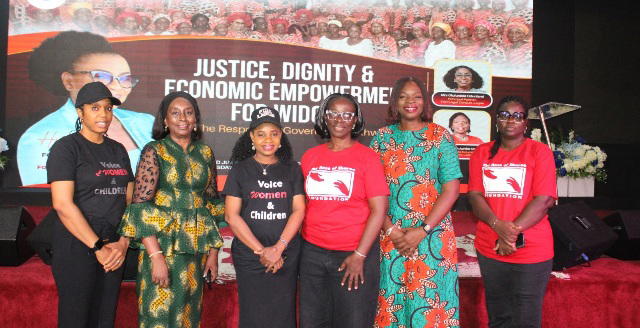
L-R: Barr. Cynthia Ibe, FIDA Lagos, Mrs Olufunmilola Odunlami, Principal Partner, FAO Legal Consult, Barr. Olubola Afolabi, FIDA Lagos, Dr Ndudi Bowei, ROSF Country Manager, Mrs Elizabeth Achike-Osegbue, MD, Freestates Educational Services, Mrs Oloruntosin Taiwo, ROSF NGO Coordinator.
By Precious Enaike
Widows, legal experts and development stakeholders on Tuesday called for the enactment of a dedicated law to protect widows in Nigeria, citing persistent cases of discrimination, property grabbing, social exclusion and economic hardship despite existing constitutional safeguards.
The call was made during the 2026 International Widows Day commemoration themed, “Justice, Dignity and Economic Empowerment for Widows: The Responsive Governance Pathway.”
Participants at the event lamented that many widows across the country continue to suffer violations of their rights, including denial of inheritance, loss of family property, housing discrimination and economic exclusion, urging government at all levels to move beyond policy declarations and establish enforceable legal protections.
Speaking at the event, the Coordinator of the Rose of Sharon Foundation, Mrs. Oloruntosin Taiwo, said International Widows Day provides a global platform to amplify the voices of widows and draw attention to their unique challenges.
According to her, widows remain among the most vulnerable groups in society, often facing multiple layers of hardship following the loss of their spouses.
She said: “International Widows Day gives us the opportunity to bring their challenges to the open and advocate for their rights. Many widows are going through a lot silently and are socially excluded. This day allows them to interact, smile and feel a sense of belonging.
“Widows face loss of property, loss of access to family resources, stigma, discrimination and, in some cases, separation from their children. These are realities many people do not see.”
Taiwo stressed that while some government policies exist to protect vulnerable groups, widows continue to experience systemic neglect and require targeted legal protection.
“We are advocating for a dedicated law that protects widows in Nigeria. Existing policies are not enough if they are not implemented. Widows are still being denied housing, inheritance rights and access to basic economic opportunities,” she said.
She also called for a review of existing policies and stronger implementation mechanisms, noting that many widows remain unprotected despite constitutional guarantees of dignity and freedom from discrimination.
Also speaking, Country Manager of the Rose of Sharon Foundation, Dr. Ndudi Bowei, described International Widows Day as a United Nations-recognised observance designed to spotlight the realities faced by widows globally and encourage policy reforms.
She explained that the observance was inspired by the experience of Lord Loomba’s mother, who endured severe hardship after becoming a widow in 1954, an experience that later evolved into a global advocacy movement for widows’ rights.
According to her, widows in Nigeria continue to grapple with structural and cultural barriers that undermine their welfare and dignity.
“Widows still face property grabbing, denial of inheritance rights, child custody disputes, housing discrimination and economic exclusion. While government and non-governmental organisations are making efforts, these interventions remain insufficient without a clear legal framework,” she said.
“Our major call to action is the need for a dedicated policy and law specifically tailored towards widows’ protection in Nigeria. We have policies, but we need stronger enforcement and a legal framework that directly addresses widows as a vulnerable group.”
Dr. Bowei further urged individuals and communities to take responsibility for supporting widows, saying their welfare should not be left solely to government intervention.
“Every individual must look around and support widows in their families and communities. It is not only about financial assistance, but about justice, fairness and inclusion,” she added.
She disclosed that the Rose of Sharon Foundation, established in 2008, has continued to support widows through vocational training, interest-free loans, educational assistance for children, healthcare interventions, agricultural empowerment and psychosocial support.
According to her, more than 1,000 widows and over 300 orphans across Nigeria currently benefit from the foundation’s programmes, which have expanded to include climate-smart agriculture and trauma support services.
Legal practitioner, Mrs. Olufunlola Odunlami, said widowhood should never translate into loss of dignity or legal rights.
She noted that despite constitutional protections, many widows continue to suffer disinheritance, property grabbing and social exclusion.
Odunlami called for stronger enforcement of existing laws and reforms of harmful customary practices that undermine the rights of widows.
In her presentation, economic empowerment advocate, Mrs. Elizabeth Osegbue, urged widows to pursue education, skills acquisition and personal development, describing empowerment as a matter of justice rather than charity.
“Widowhood is not a disability. A widow can accomplish anything a married woman can accomplish. Empowerment is not charity; it is justice,” she said.
The event also featured emotional testimonies from widows who shared their experiences of financial hardship, social isolation and the burden of single-handedly caring for their families after losing their spouses.
One of the widows, Mrs. Ijeoma Nwaogwu, said many women face severe economic challenges after the death of their husbands.
“When a man dies, the woman is left to pay school fees, rent and handle all household responsibilities alone. Widows do not have the same economic opportunities as married women,” she said.
Similarly, Mrs. Jacinta Ekwonye lamented the stigma often associated with widowhood, saying many widows are treated as though they have lost their value in society.
“When a woman loses her husband, she is often treated as if she has no value. But widows must not give up hope. Education and self-development remain key to survival,” she said.
Participants at the event unanimously called for stronger legal reforms, improved enforcement mechanisms and community-based interventions to ensure widows are protected from abuse and given opportunities for economic advancement.
The commemoration ended with a renewed appeal to government, policymakers and stakeholders to move beyond policy statements and implement concrete measures that guarantee justice, dignity and inclusion for widows across Nigeria.
Disclaimer
Comments expressed here do not reflect the opinions of Vanguard newspapers or any employee thereof.