By Juliet Umeh
Experts have identified technology adoption as a critical factor limiting the growth of women-owned businesses in Nigeria, urging entrepreneurs to embrace digital tools to move from survival to scale.
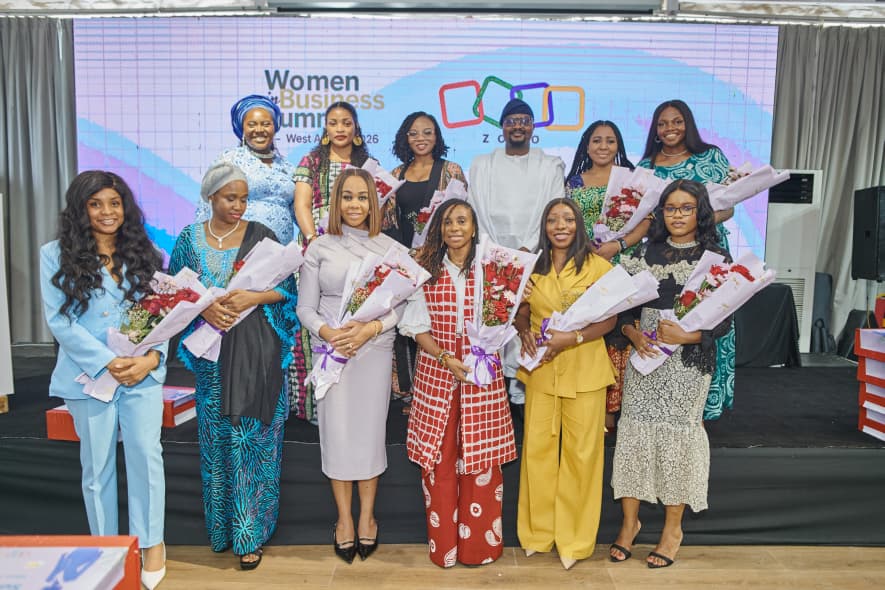
They made this known at the Zoho Women in Business Summit West Africa 2026 – Nigeria edition, where stakeholders highlighted how manual processes and fragmented systems continue to slow business growth across sectors.
Across Nigeria, women operate businesses in retail, logistics, technology and other industries, yet many struggle to expand beyond subsistence level. Analysts note that reliance on spreadsheets, social media for order management, and disconnected tools often hinder efficiency and decision-making.
Despite Nigeria ranking among countries with the highest rates of female entrepreneurship globally, many women-led businesses remain small. A 2025 Mastercard study, Empowerment for All, found that 83 per cent of Nigerian women consider themselves entrepreneurs, while data from the National Bureau of Statistics shows women own about 40 percent of Micro, Small and Medium Enterprises, MSMEs.
Speaking at the summit, Head of Marketing, Zoho Middle East and Africa, Praise Olusegun, said women entrepreneurs play a vital role in economic development but face persistent barriers.
“Many women start businesses from home, build companies from scratch, employ people, and contribute significantly to the economy,” she said. “However, access to finance, technology, and global markets often limits their ability to grow.”
Also speaking, Country Manager, Zoho Nigeria, Kehinde Ogundare, warned that manual processes are no longer sustainable in today’s fast-paced digital economy.
“When processes depend on individual knowledge, it becomes difficult to make fast, data-driven decisions. Fragmented systems lead to inefficiencies, errors, and delays that ultimately slow growth,” he said.
He explained that the solution lies in adopting integrated digital platforms that combine sales management, customer relationship management, financial systems, and operations into a single ecosystem.
“Technology should remove complexity, not create it. The right tools help entrepreneurs optimise operations, understand their customers better, and scale faster,” Ogundare added.
Experts at the summit noted that digital tools help bridge resource gaps by automating administrative tasks, improving customer management, and strengthening marketing efforts.
“Email marketing remains one of the most powerful ways to stay connected with customers,” Ogundare said.
They further explained that beyond operational efficiency, technology enhances business credibility through digital invoicing, automated payments, and integrated accounting systems, which help build customer trust.
Artificial intelligence, they added, is increasingly playing a role in business growth by analysing customer behaviour, predicting opportunities, and automating routine tasks.
Panelists at the event, including Chinanza Arize of Autogirl, Datari of Fernhill Digital and Digital Women Africa, Judith Didi of Apex Edge Consulting Corp, and Uloma, Sales Manager at Truecaller Business Nigeria, emphasised that technology alone is not sufficient for growth.
According to them, mentorship, knowledge sharing, and strong networks are equally important in helping women entrepreneurs scale their businesses.
“When women come together, ideas are exchanged, partnerships are formed, and new possibilities emerge,” the panelists said.
They urged women entrepreneurs to embrace digital tools, build strong networks, and seek mentorship opportunities to unlock growth and compete in an increasingly digital economy.
Disclaimer
Comments expressed here do not reflect the opinions of Vanguard newspapers or any employee thereof.