By Ebunoluwa Sessou
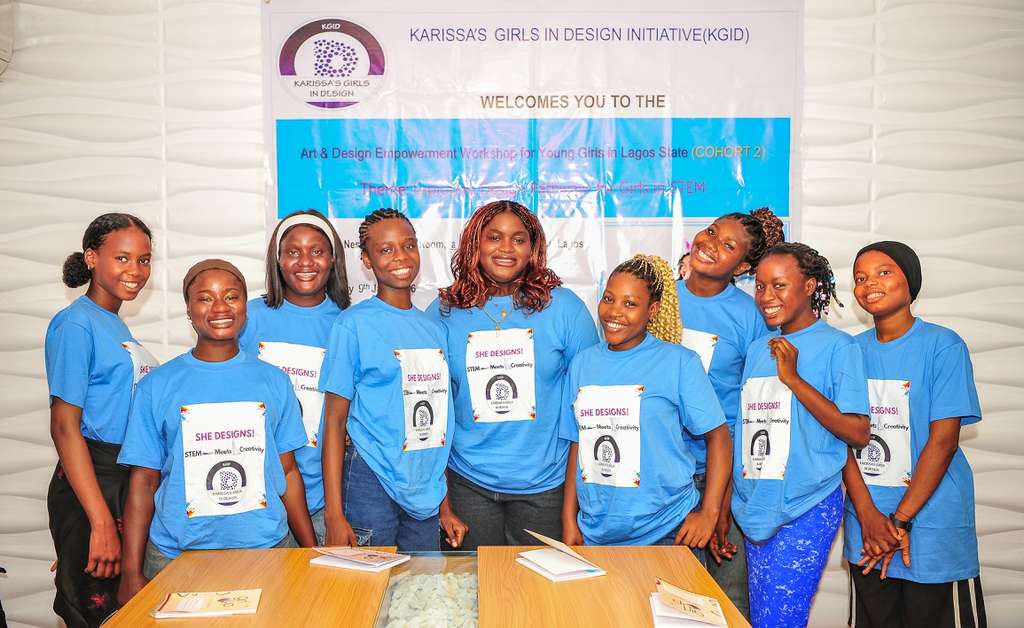
In a deliberate effort to challenge long-standing perceptions of Science, Technology, Engineering, and Mathematics, as well as STEM careers in Nigeria and across Sub-Saharan Africa, Karissa’s Girls in Design Initiative (KGID) has empowered young girls through its annual Art & Design empowerment workshop, aimed at positioning design as a viable and rewarding career path.
The second workshop cohort, organized by KGID, was held in Lagos under the theme “Exploring Design Pathways for Girls in STEM.” Young girls who registered for the programme received guidance and mentorship in design-related disciplines.
Across Nigeria and much of Sub-Saharan Africa, STEM careers are often narrowly defined as medicine, engineering, and core technology fields, with limited attention to design-based professions such as architecture, product design, interior design, fashion, and graphic communication. Yet many of these design disciplines are globally recognized as high-value and well-paid professions. This narrow framing has contributed significantly to the persistent gender gap in design education, with young girls underrepresented in enrollment, retention, and completion rates.
Speaking during the workshop, the Founder of KGID, Karissa Idoko, attributed the disparity largely to limited access to role models, mentorship, and early career guidance. “Girls belong in STEM and design spaces,” she said. “Design combines creativity with reasoning and plays a critical role across industries, from technology and engineering to media and urban development.”
Participants were introduced to diverse design career pathways, including architecture, industrial and product design, interior design, graphic design, and fashion design. The programme also highlighted design degree options available in Nigerian universities, while interactive sessions encouraged the girls to reflect on their interests, strengths, and long-term aspirations, reinforcing the message that design careers are both accessible and impactful.
Idoko, who is also the Creative Director, is a final-year student in Interior Architecture and Design at Abilene Christian University in Texas. She noted that the “She Designs” workshop series is built on mentorship, representation, and early exposure as critical tools for closing gender gaps in creative and design education.
Looking ahead, she expressed determination to expand the initiative’s reach, stressing that while the second cohort in Lagos marked a significant milestone, many young girls across Nigeria still lack early exposure and guidance in design-related careers.
She called on practicing architects, interior designers, product designers, fashion designers, graphic designers, and other professionals in the design ecosystem to volunteer as mentors for future cohorts. She also expressed optimism about mobilizing partnerships and sponsorships to scale the program and extend its impact to underserved communities.
According to Idoko, sustained mentorship and adequate resourcing remain critical to closing persistent gender gaps in design education. Through Karissa’s Girls in Design Initiative (KGID), she envisions building a strong pipeline of confident, well-supported young women who will pursue and complete design degrees and contribute meaningfully to Nigeria’s creative and built environments.
The impact of the workshop was evident in participants’ feedback. A senior secondary school student said the session helped her “realize that design is not just about drawing, but about solving real problems that affect people’s lives.” Another participant described the facilitator’s experience-sharing and interactive discussions as making design “achievable and exciting,” and added that she now feels more confident discussing design as a future career option.
In her response, Queen Lebi said, “What I learned today is that you don’t have to focus on just one thing or limit yourself to a single career path. You don’t always know exactly what you will become, so it’s important to do what you love and what inspires you most. I learned that it’s possible to combine two or even three interests, especially when they align with your passion.”
“Before now, I wanted to be a nurse because I am in the science class, and I thought my only options were careers like being a doctor or a nurse. So, I chose nursing. However, today I learned that I could add other skills and interests to it. I also have hands-on skills that I enjoy, and now I understand that I can combine them with science to reach a wider audience.”
“I have also learned that design plays an important role even in the medical field. STEM careers encompass more than just doctors and related professions, such as nurses; design, creativity, and innovation also matter. I have learned a lot today, and I am ready to learn more, grow more, and use my skills to make the world a better place”, she said.
Disclaimer
Comments expressed here do not reflect the opinions of Vanguard newspapers or any employee thereof.