By Olayinka Latona
Non-Governmental Organisations (NGOs) have urged governments at all levels to move beyond rhetoric and invest in infrastructure that supports Non-Motorized Transportation (NMT), such as walking and cycling.
According to the groups, building dedicated pedestrian and cycling facilities will encourage citizens to embrace healthier alternatives to cars, buses, and motorcycles—helping to reduce the severe air pollution plaguing many Nigerian cities. The World Health Organisation (WHO) estimates that 46,750 people in Nigeria die annually from outdoor air pollution.
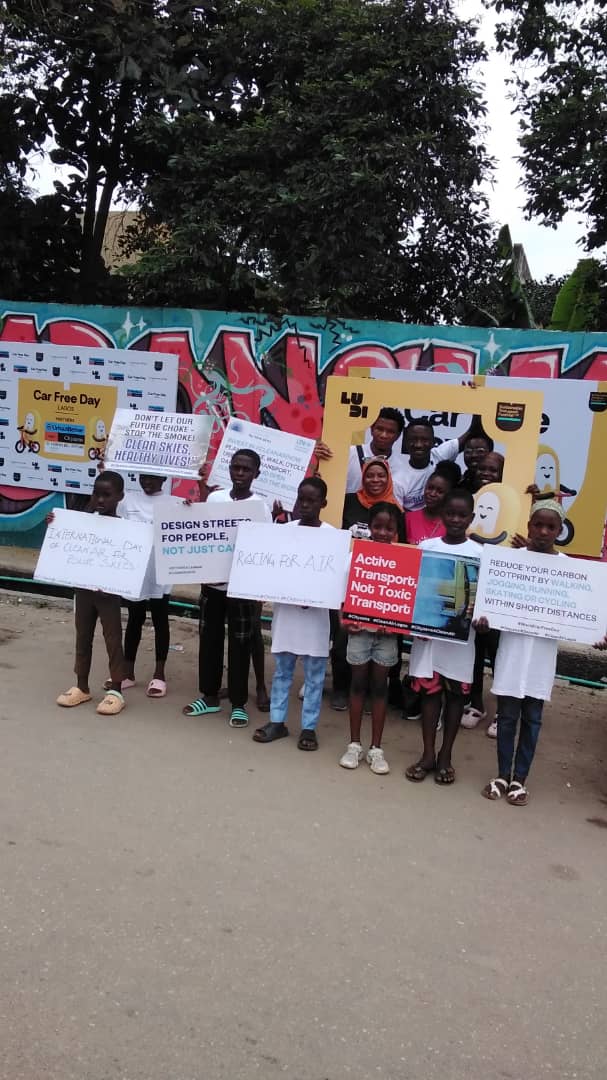
The call was made during community sensitisation campaigns organised by the Lagos Urban Development Initiative (LUDI), in partnership with Heinrich Böll Stiftung (HBS) and UrbanBetter Cityzens Hub, to mark the International Day of Clean Air for Blue Skies and Car-Free Day.
Speaking at the third edition of the event in Oworonshoki, Lagos, Miriam Adenuga, Project Manager and Coordinator of the Sustainable Transport Festival for LUDI, said:
“We are advocating for a shift from motorised transportation to active modes like walking and cycling. This will not only improve air quality but also reduce emissions from vehicles. We want safer infrastructure for cyclists and pedestrians, as well as car-free streets that protect community members. Cycling lanes should be separate from major roads, and enforcement is needed to prevent business activities from encroaching on them.”
Similarly, Waziri Mainasara, Coordinator of UrbanBetter Lagos Cityzens Hub, stressed the role of awareness and education in driving change:
“At UrbanBetter, one of our focal points is air pollution. On this occasion, we are encouraging citizens to leave their cars and use bicycles. Vehicle emissions harm both human health and the environment. Our hope is that communities will demand walking and cycling lanes, ensuring safety for all road users. Streets are not for cars alone; they belong to people too.”
Mainasara added that beyond health, such infrastructure strengthens social bonds:
“Dedicated walking and cycling lanes foster community living and help people connect with one another.”
The NGOs have extended their campaign to communities in Agege, Bariga, Ikeja, and Oworonshoki, working with local leaders and government representatives to raise awareness about the causes of air pollution and practical steps residents can take to protect their environment.
Mr. Olanrewaju Adeyehun, Vice Chairman of the Urban Renewal CDA under the Oworonshoki Development Area, described the initiative as timely:
“This is laudable because transportation should not be limited to those who own cars. Roads must also serve cyclists, bikers, and pedestrians.”
Disclaimer
Comments expressed here do not reflect the opinions of Vanguard newspapers or any employee thereof.