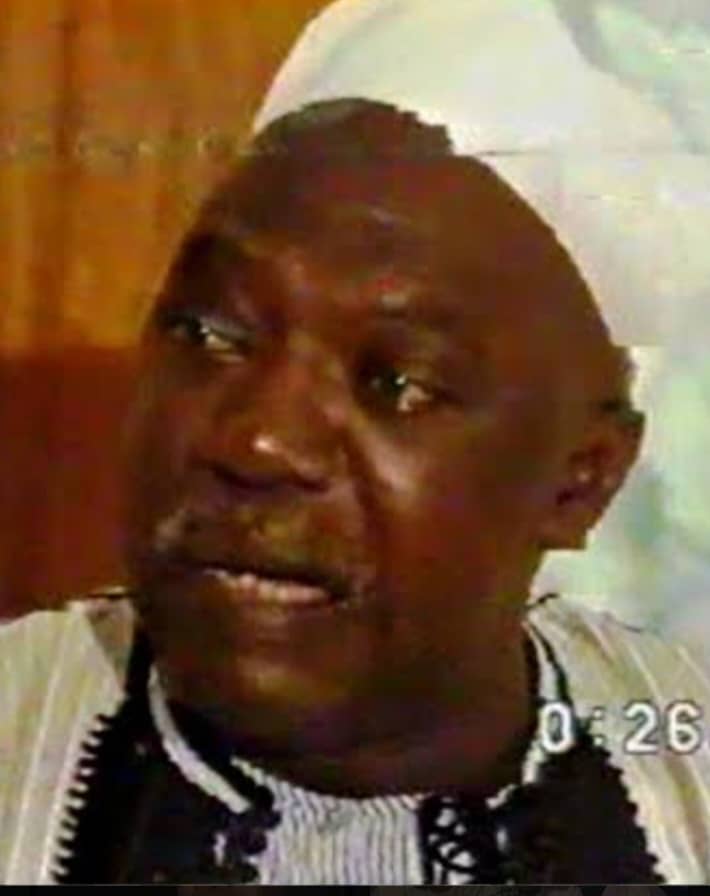
— Gwadabe Calls for Leadership Renewal, Educational Investment
By Ibrahim Hassan-Wuyo
KADUNA – Thirty years after the passing of General Hassan Usman Katsina, one of Northern Nigeria’s most respected military and political figures, a former military officer, Colonel Lawan Gwadabe (rtd), has urged Northern leaders and citizens to reflect on the late general’s legacy and take urgent steps to address the deepening crisis in the region.
Speaking under the banner of the New Vision Development Initiative (NEVDI) at a press conference in Kaduna, Gwadabe used the 30th anniversary of Gen. Katsina’s death to highlight what he described as the “existential challenges” plaguing the North—poverty, insecurity, illiteracy, and poor governance.
“This meeting today is in his honour. It is also a wake-up call to our people and our leaders,” Gwadabe said.
He described Gen. Katsina as a soldier, statesman, and peacemaker, whose leadership during some of Nigeria’s darkest moments was marked by compassion, vision, and courage.
Born on March 31, 1933, into the royal Fulani family of Katsina, Hassan Usman Katsina rose from Barewa College and the Royal Military Academy Sandhurst to become Nigeria’s first Military Governor of Northern Nigeria in the aftermath of the January 15, 1966 coup. Gwadabe recalled Katsina’s pivotal role in calming tensions following the assassination of key Northern leaders, including Premier Ahmadu Bello.
“He accepted the surrender of Major Nzeogwu and personally toured Northern cities to counter false narratives and prevent further bloodshed,” he said.
During the Nigerian Civil War, Katsina was appointed Chief of Army Staff in 1968 and oversaw key operations that led to the end of the conflict. Gwadabe praised his emphasis on humane warfare and his drafting of the military’s code of conduct, which promoted respect for prisoners and civilians.
“To General Hassan, the rebels were our brothers—misguided, not enemies,” Gwadabe said.
After retiring from the military in 1975, Katsina remained deeply involved in regional and national affairs. His Kaduna home became a meeting ground for intellectuals, former generals, technocrats, and traditional rulers, where policy issues were debated and solutions crafted. He mentored a generation of future leaders, including Col. Umar Dangiwa and Gwadabe himself.
Gwadabe highlighted Katsina’s staunch opposition to the Almajiri system and his advocacy for education and agriculture as tools of economic liberation. He recalled how Katsina confronted underperforming leaders directly and championed urgent action in crisis zones.
“He once ordered Governor Dabo Lere to go to Southern Kaduna himself to quell a crisis. That was his style,” he said.
However, Gwadabe painted a grim picture of the current state of Northern Nigeria.
“The North today is the poorest of the poor. We have the highest number of out-of-school children and the worst development indices. This is not accidental. It is man-made,” he lamented.
He expressed disappointment over the underfunding of the National Commission for Almajiri and Out-of-School Children Education—an initiative he said embodies the vision Katsina worked for.
“If it is not funded, it risks becoming just another political gimmick,” he warned.
Gwadabe also criticized the country’s culture of forgetting its heroes.
“This culture of indifference has turned good leaders into bad ones. Why make sacrifices for a country that won’t remember you?”
He urged political leaders in the North to emulate the values of service, humility, and foresight embodied by Gen. Katsina, warning that leadership is a burden, not a throne.
“We must use the life of General Hassan as a new template. If we are to copy the leadership style of our predecessors, so be it,” he declared.
As NEVDI prepares to host the 2nd Gen. Hassan Usman Katsina Memorial Conference later this year, Gwadabe called on Northerners to reflect deeply on their past and recommit to a future built on education, service, and unity.
Disclaimer
Comments expressed here do not reflect the opinions of Vanguard newspapers or any employee thereof.