…programme to reduce poverty, boost nutrition -IFAD
By Gabriel Ewepu
ABUJA – IN a bid to upscale food production and transform the rural economy, the Federal Government and International Fund for Agricultural Development, IFAD, Tuesday, partnered Global Center for Adaptation, GCA, on Climate Resilience and Adaptation to offer technical assistance for the Value Chain Programme in Northern Nigeria, VCN.
This was made known by the Minister of Agriculture and Food Security, Senator Abubakar Kyari, in a keynote address delivered at the the Launch Workshop of GCA Technical Assistance to the Value Chain Programme in Northern Nigeria, VCN, where Kyari described the partnership as pivotal, saying it will promote inclusive economic growth and rural development, adds vital value to the programme.
Represented by the Director, Projects Coordinating Unit, PCU, Federal Ministry of Agriculture and Food Security, Bukar Musa, the Minister expressed optimism that the programme will accelerate implementation as far as the Joint Roadmap for Accelerated Startup signed on May 7th by the Government of Nigeria and IFAD during a High-Level, which the Vice President, Senator Kashim Shettima is concerned.
He also commend efforts of IFAD for the initiative for the proposed Value Chain Programme in Northern Nigeria as it indicates the dedication and commitment of IFAD to ensuring that the project works in alleviating the agricultural sector of the country.
Basically, the VCN to add value and improve the livelihoods of smallholder farmers, by boosting the value chains that would bring about higher productivity and profitability, and creating more market access.
The initiative which is in accordance with President Bola Tinubu’s declaration of emergency on the agricultural sector including the National Agricultural Technology and Innovation Policy, NATIP, the Food System Transformation Pathways and the 8-point Renewed Hope Agenda, will ensure poverty reduction, better nutrition, and creating resilience in the rural populations of the nine northern states of Nigeria.
It is being financed by the Federal Government of Nigeria, International Fund for Agricultural Development, IFAD, and Agence Française de Développement, AFD.
Meanwhile, the programme also aligns with a United Nations Sustainable Development Cooperation Framework (UNSDCF 2023-2027), IFAD Nigeria Country Strategic Opportunities Programme (COSOP 2024-2029) and AFD Nigeria Country Intervention Strategy.
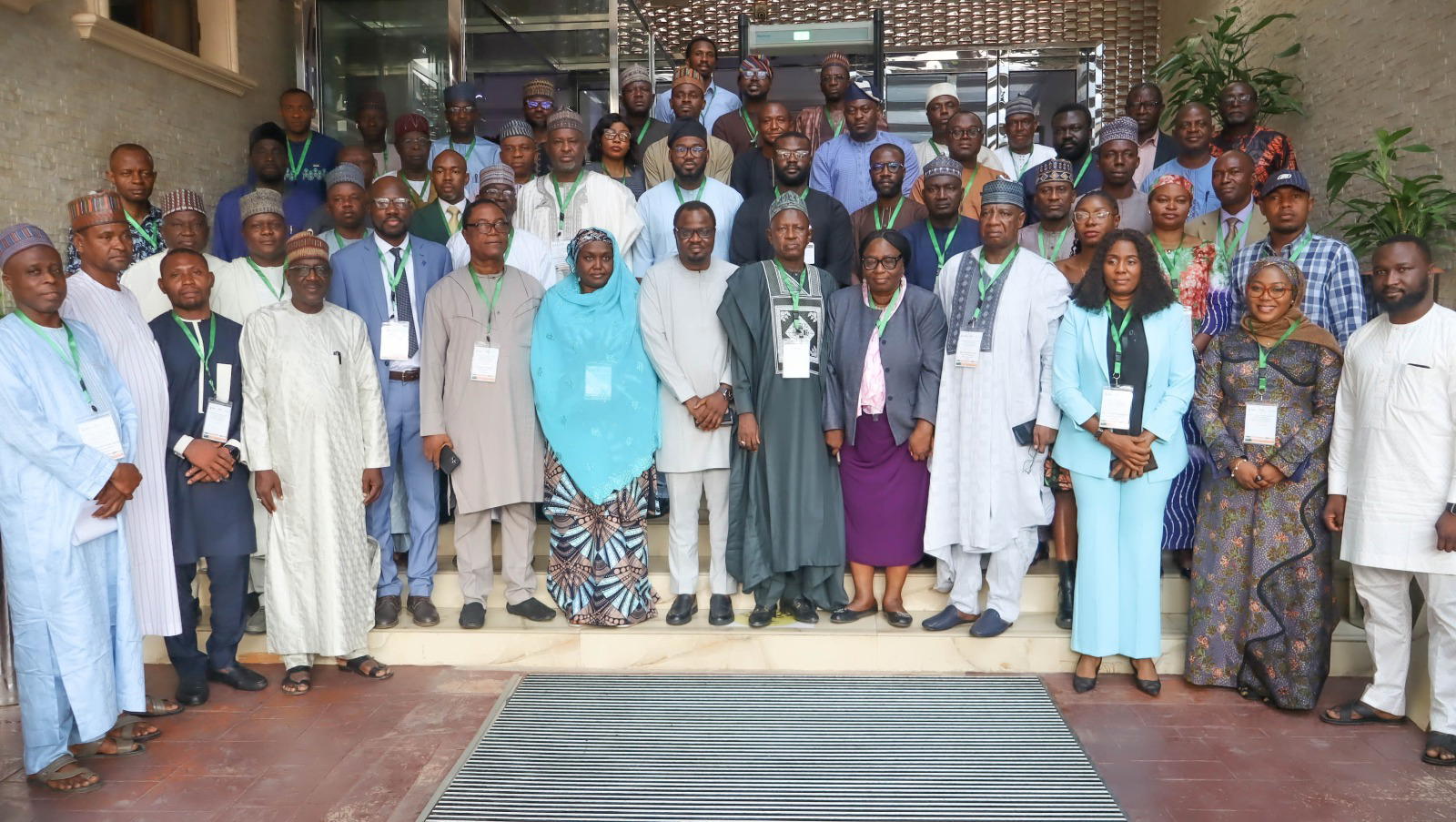
The workshop was attended by the Federal Ministry of Agriculture and Food Security, VCN states’ officials, environment and experts, Commissioners of Agriculture and Permanent Secretaries, Islamic Development Bank, World Bank, African Development Bank, Food and Agriculture Organization, FAO, World Food Programme, WFP, National Council on Climate Change, Nigeria Meteorological Agency, NiMet, and others.
He said: “This ambitious initiative, by Global Center on Adaptation (GCA) greatly underscores our collective commitment to addressing the pressing challenges posed by climate change. As many of you are aware, the northern states of Nigeria play a crucial role in our nation’s agricultural landscape, particularly in both food and cash crops agricultural production. However, they also face significant vulnerabilities due to climate variability and extreme weather events.
“The Value Chain Programme in Northern Nigeria will represent a strategic response to these challenges. By focusing on enhancing climate resilience throughout the agricultural value chain, from production to market access, we aim to ensure sustainable food and nutrition security for our people. This initiative will not only strengthen the resilience of smallholder farmers but also promote inclusive economic growth and rural development.
“This partnership with GCA serves as a testament to our shared commitment to innovation and partnership in pursuit of a climate-resilient future. Together, we will leverage cutting-edge adaptation solutions, scientific expertise, and best practices to safeguard our agricultural sector against climate impacts and ensure a Food and Nutrition Secure Nigeria.
“The technical assistance that will be implemented by Genesis Analytics, a global impact firm, will help equip us with; a deeper understanding of climate vulnerabilities across selected key value chains; a robust adaptation strategy to help address climate vulnerability in each selected value chain; a medium-term climate finance mobilization plan to increase investment in climate resilience and accelerated strategy for the implementation of the Digital Innovation Action Plan (DIAP).
“I strongly believe that the Value Chain Programme in Northern Nigeria will not only meet its objectives but will also serve as a model for sustainable agricultural development in the face of climate realities.”
Earlier, the Country Director, IFAD Nigeria, Dede Ekoue, lauded the Federal Government of Nigeria including the Federal Ministry of Agriculture and Food Security; Federal Ministry of Finance; Ministry of Environment, participating States under VCN, and development agencies as well as the co-financing AFD for their steadfast commitment and efforts made to design the VCN project in a participating manner and in alignment with national policies and regional priorities to transform the agricultural landscape of Northern Nigeria.
“The VCN Programme is a bold step by the Federal Government to transform the agrifood systems for food security, inclusive and resilient growth in line with the Renewed Hope Agenda.
“The project aims to sustainably reduce poverty, enhance nutrition and better resilience and income of smallholder farmers and most vulnerable populations in the nine northern states, which include Borno, Bauchi, Kano, Katsina, Kebbi, Jigawa, Sokoto, Yobe and Zamfara.
“This programme will leverage existing and new initiatives in the northern region to catalyze transformation success while also connecting with Special Agro-Industrial Processing Zones (SAPZs) for win- win benefits for food security, the farmers, youth and women agro-processors and agro-industries.
“Through the VCN, the Federal Government is partnering with national and international development partners to Fast-track the nexus humanitarian, peace and development by harnessing the potential of the region for the sustainable achievement of the following priorities; ensuring food security and nutrition; promoting economic development; and ensuring social resilience including climate resilience and social cohesion among Nigeria’s Northern rural populations.
“This workshop is not just a launch but a collective space for us to co-create solutions and reaffirm our shared responsibility in addressing the climate challenges through practical and digital solutions that help strengthen food systems and advance rural development in Northern Nigeria.
“The success of this technical assistance and indeed of the broader VCN programme depends on sustained collaboration, local ownership, and adaptive learning. IFAD is committed to ensuring that this process is inclusive, transparent, and anchored in the real needs of the communities we serve”, she said.
On his part, the Senior Program Officer, Food Security and Rural Wellbeing, GCA, Oluwabunmi Ajilore, the underscored the crucial role played in partnership to tackle climate change challenges.
“The programme is not only about protecting farmers, but also about reinforcing Nigeria’s broader food security framework.
“Strong partnerships are essential to maximizing the impact of climate adaptation investments. This programme is not only about protecting farmers, but also about reinforcing Nigeria’s broader food security framework.
“The tools we’re introducing will guide stakeholders in assessing risks, evaluating adaptation options, and crafting effective response strategies.
“Given Northern Nigeria’s pivotal role in national food production, the region is a key target for this intervention. With increasingly unpredictable weather patterns and climate pressures, the initiative aims to equip farmers with the resources and knowledge needed to adapt and sustain agricultural productivity.
“Enhancing the region’s food systems directly contributes to national food security. Our goal is to empower farmers, fortify value chains, and foster collective resilience against climate risks”, he added.
Meanwhile, according to a representative of Genesis Analytics, Rotimi Etomi, the technical assistance component of the VCN project is structured into six key phases, spreading across the year, “This includes the inception phase, climate vulnerability and impact assessment, climate adaptation strategy development, campus development sessions, adaptation financing mobilization, and digitization support.
“We are currently in the inception phase, which includes this workshop. Our aim is to support the integration of climate adaptation and digital tools into selected agricultural value chains while unlocking climate financing to enhance resilience.”
Disclaimer
Comments expressed here do not reflect the opinions of Vanguard newspapers or any employee thereof.