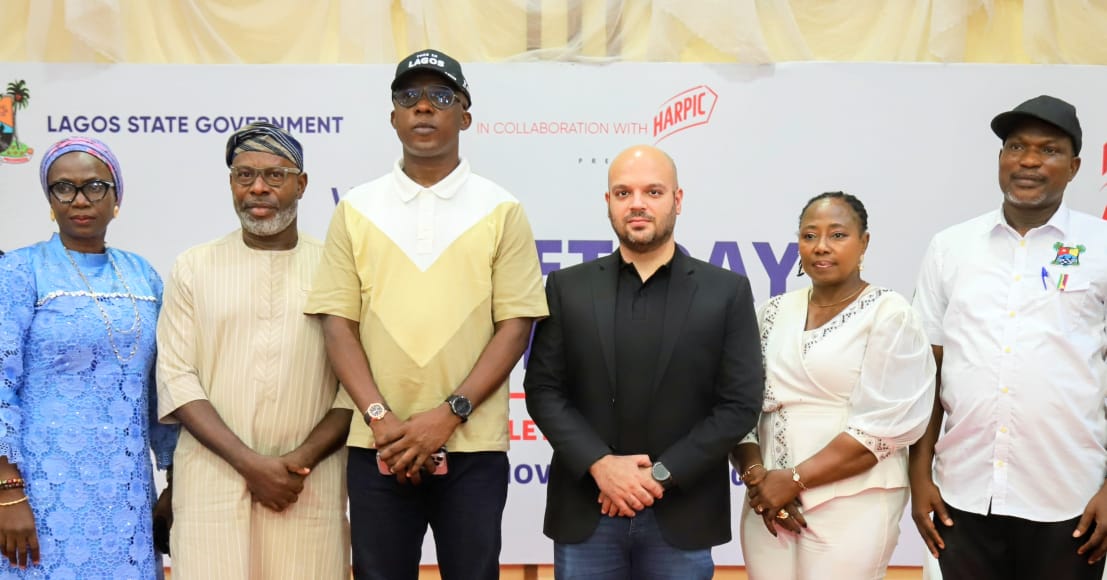
L-R; Representative of the Permanent Secretary, Office of Enviromental Services and Director, Environmental Education Unit, Office of Environmental Services, Mrs. Monsurat Banire; Permanent Secretary, Office of Drainage Services, Engr. Mahamood Adegbite; Hon. Commissioner for The Environment and Water Resources, Mr. Tokunbo Wahab; Reckitt Category Manager, Hygiene, Sub-Saharan Africa, Mr. Nas Hassim and the guest Lecturer, Prof. Basirat Oladipupo-Folarin, during the Year 2024 World Toilet Day celebration, held on the 19th of November, 2024, at Adeyemi Bero Auditorium, the Secretariat, Alausa Ikeja, Lag… Read more
…as Lagos steps-up construction of 100 public toilets, others
By Olasunkanmi Akoni
A university don, and environmental stakeholders in Lagos have stressed the need for urgent collaborative efforts to eliminate the menace of open defection towards achieving the Sustainable Development Goals, SDGs 6, water and sanitation for all by year 2030 in the State.
Meanwhile, the Lagos State Commissioner for the Environment and Water Resources, Tokunbo Wahab, has said that the government is stepping up efforts to bridge the infrastructure gap and achieve Open Defecation Free, ODF, with construction of 100 units of public toilets among other measures across the metropolis.
Wahab, Deputy Vice Chancellor, Lagos State University of Science and Technology, Ikorodu, Prof. Basirat Oladipupo, and other stakeholders, spoke on Tuesday, during the commemoration of the year 2024 World Toilet Day, with the theme: “Use the Toilet and Have Peace,” held at Alausa, Ikeja, Lagos.
The commissioner, in his address, stressed that as part of Governor Bababjide Sanwo-Olu-led administration’s determination to combat open defecation head-on, had launched Water Sanitation Hygiene, WASH Policy.
Wahab noted that World Toilet Day stresses the importance of toilets and raises awareness of the 4.2 billion people living without access to safely managed sanitation.
He added that it was also about taking action to tackle the global sanitation crisis and achieve Sustainable Development Goal, SDGs 6, water and sanitation for all by 2030.
According to Wahab, “The National theme focus on the fact that, for billions of people, sanitation is under threat from conflict, climate change, disaster and neglect.
“When sanitation services are destroyed, damaged or disrupted, untreated human waste spreads in the environment, unleashing deadly diseases such as cholera, diarrhea which affect community health and the well-being of citizens.
“The indiscriminate open defecation in Lagos State has become pronounced in various open spaces across the metropolis as a result of the influx of people that come into the State on a daily basis.
“Statistically, a recent national survey on Water, Sanitation and Hygiene National Outcome Routing Mapping (WASHNORM) 2021 reported 3 per cent of Open Defecation in Lagos State.
“Therefore, this is to proffer solution to the sanitation challenges in the State and collaborate to achieve an ODF, Lagos.”
In addressing the trend of Open Defecation in the State, he said “this government had developed a four cardinal roadmap which are :- Advocacy/Sensitization; Bridging Infrastructure Gap; Standardization and Regularization of existing facilities and ensuring Adequate Monitoring and Enforcement.
“To this end, this ministry had taken the campaign to the grassroots and launched the Clean Nigeria Use the Toilet Campaign in 13 Local Government Areas, LGAs, out of the 20 LGAs in Lagos State; Sanitation Engagement Interaction with Community Development Committees at 22 LGAs/Local Council Development Areas, LCDAs; Organized developmental Training for 250 Public Toilet Operators and Janitors in the State; rolled out a comprehensive Operational Guidelines to guide the operation of public toilets in the State in order to achieve an effective service delivery.”
Wahab disclosed that also in year 2024, the ministry ensured the upgrade and regularization of 16 privately owned public toilets; while the government effort to bridge the infrastructure gap with construction of 100 toilets units is at the top gear.
“Furthermore, the Ministry also cleaned-up several open defecation black spots and installed Environmental Warning Signage against open defecation across the State.
“Additional hands were engaged to boost the performance of the Anti-open Open Defecation Squad covering Lagos Island and Ojodu Berger area of the Lagos-Ibadan Expressway to curb Open defecation along the road median.
“This event therefore aims to raise awareness for the sanitation crisis and to mobilize global, national and community efforts to improve hygiene, change social norms and eliminate open defecation by making sanitation development a priority in Lagos State.”
Also, Oladipupo, made the call in her paper presentation titled: “The vital role that access to safe and hygiene toilets facilities plays on fostering health, dignity, and peace of mind.”
According to her, “Sanitation may seem like a basic, taken-for-granted amenity for some, yet over 3.6 billion people—nearly half the world’s population—still lack access to safely managed sanitation facilities.
“These numbers are not mere statistics but stark reflections of the daily challenges faced by millions in managing basic hygiene, dignity, and health. This paper argues that by prioritizing the construction and use of toilet, we can create a more peaceful and equitable world.
“On health implications, the lack of access to safe toilets is a leading cause of various waterborne diseases, including cholera, typhoid, and diarrhea. These diseases are often deadly, particularly for young children, the elderly and vulnerable populations.
“In Nigeria, inadequate sanitation is linked to preventable illnesses that burden families, communities, and the healthcare system. When people lack access to toilets, they are forced to practice open defecation or use unhygienic facilities, exposing themselves and others to dangerous pathogens.
“By ensuring that all individuals have access to safe and clean toilets, we can prevent the spread of diseases and reduce mortality rates. Access to proper sanitation facilities not only keeps people healthy but also supports their nutritional well-being, as frequent illnesses associated with poor sanitation can impair nutrient absorption, particularly in children.
“Improved sanitation facilities can lead to healthier communities and contribute to a nation’s economic and social progress.”
In calling for action, she urged government to encourage partnerships with businesses, Non-Governmental Organisations, NGOs, and other stakeholders willing to invest in sustainable sanitation solutions, making sanitation improvements a collaborative effort.
Oladipupo, maintained that government must invest in infrastructure by prioritizing priotizing construction and maintenance of public sanitation facilities, especially in high-density and underserved areas.
According to her; “As we commemorate the day, Lagos stands in solidarity with the rest of the world to recognize the necessity of adequate sanitation facilities. To achieve SDGs 6.2, which targets access to adequate and equitable sanitation for all, we must collaborate across government, communities, and private sectors to ensure that no one is left behind. In this respect, our task is both significant and urgent.”
Other speakers on the occasion also harped on the need for collaborative efforts to eliminate the menace of open defecation and ensure a sustainable safe environment for all by year 2030.
Disclaimer
Comments expressed here do not reflect the opinions of Vanguard newspapers or any employee thereof.