By Kenneth Oboh
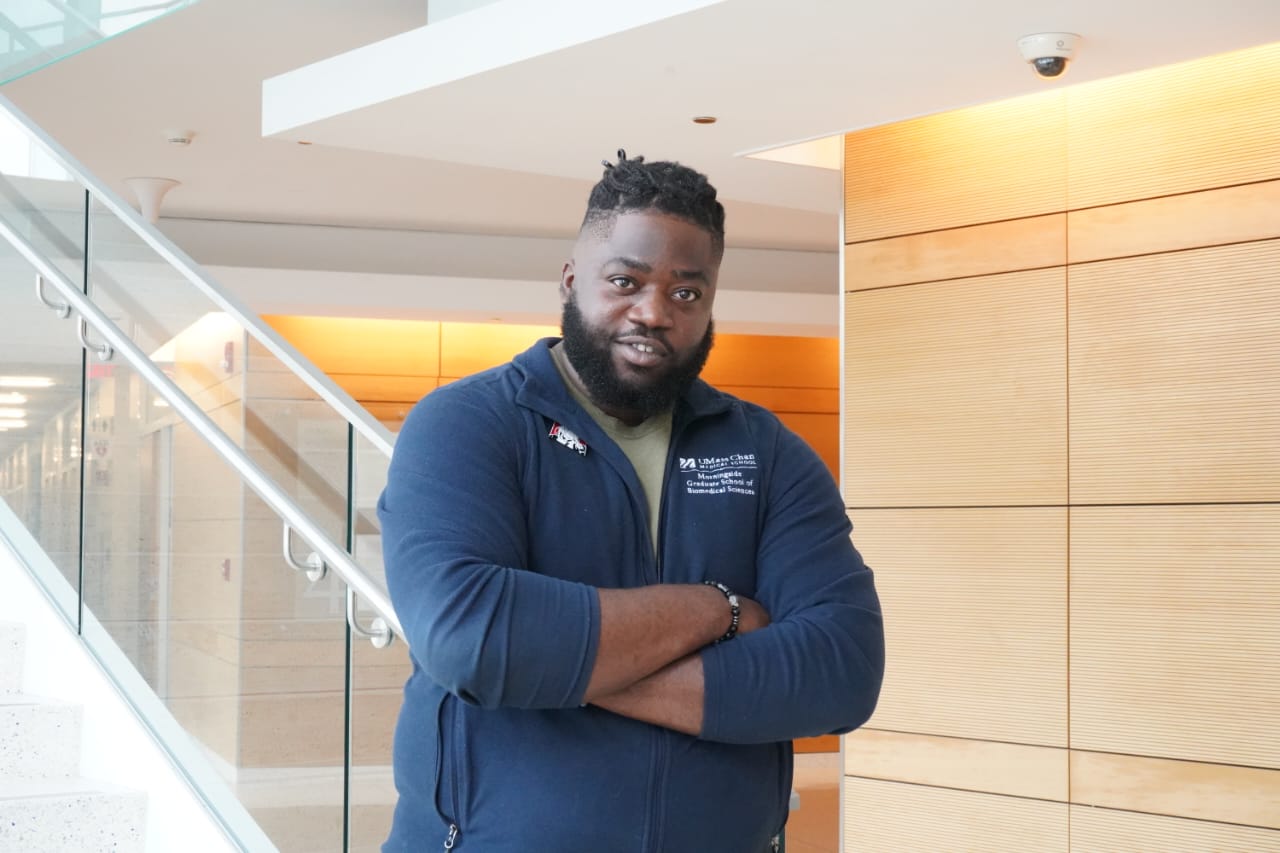
Nnaeme Ukabiala is an accomplished scientist, Senior Research Associate, and Project Lead at Novo Nordisk/Dicerna Therapeutic in the US, whose expertise has gained international recognition. With a Bachelor’s and Master’s degree in Integrative Neuroscience, he brings over three years of experience in both academic and industry research. Driven by a passion for developing innovative therapeutics for rare neurological disorders, Ukabiala offers valuable insights into his academic journey, key milestones, and future directions for enhancing biomedical practice in this engaging virtual Q&A with journalists.
What inspired you to pursue a career in biomedical science?
I wanted to help people. Originally, I wanted to pursue a career in medicine to help ailing members of my extended family. I had an aunt with epilepsy and an uncle with schizophrenia; so I was driven to help them. I was especially driven to do something when I saw my aunt labeled as a “demon-possessed” woman just because of an epileptic episode.
I went to medical school and eventually ended up in biomedical research when I realized that I did not want to make a change clinically in a hospital, but biochemically in a lab.
Can you describe your most significant academic achievement?
My most significant academic achievement so far is getting into the prestigious UMass Medical School GSBS (PhD) program. While here, I joined the lab of the head of the RNA Therapeutics Institute, Philip Zamore. This trumps my Master’s from Georgetown, my undergrad at Baylor, and even my time spent studying medicine at the University of Debrecen from ages 17 to 19.
What challenges have you faced during your academic journey, and how did you overcome them?
So, during my academic journey, I encountered several challenges that required resilience and creativity to overcome. One of the primary challenges was a lack of resources. I frequently had to pursue scholarships and find innovative ways to earn money to support my education.
As a Black man in America, I faced racism at every institution I attended. The severity of these experiences varied, but each instance demanded clever strategies and perseverance to navigate successfully and achieve my goals.
Which diseases or areas of research are you most passionate about, and why?
I am particularly passionate about genetic and genomic diseases. My current studies focus on DNA and RNA Biology. This was driven by my belief in the potential to cure various illnesses through a comprehensive understanding and manipulation of our genetic systems. While all areas of research hold significant importance, I find that investigating DNA and RNA mechanisms in model organisms is crucial.
This research not only enhances my understanding but also contributes to the development of innovative tools such as RNA interference (RNAi) and CRISPR, which have significantly accelerated advancements in the therapeutic industry.
How has your academic background prepared you for your current role?
My academic background in Neuroscience, with both Bachelor’s and Master’s degrees, has been instrumental in preparing me for my current role.
My three years of experience as a Senior Research Associate and Project Lead at Novo Nordisk/Dicerna provided me with practical expertise in a specific biological system—the brain. These experiences have equipped me with transferable skills applicable to biomedical science, allowing me to seamlessly integrate into my current position through dedication and extensive reading.
What relevant work experience do you have in clinical or laboratory settings?
I have three years of relevant work experience at Dicerna Therapeutics. During my tenure, I focused on studying and designing small interfering RNA (siRNA) treatments for various genetic diseases, including Alzheimer’s, Parkinson’s, and peripheral neuropathy. This role involved leveraging siRNA’s ability to precisely target and silence specific genes associated with these conditions, contributing to the development of innovative therapeutic strategies.
My work at Dicerna provided me with hands-on experience in cutting-edge gene therapy techniques and deepened my understanding of RNA interference mechanisms.
How do you stay updated with the latest developments in biomedical science?
I stay updated with the latest developments in biomedical science through several methods. I regularly read articles from leading journals such as Nature and Cell, which provide cutting-edge research findings. Beyond that, I attend conferences, seminars, and workshops to engage with experts and gain valuable insights into the latest trends and innovations in the field.
I also subscribe to newsletters and online resources like Biomedical Science Digest, which offer news and updates on advancements across various biomedical disciplines. Networking with peers and participating in professional forums further enriches my understanding and keeps me informed about emerging research.
What role does teamwork play in your research, and how do you approach collaboration?
Teamwork is an essential component of biomedical research. I heavily rely on collaboration with my team, both in the industry and academia, to effectively design and conduct experiments. As a second-year PhD student, I seek guidance and mentorship from my experienced seniors and colleagues, who often provide invaluable insights and firsthand knowledge.
They not only share their expertise but also direct me to resources where I can further develop my understanding. This collaborative environment fosters learning and innovation, enabling us to achieve our research goals collectively.
How do you perceive the differences in biomedical science research and practice between Nigeria and the United States, particularly in terms of funding, infrastructure, and opportunities for innovation?
The differences in biomedical science research and practice between Nigeria and the United States are significant, particularly in terms of funding, infrastructure, and opportunities for innovation.
In the U.S., institutions like the National Institutes of Health (NIH) and private industries provide substantial funding for biomedical research, which supports diverse and cutting-edge projects. In contrast, Nigeria’s funding is limited, with initiatives like TETFund providing insufficient resources for extensive research.
The U.S. boasts advanced research facilities equipped with state-of-the-art technology, enabling high-quality scientific output. However, Nigeria struggles with inadequate infrastructure, including unreliable power supply and outdated equipment hindering research capabilities.
The U.S. environment fosters innovation through robust support systems and collaborations between academia and industry. In Nigeria, innovation is stifled by systemic issues such as corruption and a lack of public understanding of biomedical science’s importance. Despite these challenges, Nigerian researchers show potential by contributing to global health issues when given adequate support.
What key insights or lessons should Nigerian biomedical practitioners learn from their counterparts in the United States to enhance their research and practice?
To advance biomedical science in Nigeria, it’s crucial to adapt to the current environment while advocating for change. Support from influential leaders is essential to champion the cause of biomedical research.
Scientists must learn to conduct high-level research even under challenging conditions. This might involve focusing on experiments that are feasible within Nigeria’s limited infrastructure.
Shifting the focus to bioinformatics and dry lab work could be highly beneficial for Nigerian biochemical scientists. By concentrating on computational analyses, researchers can leverage data generated by international counterparts, which is readily available online.
This approach aligns well with Nigeria’s thriving IT sector and offers a promising path for young scientists. Many American PhD programs now emphasize computational analyses, allowing students to earn their degrees without extensive lab work. This model could be a game-changer for Nigerian researchers facing infrastructural constraints.
What strategies do you suggest for advancing biomedical science in Nigeria, especially focusing on nurturing the next generation of scientists and researchers?
Focus on Bioinformatics! The youth need to start learning Next Generation sequencing analysis of all kinds. Computational Structural analyses of proteins, Machine learning for statistical analysis. Sequencing analysis to determine genetic motifs. Start here. Use all the data the Americans have already generated to your advantage. It is free.
Gone are the days when a biochemistry degree should be looked down upon (those days never existed in the West). To foster Nobel prize-winning biomedical scientists, physicists, chemists, and engineers, we must encourage the pursuit of science outside of MEDICINE.
Start reading early and memorizing biochemical structure while studying your periodic table in junior secondary school 3 (JSS 3). The earlier the better.
Is there anything else you’d like to share?
The challenges facing Nigeria’s biomedical science sector could be effectively addressed if the government prioritized this initiative and allocated funds appropriately. The country’s poor infrastructure fundamentally obstructs progress.
This makes it imperative for leadership to focus on developing sustainable solutions. By investing in research facilities and ensuring proper funding mechanisms, Nigeria can enhance its biomedical capabilities and foster innovation. This commitment would not only improve healthcare outcomes but also empower scientists to conduct meaningful research despite existing limitations.
Disclaimer
Comments expressed here do not reflect the opinions of Vanguard newspapers or any employee thereof.