By Juliet Umeh
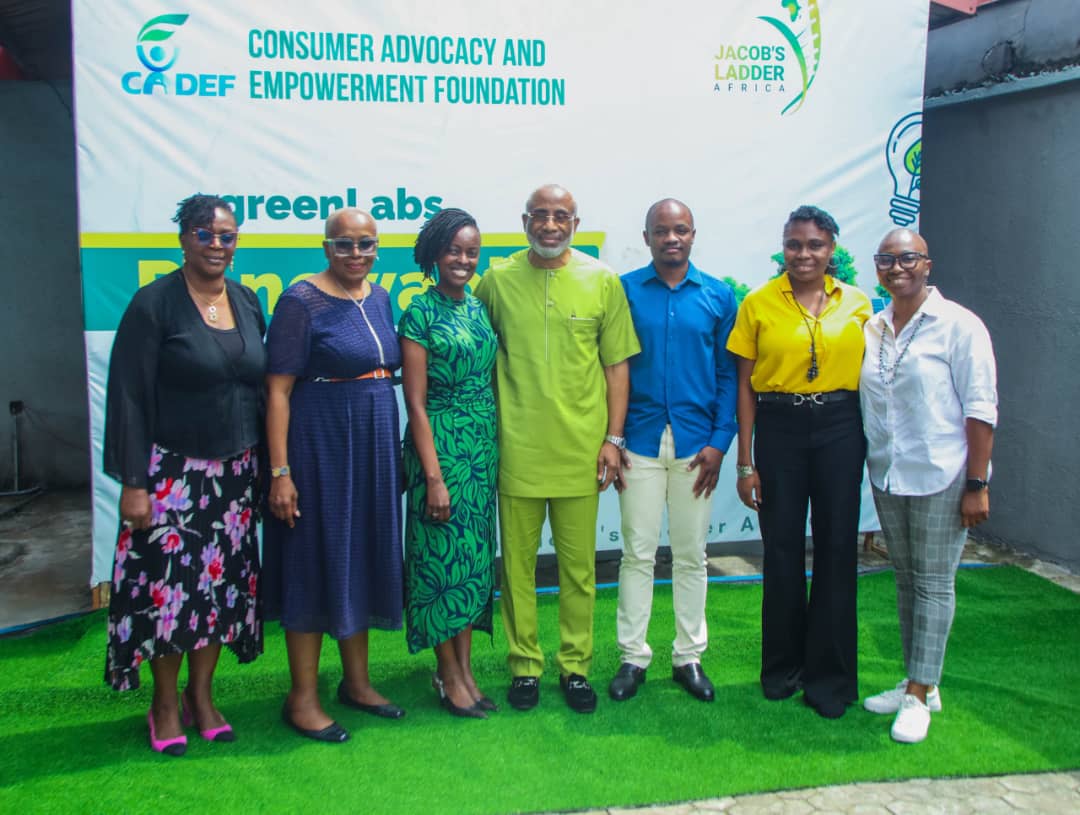
To equip young Africans with the skills, resources, and networks needed to succeed in the energy sector, the Consumer Advocacy and Empowerment Foundation, CADEF, has partnered with Jacob’s Ladder Africa, JLA, a Kenyan non-profit organization.
The Renewable Energy Innovation Challenge aims to unlock African youth potential in the booming $193 billion clean energy market by providing skills, resources, and networks needed to succeed in the industry.
Africa, with its young population, has strong potential for growth in clean energy, but barriers like limited training and resources hinder youth involvement. CADEF and JLA seek to address these challenges through programs, workshops, and mentorship, empowering young Africans to make a meaningful impact in the industry.
CADEF’s Executive Director director, Prof. Chiso Ndukwe-Okafor, at the 2024 Energy Innovation Challenge in Lagos, explained that the challenge is designed to harness youth potential in clean energy. “Participants collaborated with mentors, refining new ideas and enhancing existing innovations. This initiative, funded by Jacob’s Ladder Africa, promotes sustainable, locally-driven green energy solutions,” she stated.
This year, 43 innovators applied, with 12 finalists reaching the final pitch session. The next stage, a five-week “discovery phase,” will emphasize sustainable entrepreneurship. “It’s not just about having a great idea; it’s about building a business that lasts,” Ndukwe-Okafor emphasized, adding that only participants who demonstrate a strong understanding of business operations and teamwork will advance.
JLA’s chief innovation officer, Karen Chelangat, highlighted the partnership’s collaborative approach. JLA aims to create 30 million green jobs by 2033, and this initiative is one step towards that goal. “This program prepares young people for roles in renewable energy, waste management, and sustainable food systems, in line with the global shift toward a greener economy,” she added.
Permanent Secretary of the Lagos Office of Environment Services, Gaji Omobolaji Tajudeen, commended the initiative, adding that, “As we face challenges like energy shortages and waste management, the need for sustainable solutions is urgent. I encourage all innovators here to realize their potential to reshape our communities and drive lasting change.”
The top three innovations—Hydroelectric Core Generator, E-Waste2E-Access, and Loopbox—demonstrated the potential of sustainable technologies to address Africa’s unique needs.
The first-place prize went to the “Hydroelectric Core Generator,” created by James Emmanuel Ikenna. This innovation aims to help bridge Nigeria’s substantial energy gap with a water-powered generator that can bring electricity to rural areas without costly infrastructure. “Nigeria has over 86 million people without electricity,” Ikenna noted. “This project can power rural communities using only water as fuel.”
Disclaimer
Comments expressed here do not reflect the opinions of Vanguard newspapers or any employee thereof.