“Great talents appear everywhere, whenever the social conditions favourable for their development exist”, Georgi Plekhanov, “On the Role of the Individual in History”
THE overriding interest that I have in paying this tribute to the man Alhaji Aliko Dangote, lies in the fact that he has achieved a transcendental station in life that forcefully intrudes into our consciousness and compels us to acknowledge his merits first, as a man, and then as a public figure. Such an attempt at portrayal of a man of many parts and talents is necessary in this our day and age, where fluctuating convictions and ephemeral loyalties are the hallmarks of social and cultural interactions, that have been further insensibly diluted by mass appeals to sensationalism and irreverent importunity.
In most cases, due largely to the vacuous reasoning in our midst, and to the tendency to insensibly reduce the national question to iteration of ethnic nationality viewpoints, we have been unable to rise to greater heights of discourse on our state of affairs as a nation, and appreciate the conditions that we have found ourselves in as a people, in all essential dimensions. I am particularly concerned with the approaches of the Nigerian “Left” to issues of existential significance, such as industrialisation and economic development, which we seem to pursue more from doctrinal predilections rather than from the basis of practical convictions.
The idea of “nationalism” as far as the Nigerian “Left” is concerned, must by all means begin and end with the political tasks at hand, and not necessarily the overriding economic questions of the day. This is rather superficial and unsatisfactory. I am of the humble opinion that a wider net should be cast by the “Left” in the discussion about the role of the national bourgeoisie or indigenous capitalist class in Africa, especially in the unfolding dynamics in our countries with their manifold contradictions and intrusive conundrums. An exhortation to Africa’s indigenous bourgeoisie to take up the challenge of industrialising Africa is, therefore, an urgent and important task that should transcend political boundaries and ideological divides.
Capitalist development is the purveyor of new social relations and an inevitable path to industrialisation from whose womb the modern proletariat is supposed to emerge. The role of the modern capitalist in Africa must mirror that of his ancient counterpart in Europe who succeeded in midwifing a new and progressive economic system out of the retrograde feudal mode of production. Moreover, it was capitalist progressivism that dragged the proletariat from his embryonic obscurity and threw him into the melting pot of the new type of social relations engendered by the capitalist mode of production. This cosmopolitan and progressive nature of capitalism has already been propounded by Karl Marx and Frederick Engels in the Communist Manifesto.
We can also recollect how Marx explored these dimensions in his classic work, The Eighteenth Brumaire of Louis Bonaparte, which should convince us about the progressive role that capitalism played in ushering in of new social relations and economic dispensations. Beyond these postulations, the African condition today is weighed down by the heavy chains of underdevelopment of its economic productive forces, which are further inhibited by dependency on the state which itself is weak and saddled with contradictions of existential dimensions.
The prevalence of low levels of investment and almost total absence of domestic capital accumulation have compounded the situation in most African countries with regard to their capacity to industrialise. This is further restricted by the escalating phenomenon of foreign debts and the astronomical costs entailed in servicing them. Likewise, the crisis of deficit financing has continually served to deny African countries the requisite savings for investment and capital formation from domestic sources to drive industrialisation and extraction of mineral resources. That is why the resort to “foreign direct investment” and other forms of capital accumulation and injection from external sources have become so inevitable but debilitating to Africa.
Despite the many interventions made by institutions like the African Development Bank, AfDB, the situation in Africa regarding industrialisation still remains critical and precarious, thereby exposing the continent to myriads of social and economic difficulties. Without capital, there can be no capitalism and industrialisation. Without industrialisation, there cannot be any thought of socialist progression and emergence of the proletariat as a transformative force with a historical task to perform.
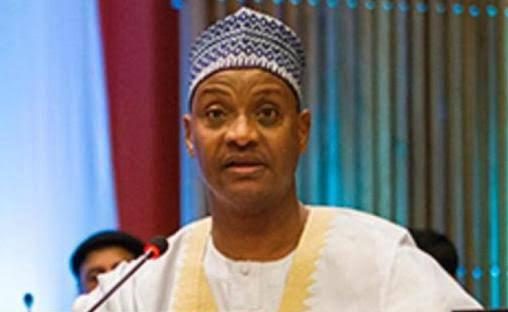
It is in this sense that Alhaji Aliko Dangote’s historic role should be appreciated, as the harbinger of indigenous capitalism and progressive industrial development in Africa. In acknowledging and appreciating his sterling achievements in this singular area of significance, foremost as an industrialist and also as an exceptional economic powerhouse, it is necessary that we should propel populism to the fore, particularly in advancing the thesis that national economic emancipation no matter from whose agency it comes, should be welcomed with wide open arms!
Disclaimer
Comments expressed here do not reflect the opinions of Vanguard newspapers or any employee thereof.