Ebiseni
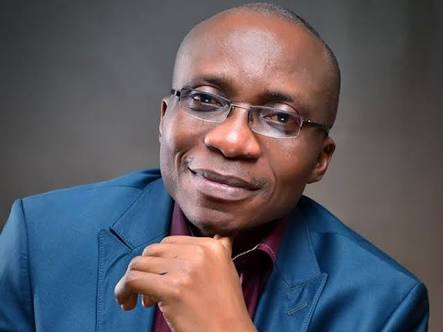
By Sola Ebiseni
May Your Road be Rough” was an article published by the legendary Dr. Tai Solarin on January 1, 1964. And before his reader began to wonder what kind of message it was, the great teacher and essayist continued: “I am not cursing you; I am wishing you what I wish myself every year. I therefore repeat: may you have a hard time this year, may there be plenty of troubles for you this year! If you are not so sure what you should say back, why not just say, ‘Same to you’? I ask no more”.
Dr. Tai Solarin, also a social critic of the most unblemished dimension, is a role model whose progressive views on national affairs people of younger generation loved to be associated. Mayflower School Ikenne founded in 1956 by him and Sheila, his English wife and of which he was the Principal, grew to be one of the most sought-after schools by my generation in the 1970s.
His commitment to mentoring was of the highest standard and so to him innovation and hardwork were virtues. As he wrote in the said article: “Our successes are conditioned by the amount of risk we are ready to take”.
A great Nigerian nationalist who had great hopes for the then less than four years old nation, the article was in furtherance of his pedagogical endeavours on the virtues of innovation and the urgent need to catch up with the rest of the world in technology. He wrote about a local farmer who “could not have been more than 55, but he said he was already too old to farm vigorously. He still suffered, he said, from the physical energy he displayed as a farmer in his younger days. Around his hut were two pepper bushes. There were cocoyams growing round him. There were snail shells which had given him meat. There must have been more around the banana trees I saw. He hardly ever went to town to buy things. He was self-sufficient”.
Solarin was obviously at his sarcastic best when he referred to the man as being self- sufficient and said to have no ambition such that “were we all to revert to such a life, we would be practically driven back to cave-dwelling”. Some of the innovations for better human life brought about by technology or issues of human concern then trending such as “the bus, the television or the telephone, the newspaper, Vietnam or Red China were nothing to him”.
Yet nothing comes without some hard decisions involving great risks as Solarin compared you with the Russian or the American astronaut who is “shot into the atmosphere and soon will be whirling round our earth at the speed of six miles per second. If you get so fired into the atmosphere and you forget what to do to ensure return to earth, one of the things that might happen to you is that you could become forever satellite, going round the earth until you die of starvation and even then your body would continue the gyration”.
He was sure that when the astronaut was being dressed up and padded to be shot into the sky, he knew only too well that he was “going on the roughest road man had ever trodden”. He imagined that the Americans and Russians who have gone were armed with the great belief that they would come back. But I cannot believe that they did not have some slight foreboding on the contingency of their non-return. It is their courage for going in spite of these apprehensions that makes the world hail them so loudly today”.
So much for Tai Solarin as the rest of the article, including his less enthusiasm for religion and distaste for the routine life of Princes are all about his philosophy that “the biggest successes are preceded by the greatest of heart-burnings” and that “throughout the world, there is no paean without pain”. Tai lived his convictions and remained a thorn in the flesh of every government, including all military junta till his last day on July 27, 1994.
Except for the joy of the successes of his students and mentees at Mayflower in all sectors of human endeavour, his expectations of Nigeria as a great nation remained forlorn for his 72 years on earth. He has a university named after him by the Ogun State Government.
When Solarin wrote on the new year day of 1964, the Nigerian state which gained independence less than three years earlier on the October 1, 1960 had a constitutional federal arrangement which was responsible for the great exploits of the founding fathers in the development of the largely autonomous regions. In fact, by then the major political parties were in the frenzy of alliances for the Parliamentary elections slated for December 30, 1964, the two major divides being the Nigerian National Alliance and the United Progressives Grand Alliance.
At a time when the country depended largely on agricultural products both domestically and for exports the Western Region, becoming self-governing in 1951, the first administration thereof headed by Chief Obafemi Awolowo declared and implemented free and compulsory education throughout the Region in 1955 and even before France, introduced the first television in Africa in 1959; revenue from minerals including oil and gas was minimal though 50 per cent of revenue derived from exploitation of minerals in any region was paid to the concerned region.
In practical terms, the strides of the country at the time compared with its state today keeps one wondering if truly, we the elite, are children of our fathers. Even at the death of Solarin in 1994, the roads of Nigeria physically and metaphorically were not this rough.
Life has now become truly nasty, brutish and short. In his time, he couldn’t have imagined that the little sticks of the cattle rearers in the neighbourhood would have transformed into sophisticated lethal weapons with which hundreds of Nigerians are thereby perennially killed and tens of thousands displaced and housed in refugee camps in their country with no terminal date.
Tai couldn’t have contemplated the access of armed bloody civilians into the Nigerian Defence Academy or some hoodlums kidnapping military officers thereof or the derailment of trains and the unthinkable shooting down of military aircraft within Nigeria territory.
Travelling overseas then by Nigerians was quite minimal and for clearly set objectives compared with the present marathon exodus. For sure, the astronauts in Solarin’s essay face far less risks than Nigerians are today confronted with in their illegal and often fatal voyage across the Mediterranean in pursuit of the unknown, including trading their bodies.
The scourge initially described by government as child trafficking has become, for all intents and purposes, voluntary slavery for Nigerians of all age categories. “Jápa”, the Yoruba slang coined to describe the horrible phenomenon literally means ‘escape or break- lose from bondage’.
With the free-fall of the Naira, the intractable costs of petroleum products, worsening state of electricity and the collateral effects on the economy and standard of living of the people, it will be callous to adopt the 1964 new year message of Tai Solarin to Nigerians as their roads cannot be rougher.
The situation is beyond wishes for the citizens; it is a clarion call to the Nigerian state to rise to the full stature of its sovereign status, ensuring, first the security of lives, property and the well-being of its citizens.
To my good people of Ondo State, it is a year of decision using our franchise to end the rudderless condition of the ship of state. It is a daunting task fixing the broken walls such as only a Nehemiah can accomplish.
Nigeria, we hail thee.
•Sola Ebiseni is the Secretary General, Afenifere.
Disclaimer
Comments expressed here do not reflect the opinions of Vanguard newspapers or any employee thereof.