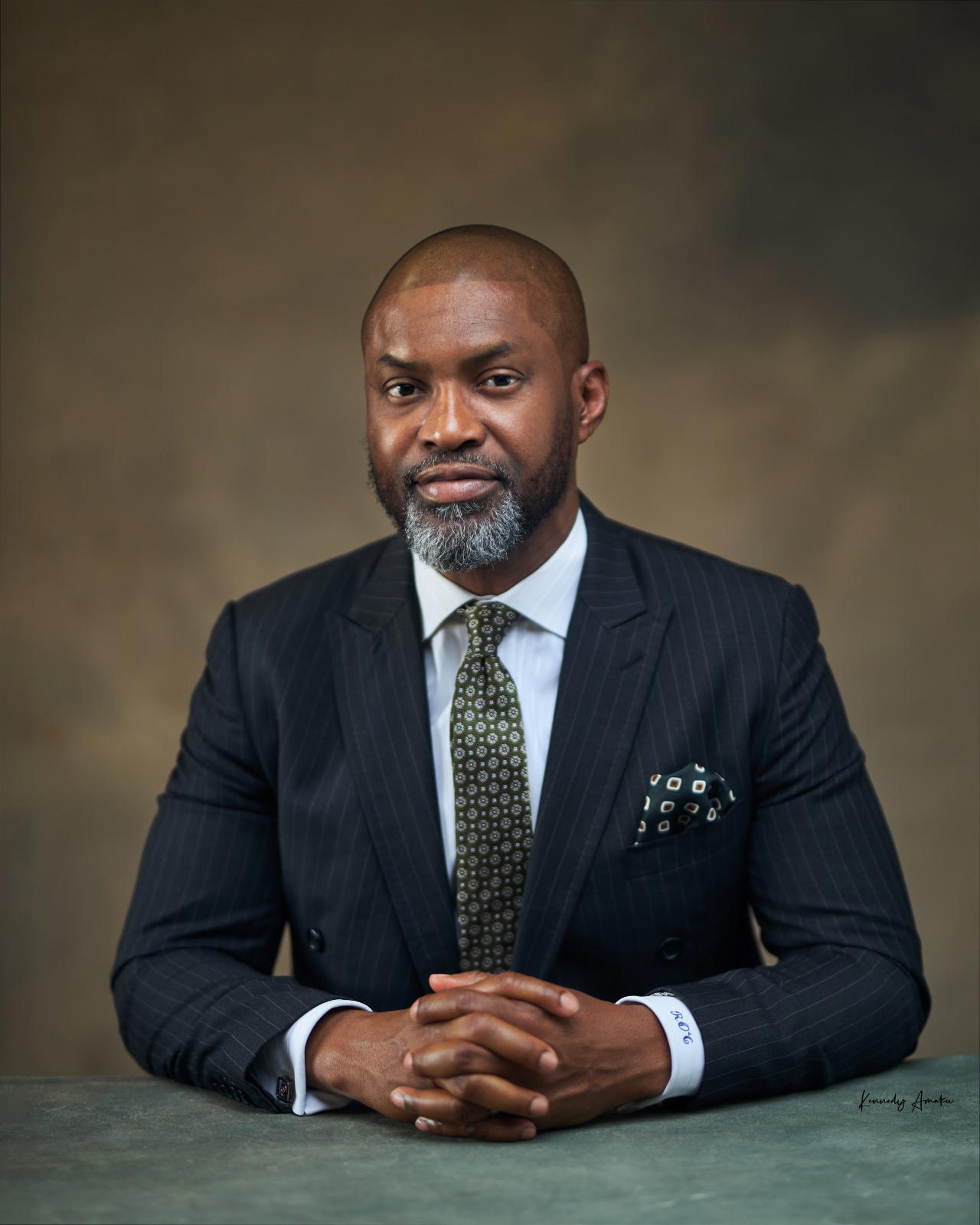
A former member of the House of Representatives, Mr. Obinna Chidoka, is 50 today. He was elected at the age of 33, making him one of the youngest at the time. The three-time lawmaker, who represented Idemili South and North Federal Constituency, in this interview, shares the humble and big moments of his trajectory so far. His story, among other things, provides a rare knowledge of the challenges young persons in authority face in asserting their authority just for being young.
By Charles Kumolu, Deputy Editor
Background
My name is Obinna Chidoka. I am from the family of Ogbueshi Ben and Deaconess Nneka Chidoka in Obosi, Anambra State. I have four siblings and was born in Enugu where I was partly raised shortly before we moved to Lagos where I completed my secondary education and later attended the University of Lagos, and graduated with a BSc in Sociology. I have most of my work experience at the National Assembly where I worked with Senator Mike Ajegbo as his legislative aide in the 1999/2003 parliamentary session. Also worked with Nedu Ugochukwu between 2003 and 2005. After which I contested and won the House of Representatives in 2007. Since then, that has been my political trajectory. I have also contested in five consecutive elections from 2007, losing out in 2011, winning in 2015, and 2019, and just losing out in the 2023 general elections. I am married to Nneka Chidoka and we have four kids.
Can you take us through your educational background and upbringing?
I was born in Enugu, where I also attended primary school before we relocated to Lagos, and I attended Lagos State Model College Badore for my secondary education and eventually gained admission to the University of Lagos where I studied sociology. I have a certificate in Entrepreneurial Management from the Pan Atlantic University Lagos.
Can you take us through your career path?
After schooling at the University of Lagos and doing my National Youth Service Corps in Port Harcourt, I started working with Senator Mike Ajegbo, who was then representing Anambra Central at the National Assembly.
It was an interesting moment because he was a businessman and a politician at the same time, which was when I began to cut my teeth in politics. Coincidentally, he was not only from my state but also from my hometown of Obosi. We usually had his constituency visits and consultations which also exposed me to a lot of people at the grassroots level.
But I need to say that my initial thought of working with Senator Ajegbo was because he was a very successful businessman and I wanted to be successful as well and wanted to know how he runs his businesses. I wanted to study his businesses and if possible, learn from his business acumen and set up my businesses too. But like I always would joke, I unfortunately got beaten by the politics bug and that’s how I missed out on being wealthy.
You were elected into the House of Representatives at 33, what inspired you to choose politics over business?
I’m really not sure how politics caught my fancy, but I liked the idea of bringing about tangible change to our laws and society with the instrumentality of government. It’s what I would call input, output and outcomes. You make a law and see it work for the benefit of the people, and also initiate a project and see people benefit from it.
I guess that is one of the key things that caught my attention because ordinarily, all I wanted to do was to learn from my boss, set up my business, employ people and make money out of it.
What was it like as a young person in the House of Representatives?
What you need most in the legislature is experience and understanding of the law-making processes and being adept at lobbying. As a young parliamentarian, I had to work hard to stay abreast of the legislative procedures and never gave in to intimidation from older and experienced members to make sure my voice was heard.
Honestly, there is really no initial advantage to being a young parliamentarian. The only advantage is that you may still be younger than most people if you get re-elected for a second or a third term.
What were some of the challenges you faced being a young representative in the House and your constituency?
Sometimes older people don’t take young people seriously. You tend to be overlooked because they feel you’re still a young boy. So they look at the older ones first and give recognition.
Even at the point when it dawned on them that I was the leader of the party in Idemili North and South, many of them found it very difficult to accept. I remember one of the stakeholders always wanted to give an excuse why I shouldn’t be the leader and one such excuse is that I was too young.
And even on the floor of the House, you’re sometimes overlooked because they feel, what is this young man going to say? What do you have to say? His voice is not strong enough. He’s not speaking up. There was that kind of stereotype of young people who are not resolute, and who do not understand what they want to do. But instantly, when they noticed where I was coming from, they took me seriously.
From some of the things I started doing, I made sure that they took me seriously because ordinarily, I was being overlooked. One of the first bills or motions I moved after I got elected in 2007 was the repair of the existing Niger Bridge, which was built in 1964 by Dumez Construction. I added to it the completion of the second Niger Bridge because at that time, the government had started preliminary works on the second Niger Bridge but nothing serious had been done. I was the first to move for its completion.
What were the lessons you took with you?
One of the major lessons is how not to be caught off guard at any point in time. One of them is the necessary engagement, being able to engage in lobby and dialogue with other people. I had to understand how Nigeria works, how the Nigerian National Assembly works, it’s a lot more difficult than people think, managing people, especially your constituents.
You are also a big advocate for the environment. How would you say Nigeria is doing as regards achieving NET-ZERO emission?
Nigeria is a signatory to the Paris Agreement of 2015 at COP 21. It is an indication that we are working with the comity of nations to reduce global warming.
Nigeria committed to long-term climate goals such as net zero emissions by 2060 as agreed at COP26 in Glasgow. We now have the Climate Change Act, which established the legal framework for achieving our long-term climate goals and the setting up of The National Council on Climate Change which leads the way in making policies and decisions on all matters as regards climate change for the Nation.
Yes, there are hurdles for us as a nation in achieving our set goals, including funding and the sustainability of our plans as contained in our Nationally Determined Contributions NDC. Nigeria is on the right path, but we all need to do more to achieve our set goals for the sustainability of our environmental plans.
The environment has been known to play a lot of role in human health, yet these two issues don’t get enough priority in budgetary allocations…
I think government needs to pay more attention to the environment and the healthcare sector. The environment doesn’t get the necessary funding and attention it needs.
Government needs to put in more money to provide certain infrastructures and possibly work with foreign governments and agencies. That is why we need to attend some of these international conferences where we can talk to international partners to come in and help. It must not be government agencies at all times, there are many agencies and NGOs out there willing to help in water and sanitation, health care and others.
If the Federal Ministry of Environment brings out a concrete policy to say this is what the government needs to do, we do not even need to put so much money in at the budgetary levels because there are donor partners who can fund some of these issues and when they see that Nigeria is a country that is not corrupt and that the money will be put to productive use, they will provide the funding.
Then in terms of waste disposal, there are productive things you can do with waste. There are recyclable materials that you can use. I heard recently in Lagos that one of the new companies got a fund of four million dollars to build a recycling plant. Many venture capitalists out there can give you funds to build some of these infrastructures and manage them well. But one of the major issues we face today is that of corruption where people feel that their money won’t go into productive use. The government needs to lead in terms of advocacy, and in terms of educating our people, making sure that policies are put in place for our people to use.
I know that in France, they banned some forms of plastics and then some countries are already banning cars that are within the range of a certain number of years because of their emissions to the environment. These are the major issues that we need to look at. The advocacy, policies and laws need to be strengthened.
Any unforgettable experience from the House of Representatives?
As we got elected into the house, one of the most unforgettable experiences I had was the fight to unseat the then Speaker, Patricia Ette.
We came under fire from those who wanted her out, but we were resolute in sustaining her speakership at all costs. It was a very difficult situation as the opposition was equally very strong. Six of us were sent to visit the Former President Chief Olusegun Obasanjo to help us talk to some of the governors of the state whose members were opposed to the then speaker.
Aside from speaking to the former President, we spoke to other stakeholders to intervene as well, to no avail. I remember that morning before the sitting where her impeachment motion was raised by the opposition, we all met with the Speaker at the meeting room at the office complex and we walked from there to the White House chambers. As we walked into the foyer of the White House, the Speaker asked everyone to go into the chamber, but I followed her into her office. As we walked into her office, I was there with one or two other people when she took her files and was about to step out. That moment, one of her security details if I remember clearly, a DSS officer, said to her that he was scared of what might happen in the chambers and for that, we should pray.
The young man began to pray fervently asking God to grant us victory as we stepped into the chambers. As the young man continued to pray and we echoed Amen, Aminu Safana, from Katsina, walked in all pumped up and boisterous and said, ‘let’s go, stop praying, let’s go, let’s go, we have won, we have won, let’s go, let’s go,’ then he walked out.
Safana walked back in moments later and said, ‘why are we still praying? We have won this thing, we have won this thing, and can you stop praying?’ When the young man finished praying and we proceeded into the chambers with the Speaker, it was like a scene from the movies. In fact, the Speaker couldn’t proceed through the middle aisle as it was completely blocked and they didn’t want her to get to her seat.
We fought our way through, took the Speaker through the side aisle and found our way to her seat and formed a fence around her.
While the pushing and shoving was going on, I saw Safana standing on the table in front where the admin staff sat, jumping up and down waving a white handkerchief and shouting, ‘we have won, we have won.’
You founded the Obinna Chidoka Foundation. What inspired you?
The foundation is my outlet to make sure that I focus on one or two areas. Having been in the National Assembly for some time, I knew where the issues lie within our communities, and most of our communities are facing many challenges and you cannot handle those challenges at the same time. And one of those critical areas I have found is that of empowerment. I need to be able to empower our people to be self-sustained and basically empowered. And what we have done is to teach them certain basic economic activities to make confectionaries – like cake, bread, etc. And for industrial production, we teach them how to make soap, detergents, paints and so on and for the agro-allied, we teach them snail farming and other viable areas. We not only teach you how to make it, but we also teach you some basic bookkeeping. We also give out funds to women who are traders. They sell and use the money for their upkeep and to train their children in school.
However, one of the other issues we are handling is our back-to-school initiative. I have seen it firsthand when students go to school barefoot and are sent back home because they can’t afford to buy plastic shoes that aren’t up to N2000. So we do our best to make sure that students go back to school because I see that education is one of the major pathways to survival in this country and there is nothing as bad as leading an illiterate or semi-educated people because an illiterate will believe any story he hears. An illiterate is not useful. So what I need to do is train the parents, train the older ones, teach them productive ventures, and let them become productive, which is the informal sector, through the informal sector they help their economy, send their children to school or their loved ones to school and the society gets better for it.
Disclaimer
Comments expressed here do not reflect the opinions of Vanguard newspapers or any employee thereof.