By Adekunle Adekoya
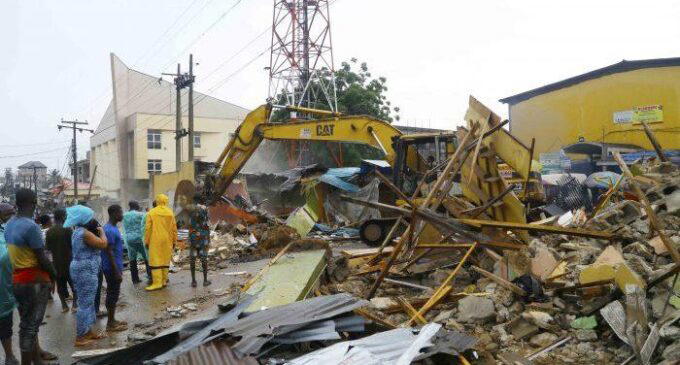
AS we entered the month of May, it was anguish for some fellow compatriots as they had their dwellings in Ajao Estate, Lagos, demolished. Officials of the Lagos State Building Control Agency, LASBCA, and those of the Federal Airports Authority of Nigeria, FAAN, were part of a joint task force that carried out the demolitions. I have no grouse with government agencies doing their work. General Manager of LASBCA, Gbolahan Oki, gave reasons for the demolition, and said 12 buildings were marked in the area for demolition for non-compliance with the state’s law regulating the construction of buildings in the state. Oki said the affected buildings were erected by the owners along pipelines and sited in close proximity to Murtala Mohammed International Airport without obtaining construction approvals from the Federal Government through the Federal Airports Authority of Nigeria and the state government.
Aside from not obtaining any approval, the affected structures were said to have been built on pipelines laid to convey aviation fuel to the airport in Ikeja.
Great job. But there are questions around dereliction of duty and slack or non-existent regulation. The encroachment had been taken note of, officially, since 2015. Why wait for eight years?
One of the major reasons why living in Lagos is becoming more problematic for residents is uncontrolled land use. The Lagos State Ministry of Physical Planning and Urban Development, as I understand, is the custodian of the mega city’s master plan. In concert with other MDAs like the Ministry of Environment, Ministry of Transportation, Lagos Geographic Information System and others, it is supposed to regulate land use in the mega city in such a way that the built environment remains conducive to the pursuit of happiness — life and living. But the contrary has been the experience of Lagosians, to their eternal pain, over the years. Back to the questions. Do the MDAs mentioned above have surveillance departments? If they do, what do the staff do? Are there evaluation units as well, that can evaluate the data gathered by the surveillance units and generate appropriate responses for the political and administrative authorities to act on? I am not sure. From what Lagos has become, civil and public servants paid from our exchequer simply leave their houses for their air-conditioned offices to do things that are far from what they should be in terms of positive impact on our lives. Else, how could officials of these MDAs sit idly by and watch people encroach on land acquired for public projects, develop them, and live there for years? Since 2015? If prevention is better than cure, officials of these MDAs are as culpable as the fellow Nigerians that illegally acquired land and developed them. Apart from these officials not doing their work, the permits that have been granted in the past simply put to question their competence at regulation of land use.
Sometime in 2020, Vicky Haastrup, Executive Vice-Chairman of ENL and also chairman of Seaport Terminal Operators Association of Nigeria, STOAN, at an event said that there are over 63 tank farms currently located in Apapa that are posing serious threat to lives, businesses, infrastructure and property within the port environment.
If this is true, and there is no reason for Haastrup to concoct facts, the questions to be asked are: Who granted approvals for the construction of these 63 tank farms? In granting approvals, were Environmental Impact Assessment, EIA, reports generated? If so, were the reports taken into consideration before the approvals were granted? In all probability, if the EIAs were duly factored in granting approvals, it is unlikely that Apapa would now be home to as much as 63 tank farms. See why the Apapa traffic gridlock will never be resolved? Having done this, it is now clear how people sat in their air-conditioned offices in Alausa, and with filthy lucre as lubricant, oiled the engine that is now destroying the built-environment in Apapa. Apapa was once an alluring, beautiful part of Lagos; not anymore. It is currently asphyxiating from a relentless influx of fuel tankers that come to lift fuel from the 63 depots. Having killed Apapa through reckless and insouciant granting of approvals to tank farms developers, they have now turned their attention to other communities along Lagos-Badagry Expressway. Now residents of Satellite Town and Alakija are also howling in protest against development of tank farms in their communities.
I am of the view that reckless granting of building approvals, in addition to lack of monitoring and slack, or non-existent regulation of land use has made Lagos lose its capacity to be naturally beautiful, and the civil servants must take responsibility for this debacle. Lagos State Government has been convening climate change conferences annually for more than 10 years now.
How can such a government sit idly by and watch as a wetland, a flood plain, get developed into a container terminal? If you can do that in the ports access areas, pray, tell me the rationale for siting a container terminal on a flood plain in Ikotun-Egbe. For what?
Land use regulatory authorities must up their game, not only in Lagos, but all over the country, before all of us find ourselves in a built environment that cannot support life and living. Prevention is still better than cure, and I urge the political authorities to keep this on their “to-do” list.
Disclaimer
Comments expressed here do not reflect the opinions of Vanguard newspapers or any employee thereof.