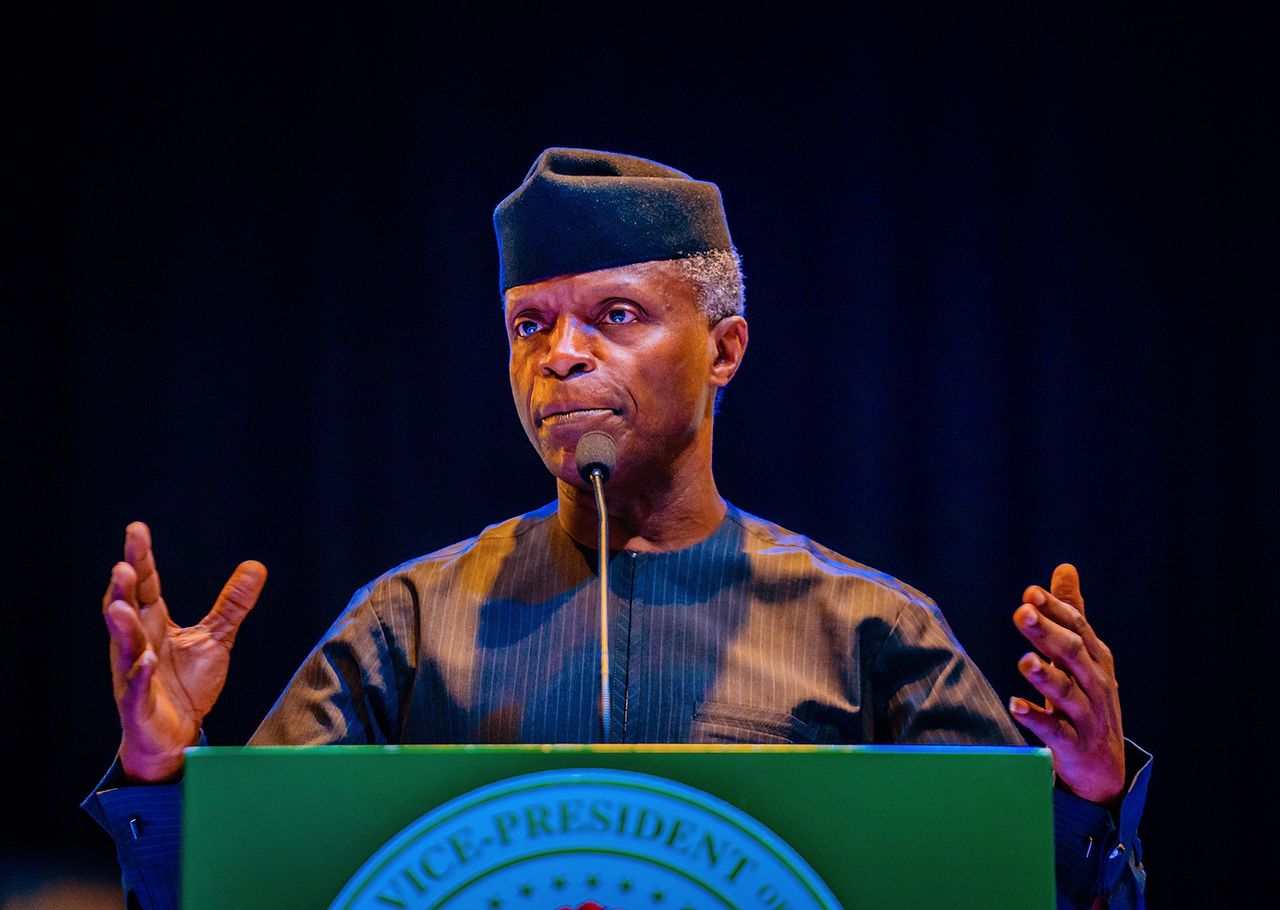
Osinbajo
By: Victoria Ojeme
Since its inception in 2016, the Presidential Enabling Business Environment Council (PEBEC), has achieved a delivery of over 180 reforms and completed 7 National Action Plans geared towards improving the Nigerian business environment.
The Vice President, Yemi Osinbajo, disclosed this at the PEBEC award in Abuja, yesterday.
He, however, attributed the successes over the years to what he described as collaboration among various stakeholders.
The Vice President, however, applauded the “efforts of our tireless civil and public servants. What we have seen over the last five years is a pointer to the possibilities for a new Nigeria.
“The private sector also deserves our heartfelt gratitude and commendation for its commitment and collaboration, especially their contributions in technical support and capacity building. They take much of the credit for the quality output of the EBES, especially through the first three years of the project.”
Following the huge successes recorded, the Vice President noted that it is not yet time to relax as according to him, “we must all remember that success births success. We must not rest on our oars but tonight, let us take a moment to relish our accomplishments so far and leave here tonight renewed and reenergized for the work that lies ahead.”
Prof. Osinbajo, however, recalled that during the birth the of the PeBEC in 2016: “The President charged us with positively impacting Nigeria’s business environment by removing the bureaucratic constraints being experienced by a large number of stakeholders.
“But how were we to do that? How were we going to remove the bottlenecks and obstacles, while delivering the reorientation of regulatory authorities and civil servants who deal with businesses on a daily basis? How were we to address the significant trust deficit from the private sector towards the government, and correct the pervading negative perceptions, by ensuring that our policies and regulations are enablers to micro, small and medium-sized enterprises (MSMEs)?
“This was the main challenge that the PEBEC was created to solve. With the myriad of challenges at the time, we knew it was going to be onerous, yet not insurmountable. This task was essential to the shared prosperity of all.
“Over the last seven years, our visionary team dominated by young Nigerians from both private and public sectors, led by Dr Jumoke Oduwole, have designed and implemented a series of reform initiatives at the federal level with measurable success. Among other tools and strategies, the team developed a homegrown 60-day accelerator – our National Action Plans (NAPs) – to implement priority reforms by select Ministries, Departments, and Agencies (MDAs) for each annual reform cycle.
“The PEBEC Secretariat supports about 15 priority public-facing agencies and currently tracks over 53 MDAs. This is in support of Executive Order 001 on Transparency and Efficiency of public service delivery to the business environment as well as ReportGov. NG, the Council’s feedback mechanism.
“I am told that the PEBEC Secretariat team enjoys the collaboration of several reform-minded heads of MDAs and Reform Champions who were instrumental in the development and implementation of these plans.”
In her welcome address , Special Adviser to the President on Ease of Doing Business PEBEC Dr Jumoke Oduwole explained that the PEBEC was established in July 2016 to oversee Nigeria’s business environment reform mandate of removing bureaucratic constraints to doing business in Nigeria and to make the country a progressively easier place to start and grow a business.
She, however, noted that the reforms made by the PEBEC were primarily targeted at reducing the cost and time of doing business, with enhanced transparency and we prioritize soft Infrastructure – people and processes issues.
“While there still remains a lot of work to be done, we are grateful to have recorded notable strides in regulatory reform, with particular emphasis on the deployment of technology, legislative reforms, judicial reforms and subnational reforms – all of which you will hear more about during the course of the evening,” he stressed.
Disclaimer
Comments expressed here do not reflect the opinions of Vanguard newspapers or any employee thereof.