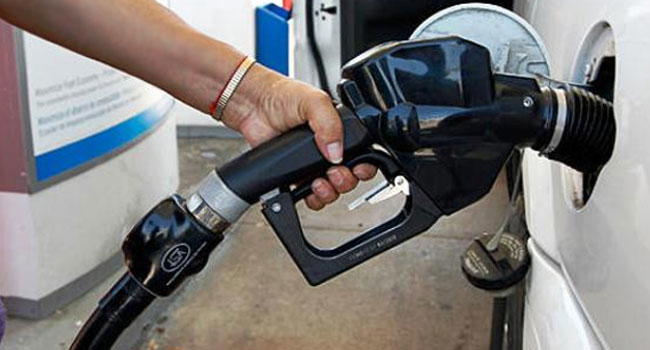
A fuel pump (stock photo).
…Says its intervention on pricing would be advisory
A fuel pump (stock photo).By Michael Eboh
In a clear reversal of its ‘Market Based Pricing Regime for Premium Motor Spirit (PMS) Regulations, 2020,’ released June 4, 2020, which removed the price cap on fuel and which said the price would, henceforth, be determined by market forces, the Petroleum Products Pricing Regulatory Agency, yesterday, said it would not allow petroleum products, marketers, to fix the price of Premium Motor Spirit (PMS), also known as petrol.
In a statement issued in Abuja, after calls for its scrapping by Nigerians, since it would be redundant in a fully deregulated downstream sector; the PPPRA, however, stated that its role in the determination of the monthly price for PMS would be advisory, while its price would serve as a guide to marketers in the sale of the commodity.
Executive Secretary of the PPPRA, Abdulkadir Saidu, who signed the statement, further confirmed that the Federal Government had deregulated the downstream segment of the market, stating, however, that, “Suffice to say that in a deregulated market, the role of a Regulator in monitoring and regulating activities in the sector cannot be over-emphasized.”
He disclosed that the ‘Market-Based Pricing Regime for Premium Motor Spirit (PMS) Regulations, 2020,’ published June 4, 2020, does not confer on marketers the power to fix prices for the product as they deem fit, but should rather, rely on guiding prices that would be advised by the PPPRA according to market realities.
Confirming details of the Regulation, Abdulkadir declared that the PPPRA shall monitor market trends and advise the Nigerian National Petroleum Corporation (NNPC) and oil marketing companies on the monthly market-based guiding price, which shall include the indicative retail price at which the product shall be sold across the country.
He said, “It would be recalled that the removal of Premium Motor Spirit (PMS) price cap and implementation of a market-based pricing regime was first announced by the Honorable Minister of State for Petroleum Resources, Chief Timipre Sylva, in March 2020. This was followed by PPPRA’s publication announcing the Regulation on the market-based pricing regime, thus creating a legal framework for the policy.
“The Honorable Minister had earlier stated that the Federal Government will continue to monitor the price of petroleum products and advise on monthly guiding prices that guarantee reasonable returns to operators while ensuring consumers pay appropriate prices in line with market reality and are not overcharged.
READ ALSO: Petrol pump price now N121.50 ― PPPRA
“The Honorable Minister, in his statement, further stressed that the government’s role in a deregulated economy was to provide, through the operation of the Petroleum Products Pricing Regulatory Agency, a pricing mechanism to create a market-driven price regime.
“For the avoidance of doubt, it is instructive to state that no private individual or group has the mandate to fix prices of petroleum products, however, the statutory regulatory body is saddled with the responsibility of advising guiding prices.”
The Market-based regulation
Prior to March 20, the operating price of PMS, as stipulated by the PPPRA, was within the price band of N143 and N145 per litre.
In the Regulation published June 4, the PPPRA had clearly stated that the price cap per liter in respect of Premium Motor Spirit (PMS) is removed from the commencement of the Regulation, adding that from the commencement of these regulations, a market-based pricing regime for PMS shall take effect.
It added that: “The Agency shall monitor market trends and advise the NNPC and oil marketing companies on the monthly guiding Market-Based Price. The price of Premium Motor Spirit (PMS) advised by the Agency shall be guiding retail price at which the product shall be sold across the country.”
See attached, the Market Based Regulations, earlier published June 4, 2020.
Disclaimer
Comments expressed here do not reflect the opinions of Vanguard newspapers or any employee thereof.