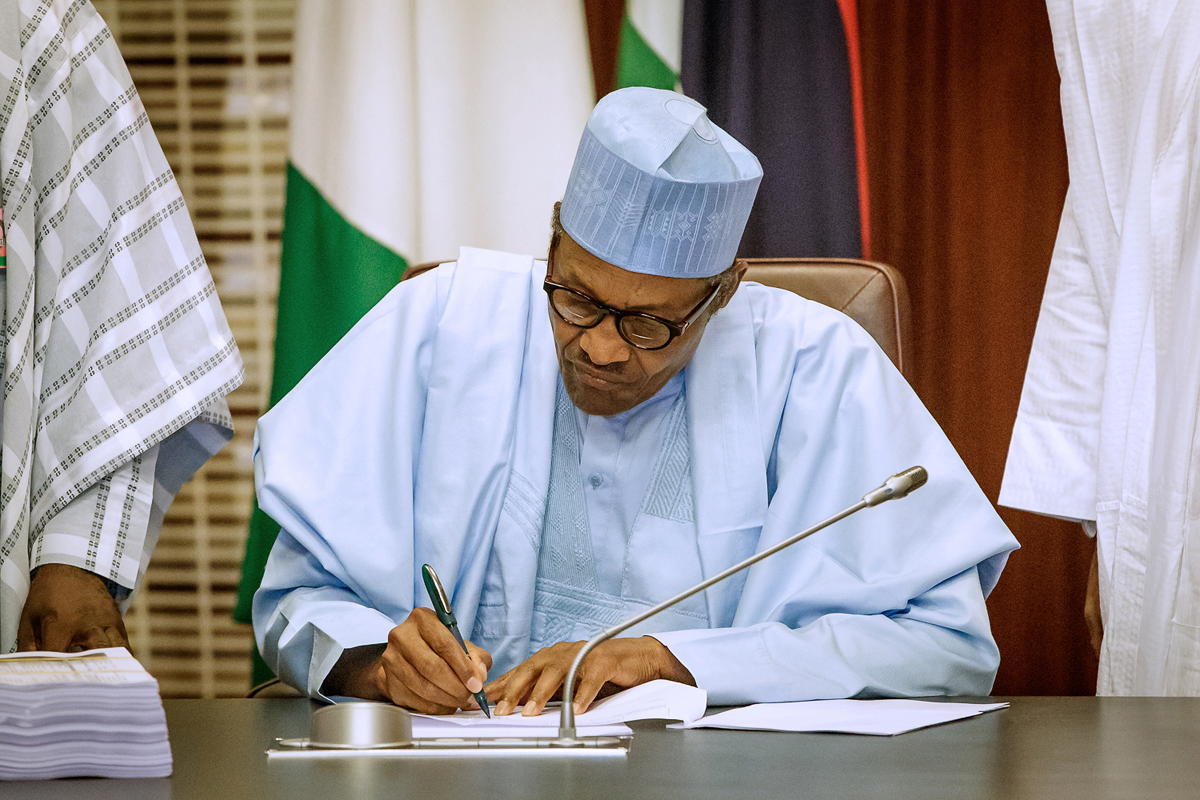
President Muhammadu Buhari signing of the 2019 Appropriation Bill to law at the State House, Abuja. Photo by Abayomi Adeshida 27/05/2019
President Muhammadu Buhari in Niamey, Niger Republic, signed the African Continental Free Trade Area (AfCFTA) agreement, making Nigeria the 53rd state on the continent to append its signature to the document.
The president signed the agreement at exactly 10.47 am local time.
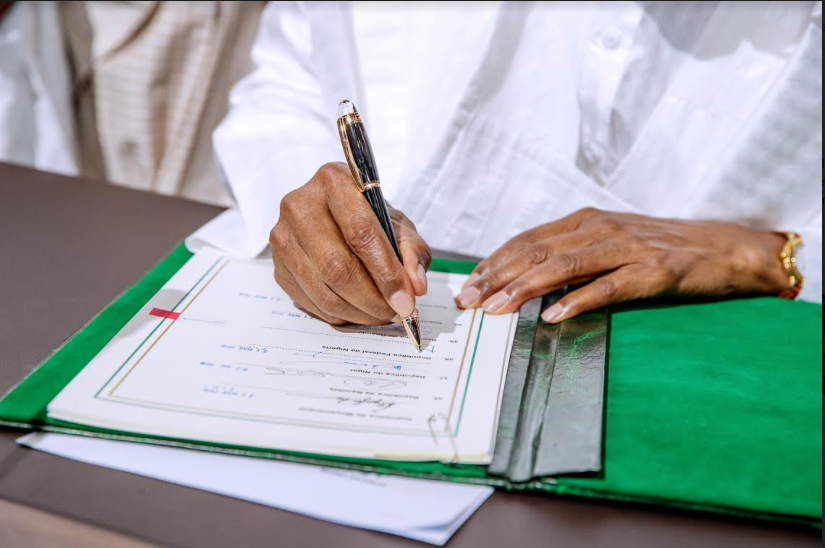
President Muhammadu Buhari signing the Assembly of the Union on African Continental Free Trade Area (AfCFTA) agreement on behalf of the Federal Republic of Nigeria while other officials witnessed the signing during the 12th Extraordinary session and the First Mid-Year Coordination Meeting of the African Union at the Palais des Congres, Niamey, Niger Republic. Photo by Abayomi Adeshida 07/07/2019
The signing of the agreement was the first event at the opening of the 12th Extra-Ordinary Summit of the African Union on the launch of the Operational Phase of the AfCFTA.
Buhari will sign Africa free trade pact in Niamey – presidency(Opens in a new browser tab)
Buhari had delayed in signing the agreement, which entered into force May 30, 2019.
The delay was to give room for extensive consultations with stakeholders, culminating in the submission of the report by the Presidential Committee to Assess Impact and Readiness of Nigeria to join the free trade area.
The committee had recommended that Nigeria should sign the agreement which aims to boost intra-African trade.
In accepting the report as submitted, the President made it clear that Nigerian government would be seeking to include terms that engender the development of policies that promote African production, among other benefits.
President Buhari said: “Africa, therefore, needs not only a trade policy but also a continental manufacturing agenda.
“Our vision for intra-African trade is for the free movement of `made in Africa goods’. That is, goods and services made locally with dominant African content in terms of raw materials and value addition.
“If we allow unbridled imports to continue, it will dominate our trade. The implication of this is that coastal importing nations will prosper while landlocked nations will continue to suffer and depend on aid.’’
AfCFTA is expected to be the world’s largest free trade area since the formation of the World Trade Organization, with a potential market of 1.2 billion people.
Disclaimer
Comments expressed here do not reflect the opinions of Vanguard newspapers or any employee thereof.