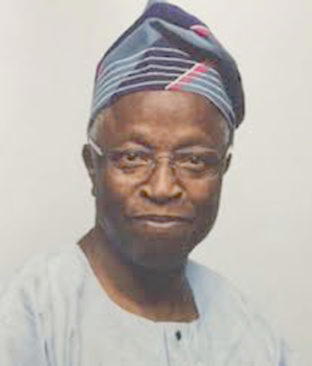
Prof. Adamolekun
When I examined the involvement of ethnic associations in politics shortly after the 2007 election cycle, I concluded that there could be a reduction in its salience over time (see Vanguard, April 25th 2007). A dozen years later, the identical ethnic background of the candidates of the two major political parties in the presidential election – Muhammadu Buhari of the All Progressive Congress (APC) and Abubakar Atiku of the Peoples Democratic Party (PDP), both Fulani – led some commentators to affirm that ethnicity would not be a salient issue in the recent contest. But what really happened?
Ethnic associations and 2019 presidential electoral campaigns
With respect to the presidential electoral campaigns, ethnic associations vociferously expressed support for their preferred candidates. However, the support of the associations featured contradictory positions taken by either factions within some ethnic associations or by competing associations in the name of the same ethnic group. Thus, for example, in the South-west (predominantly Yoruba), Afenifere (“authentic”) supported Atiku while the branches of the association in Lagos and Ekiti states supported Buhari. Similarly, in the South-east (predominantly Igbo), the national executive of Ohaneze Ndigbo supported Atiku while the national secretary of the association and some prominent members supported Buhari.
Prof. Adamolekun
Furthermore, in the North-west and North-east (predominantly Hausa-Fulani), the Arewa Consultative Forum (ACF) supported Buhari while the Northern Elders Forum (NEF) supported Atiku. Like the cases in the SW and SE, there were prominent members of the ACF and NEF who either rejected the candidate endorsed by their respective associations or were content to publicly dissociate themselves from the positions taken by the leadership of the two ethnic associations. Regarding the multi-ethnic North-central and South-south – under two umbrella groups, Middle Belt Forum and Pan Niger Delta Forum (PANDEF) respectively – the executive of each supported Atiku while varying numbers of prominent members across both groups supported Buhari. Finally, there was an entente cordiale among Afenifere, Ohaneze, PANDEF, Middle Belt Forum and NEF to jointly support Atiku who they expect to deliver on his promise to restructure Nigeria. There was no similar coalition of ethnic associations that supported Buhari.
State-level elections: All politics is local
Unlike the presidential elections that allowed a wide field for ethnic associations, the commonly cited dictum that “all politics is local” prevailed during the state level elections. And this significantly limited the scope of operations for ethnic associations during the campaigns. For example, Kwara Sate with APC’s “o to ge” (enough is enough) slogan had no other parallel throughout the federation and the party had a clean sweep in the governorship and House of Assembly (HA) elections.
However, cosmopolitan Lagos – in the true sense of Nigeria’s melting pot – was an exception. Regarding the governorship and HA elections in Lagos State, the contradictions within both Afenifere and Ohaneze Ndigbo noted during the presidential election campaigns re-emerged: while “authentic” Afenifere supported PDP candidates, Lagos branch of the association supported APC candidates. Similarly, while Lagos State branch of Ohaneze supported APC candidates, Ohaneze’s National Chairman distanced the national association from that position with comments that indicated a preference for PDP candidates.
Impact of ethnic associations on electoral competition outcomes
The actual impact of ethnic associations on the results of both the national and state-level elections can only be meaningfully determined through a rigorous (“scientific”) post-election polling. In the interim, my conjecture would be that ethnic associations had very limited impact on the outcomes of the 2019 election cycle. For example, notwithstanding the entente cordiale among ethnic associations spread across virtually all the geopolitical zones in support of Atiku, he did not perform better than former president Jonathan did in 2015 with the support of only SS’s PANDEF, SE’s Ohaneze and SW’s Afenifere.
In contrast, voters’ preferences for the APC and PDP appear to have been significantly influenced by (i) their perceptions of individual candidates and (ii) each party’s mass mobilization capacity. Regarding perceptions of individual candidates, it is widely acknowledged that Buhari’s consistent exceptional performance in presidential elections in the far north and in some parts of North-central since 2003 is largely due to this factor. Assessing the impact of party mobilisation capacity is problematic because of the mix of party membership mobilisation and indiscriminate vote buying, euphemistically called provision of “stomach infrastructure”.
Ethnic associations and party system
While in 1999 ethnic associations emerged as stronger political forces in their respective areas than the political parties that were hurriedly cobbled together to “collect” power from the departing discredited military, two decades of uninterrupted operation of political parties has enabled the latter to regain the upper hand. Although it was premature when former president Obasanjo proclaimed the “death” of ethnicity in politics in his inauguration speech in May 2003, today, after four more election cycles (2007, 2011, 2015 and 2019), more and more Nigerians are identifying with one or the other among the three parties that seriously competed for political offices during the 2019 election cycle: APC, PDP and the All Progressives Grand Alliance (APGA). Would the few elected legislators in the National Assembly and a small number of HAs who do not belong to one of these three parties have won their seats if they had contested as independents and not in the name of largely unknown political parties? Maybe. Until the eminently sensible recommendation in the Uwais Committee Report (2008) on the desirability of accepting independent candidates in electoral contests is adopted we would not know.
Notwithstanding the increased identification of citizens with one or the other among the emerging dominant political parties, party allegiance among Nigerians remains largely weak. For example, in one state in the South-west where a colleague recently conducted a rigorous and robust opinion poll, over 40 percent of registered voters declared that they belonged to neither of the two dominant parties in their areas (APC and PDP). In other words, the country’s party system is still weak with respect to citizen mobilisation. Furthermore, the fact that a majority of the visible political actors across parties who have occupied elective or appointive positions for varying periods since 1999 change party allegiance like nomads (literally in search of “greener pastures”) is strong evidence of lack of party differentiation based on principles/ideologies. A party system that combines weak citizen mobilisation with lack of distinguishable principles/ideologies – two interlinked negative characteristics – is unquestionably weak.
Ethnic associations and the promotion of socio-cultural development
Leaving aside the continuing role of ethnic associations in politics regardless of limited impact on the outcomes of electoral competitions as well as their role as pressure groups to lobby for political appointments and other preferments for their kinsmen/kinswomen at the federal level, it is with respect to the promotion of socio-cultural development in their respective areas that they have an incontestable primary role. Significantly, the story of the poor performance of this important role by Ohaneze Ndigbo as chronicled in Joe Irukwu’s book, Nation building and ethnic organizations. The case of Ohanaeze in Nigeria (2007) appears to be shared, in varying degrees, with the others. For example, Afenifere (authentic) has paid little or no attention to the efforts aimed at promoting the use and spread of Yoruba language and culture through the Yoruba Academy in Ibadan. To date, the Academy has largely relied on the support of the Afenifere Renewal Group (ARG) and some culture-minded NGOs and some Yoruba patriots, notably General Alani Akinrinade.
Of the three roles highlighted in the above paragraph, all ethnic associations should accept that their primary role is the promotion of socio-cultural development. Next, for as long as “sharing the national cake” and the constitutionally-enshrined “federal character” hold sway, ethnic associations will continue to have relevance as lobbyists for political preferments on behalf of their respective kinsmen and kinswomen regardless of whether or not they record tangible results. Finally, based on the evidence of their declining relevance and limited impact as political campaign blocs, they should voluntarily reduce and, within a decade or less, cease to be involved in partisan politics. Perhaps the clinching argument regarding the last point is the strong evidence that involvement in partisan politics is the major cause of interminable divisions within ethnic associations nation-wide.
Last Word
I would like to stress that reducing the salience of ethnic associations in politics would depend, to a considerable extent, on progress in two areas: establishing a strong party system and achieving robust economic growth and reduced poverty. Strikingly, progress in the two areas will contribute hugely to the achievement of both good governance and good development performance.
Netanyahu formally named next Israeli PM
Professor Ladipo Adamolekun writes from Iju, Akure North, Ondo State.
Disclaimer
Comments expressed here do not reflect the opinions of Vanguard newspapers or any employee thereof.