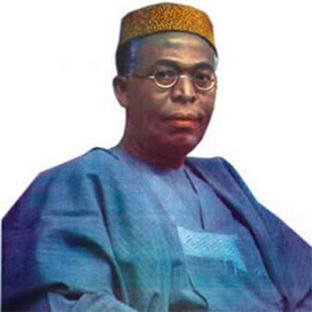
Chief Obafemi Awolowo
By Afe Babalola
FOLLOWING the advent of oil and gas exploration in Nigeria, agriculture and farming progressively took a back seat in Nigeria. Nigeria has over the last two decades functioned primarily as a monoculture in which about 80 per cent of the government income, 90-95 per cent of the export earnings and more than 90 per cent of the foreign exchange revenues in Nigeria are all derived from the oil sector.
Furthermore, emphasis on agricultural training, research and capacity building waned significantly with agricultural careers becoming less preferred amongst Nigerian graduates and youths. The result is the near annihilation of the agricultural sector of the Nigerian economy and a sharp rise in endemic poverty, hunger and starvation across Nigeria.
Obafemi Awolowo
Emancipation and liberty
Failure of successive governments in Nigeria to sustain agricultural expansion, economic emancipation and liberty of the Nigerian people is closely intertwined with the rise of instability, insecurity and violence in the country.
Declaration of Human Rights at 70: It’s not yet uhuru for Nigerians, say activists, groups
The most unsafe countries on earth are home to a significant concentration of the poorest and hungriest people. For example, sub-Saharan Africa is home to most of the most dangerous cities in the world which are found in Somalia, Libya, Democratic Republic of Congo and sadly Nigeria. For the 10th successive year, Nigeria is ranked in the top 20 of the most dangerous countries on earth. Poverty in Nigeria has breeded desperation, which has in turn entrenched chaos, insecurity and anarchy. Nigeria’s poorest are hungry, angry and desperate; and have easily embraced thuggery, militancy and terrorism.
On the other hand, the most peaceful countries on earth are the richest countries in terms of economic opportunities and welfare. Canada, Iceland, Norway, New Zealand, Austria, Portugal, Denmark and Qatar are ranked as some of the most peaceful countries in the world. Similarly, for the 10th successive year, Europe remained ranked as the most peaceful geographical region in the world. These statistics show a direct correlation between economic emancipation and national security. With Nigeria being recently ranked as the poverty capital of the world, the country is on the dangerous path to soon becoming crowned as the crime capital of the world unless something drastic is done to liberate our people from poverty.
This is a principal reason why I have consistently advocated for the respect, protection and fulfilment of the people’s right to decent standard of living in this country. Decent standard of living goes beyond the current clamour of minimum wage. What the people of Nigeria deserve is a living wage that can guarantee their liberty and economic prosperity. For many years, the Nigerian people have endured economic captivity in the hands of the political class, who will rather distribute garri, rice and vegetable oil to them during elections, rather than provide them a living wage. Nigeria has one of the lowest minimum wages in the world.
The recently celebrated minimum wage of N30,000 ($98) is pitiable when compared to other countries. For example, Luxembourg($2,100), Netherlands ($1,780), Ireland ($1,800), Belgium ($1,500), France ($1,700) and South Africa ($250) all dwarf the minimum wage that the Nigerian government recently put in place.
As a practising lawyer, I have for many years advocated that a living-wage is not a privilege or philanthropic gift from government. Rather, it is a fundamental right of every citizen of this country. Article 11 of the International Covenant on Economic, Social and Cultural Rights expressly recognises the “right of everyone to an adequate standard of living for himself and his family, including adequate food, clothing and housing, and to the continuous improvement of living conditions.”
Similarly, Article 25 of the 1948 Universal Declaration of Human Rights recognises the right of every person to an adequate standard of living.Article 23 also provides that everyone has the right to work, to free choice of employment, to just and favourable conditions of work and to protection against unemployment. These international human rights instruments require countries to take positive measures to prevent unemployment, underemployment, including removing as far as possible, all causes of poverty.
Despite being a party to many of these core international human rights instruments, Nigeria has perennially failed to respect, protect and fulfill the rights of its citizens to an adequate standard of living. Unfortunately, these basic internationally recognised rights are hidden away in the non-justiciable section of the Nigerian Constitution. The current constitution, imposed on Nigerians by the military in 1999, unscrupulously placed the economic prosperity under Chapter II called: the Fundamental Objectives and Directive Principles of State Policy. This portion of the Constitution indeed graciously and rightly provides that:
The State shall direct its policy towards ensuring:suitable and adequate shelter, suitable and adequate food, reasonable national minimum living wage, old age care and pensions, and unemployment, sick benefits and welfare of the disabled are provided for all citizens.
Economic prosperity
While these are good and robust provisions, section 6, sub-section (6), paragraph (c) of the same Constitution however provides that the judiciary shall have no powers to decide on any issue or question as to whether any act of omission by any authority or person is in conformity with the Fundamental Objectives and Directive Principles of State Policy. This provision makes it difficult, if not impossible, for citizens to sue the government for failing to provide them free education, jobs, food, shelter and security. In essence, like a greek gift, the Constitution in one breath contains wishful aspirations or dreams about economic prosperity, and in another breath takes it away from the citizens.
There is an urgent need to modify these archaic provisions and recognise the rights of the Nigerian people to a decent standard of living as an important and enforceable fundamental human right. By so doing, the Nigerian people will have robust legal basis to demand for an enforcement of their rights to welfare in courts, rather than resorting to strike actions and protests.
The Nigeria of my dream is one in which the fundamental rights of all citizens to decent standard of living, food, security, health, education, work, and wellbeing are respected, protected and fulfilled to the fullest extent.
Disclaimer
Comments expressed here do not reflect the opinions of Vanguard newspapers or any employee thereof.