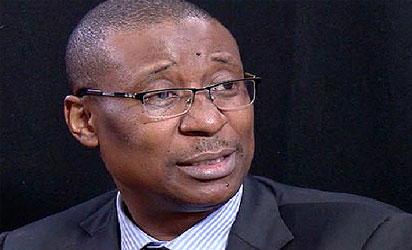
Okechukwu Enelamah, Minister of Industry, Trade and Investment
Five years after it was strengthened and relaunched, the national automotive policy is yielding positive results and drawing investors from across the world, says the ministry of Industry, Trade and Investment.

Okechukwu Enelamah, Minister of Industry, Trade and Investment
The plan’s major objective is to bring back Completely-Knocked-Down (CKD) automotive assembly and develop local content, thereby turning Nigeria into a vehicle manufacturing country.
In many countries around the world, the automotive industry plays both a strategic and catalytic role in economic development and the objective of the national automotive policy is to restore assembly and develop local content, thus, creating employment, acquiring technology and reducing pressure on the country’s balance of payment.
Efforts to attain an effective automotive sector have been a continuous one and as the policy continued to evolve over the years with necessary tweaking, remarkable achievements have made, the ministry says.
Why we’re packaging 19th Abuja Motor Fair — BKG boss
“The achievements made so far confirm the high potentials of the policy to grow the automotive sector,” says Minister of Industry, Trade and Investment Rd. Okey Enelamah.
Presently many assembly plants in the country are in operation. Over 14 existing assembly plants like Peugeot Automobile Nigeria Limited (PAN), Innoson Vehicle Manufacturing Co. (IVM), Anambra Motor Manufacturing Company (ANAMMCO) and Leyland-Busan have started assembling new products since 2014, and new ones have been established.
Before this policy, three out of the five assembly plants established in the 1970s had become moribund. However, under the policy, 29 out of the 54 licensed Assembly Plants as at February, 2018 are now operational. A total installed capacity of 419,190 units and a total actual production of 8,628 units have been achieved so far.
Also, Dangote Sinotruk West Africa LTD, a Joint Venture with total investment of $100million for truck assembly will assemble and produce full range of commercial vehicles covering heavy duty truck, medium truck, light truck and other semi-trailers etc.
Another example of the positive results of the automotive policy is the growth of ANAMMCO. The company downsized its staff from 2011 due to the unfavourable conditions. The downturn in business also affected employment down the value chain. With the revival of manufacturing, ANAMMCO recalled 200 of the staff that had been laid off. The company is currently waxing stronger and has received several proposals from Original Equipment Manufacturers interested in establishing local assembly presence.
The policy has also generated interest outside the country. Recently, a delegation of international automotive investors, comprising original equipment manufacturers and other stakeholders visited the country.
Among others, they sought to: gain insight into the opening business opportunities and investment environment in the Nigerian automotive sector; assist in the shaping of national and state policy to support industry overall and domesticated manufacturing for the automotive sector; gain insight into the automotive sector and potential for enhanced manufacturing in Nigeria; build relationships and networks with key Government and private sector figures; and to deepen the structured business links and investment between the private sectors of Nigeria and South Africa.
Enelamah, who was the host of the delegation during the visit, said: “We are excited by the role the automotive industry plays in the strategic and catalytic economic development of countries and we are committed to developing the sector speedily to facilitate the economic diversification of the country.”
Some months after the visit, Nigeria signed an MoU with Volkswagen on the development of the automotive hub. The MOU was signed on the sidelines of bilateral talks during the visit of German Chancellor Angela Merkel.
By the terms of the MOU, Volkswagen, having identified Nigeria’s strong potential as an automotive manufacturing hub, undertakes to implement a phased approach in relation to the local manufacture of vehicles in Nigeria. In addition, Volkswagen intends to establish a training facility in partnership with the German Government, and a Volkswagen vehicle service network Nigeria, subject to commercial viability.
Ahead Brazil 2019: Golfers prepare for Copa Cobana tournament
On its part the Federal Government of Nigeria undertook to ensure the passage of the Nigerian Automotive Policy, which is currently under consideration by the National Assembly, as well as ensure the creation and sustenance of a conducive environment for Volkswagen to invest and do business in Nigeria, in line with ongoing Ease of Doing Business reforms.
Enelamah had said: “The MoU is a major step in our walk towards the development of a robust automotive industry to achieve its potential contribution to the continuous economic development of the country.
Tom Schaefer, Head of Volkswagen’s sub-Saharan operations noted that Volkswagen “is serious about its intentions in sub-Saharan Africa”, adding that the region is “the last frontier for the automotive industry. Africa’s time is now and with good alignment between the African countries with automotive aspirations we can create intra-African trade and a win-win situation for all.”
Prior to this landmark signing of the MOU, a delegation of automotive investors, led by Schafer – who is also the President of the African Association of Automotive Manufacturers (AAAM) had visited Nigeria, in August 2016 and in July 2018, meeting with President Buhari, Vice President Osinbajo, members of the Economic Management Team (EMT), and the National Automotive Design and Development Council (NADDC).
Last week, activities towards the development of Nigeria into an automotive hub commenced yesterday in Lagos with a kick-off workshop of key stakeholders from the public and private sectors in Nigeria, as well as senior management of Volkswagen led by Thomas Schaefer, the Head of Sub-Saharan Region and Managing Director, Volkswagen South Africa.
Nigeria, world’s third most terrorised country for 4th year running — Report
The workshop was organized for Nigeria and Volkswagen to agree on the next steps to operationalize a September 2018 agreement for Volkswagen to lead development of Nigeria into an automotive hub.
Enelamah, who declared the workshop open, said that the development of the country’s automotive industry is a key plank of the Federal Government’s Economic Recovery and Growth Plan (ERGP) which aims to grow the economy, invest in Nigerians and build a globally competitive economy.
“We believe that this is an idea whose time has come,” Enelamah said at the workshop, which lasted all day.
Disclaimer
Comments expressed here do not reflect the opinions of Vanguard newspapers or any employee thereof.