By Juliet Umeh
The Federal Government has called for stronger international support and innovative financing to address the needs of refugees and displaced persons, saying Nigeria hosts more than 142,000 refugees and asylum seekers from 42 countries.
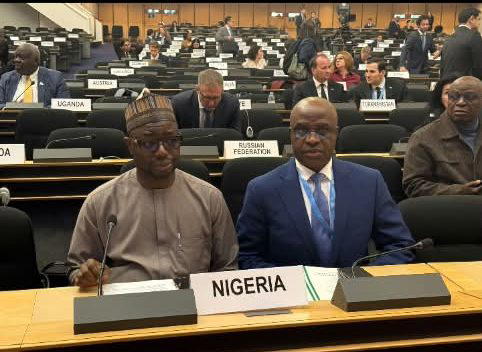
Minister of Humanitarian Affairs and Poverty Reduction, Dr Bernard Doro, made the call in Nigeria’s national statement at the 77th session of the Executive Committee of the United Nations High Commissioner for Refugees, UNHCR, in Geneva.
The meeting is holding at the Palais des Nations from October 12 to 16, 2026.
According to a statement issued by his Senior Technical Adviser on Information Systems and Data Analysis, Dr Abimbola Fasanu, Doro said Nigeria had also received more than 24,000 returnees as of September 2026 and was managing over 6.7 million internally displaced persons, IDPs.
He reaffirmed Nigeria’s commitment to its international refugee protection obligations, noting that the country maintains an asylum system under the National Commission for Refugees, Migrants and Internally Displaced Persons Act of 2022.
Doro said Nigeria had recorded no case of refoulement in 2026. Refoulement is the return of people to a country where their lives or freedom could be threatened.
On efforts to find durable solutions for displaced Nigerians, the minister said more than 7,000 refugees had voluntarily returned from neighbouring countries this year under Tripartite Agreements. Another 14,000 Nigerians in Cameroon had registered their intention to return, while an agreement on the return of 2,000 Nigerians from Niger was being finalised.
He acknowledged Cameroon, Chad and Niger for continuing to provide refuge to displaced Nigerians.
Doro said improved security in parts of the country was creating opportunities for voluntary returns. He added that Resettlement Cities established in seven locations were supporting the phased closure of displacement camps in conditions of safety and dignity.
The minister also highlighted measures to promote self-reliance among refugees and reduce prolonged dependence on humanitarian assistance.
He said refugees in five states were receiving access to land, agricultural inputs and skills training. The NCFRMI’s newly established Public-Private Partnership Department is also working to expand livelihood opportunities.
Doro cited the local integration of former Liberian and Sierra Leonean refugees, some of whom have established businesses and become economically active members of their host communities.
On access to essential services, he said displaced people and host communities were being enrolled in Nigeria’s national identity system to help them access banking, education and social services.
Refugees are also being included in state action plans and social registers, while 10 mobile documentation buses are expected to extend identity services to remote and underserved communities, he said.
Doro added that Nigeria and UNHCR were developing a Digital Gateway to give refugees secure online access to information.
Calling for greater international responsibility-sharing, the minister urged countries to expand resettlement opportunities and complementary pathways for refugees. He also called on UNHCR to explore partnerships with regional financial institutions, including the African Development Bank and the ECOWAS Bank for Investment and Development, to mobilise additional resources for refugee protection and durable solutions.
He said the responsibility for addressing displacement could not rest on host countries alone, particularly as humanitarian needs rise and international resources decline.
The minister recalled Nigeria’s reaffirmation, in December 2025, of five pledges made under the Global Compact on Refugees in 2023. He also cited the domestication of the Kampala Convention in 2026 as part of the country’s efforts to strengthen protection for IDPs.
Doro urged countries to recognise Nigeria’s Convention Travel Documents and facilitate visa access for holders, in line with applicable international obligations.
Congratulating UN High Commissioner for Refugees Dr Barham Salih on his assumption of office, the minister reaffirmed Nigeria’s commitment to working with UNHCR and international partners. He also acknowledged former High Commissioner Filippo Grandi and thanked donor countries and organisations supporting refugee protection in Nigeria.
Doro said lasting responses to displacement must combine immediate humanitarian protection with practical opportunities for voluntary return, local integration, access to essential services and economic self-reliance.
Disclaimer
Comments expressed here do not reflect the opinions of Vanguard newspapers or any employee thereof.