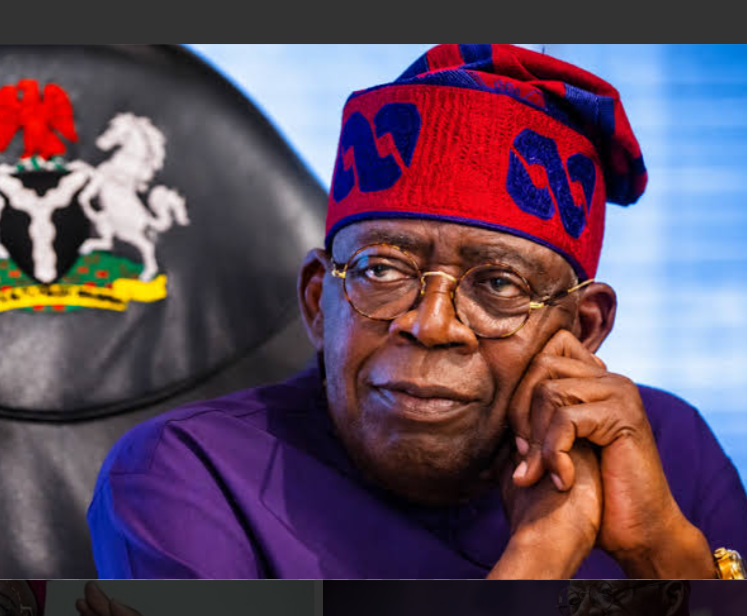
President Bola Tinubu
By Dr. Gabriel Atumeyi
The APC’s Presidential Campaign Council list, released a few weeks ago, was notable less for the names it featured than for one it did not. Festus Keyamo, SAN, the Minister of Aviation and Aerospace Development, was missing. So were governors and presiding officers of the National Assembly, whose omission also raised eyebrows.
But it was Keyamo’s name that kept me thinking.
I have never met the man, yet I have no hesitation saying he belongs in the first rank of Nigerians who have shaped our public conversation. His absence was a gap.
After weeks of back and forth, the party on Tuesday, October 13th, 2026, released a revised list featuring Keyamo and many other heavyweights.
I do not intend to recite his résumé. But a few facts are essential coordinates.
Keyamo was called to the Nigerian Bar in 1993, at a time when Nigeria was still under military rule and the struggle over the annulled June 12 election was reshaping the political landscape. He learned his craft in the chambers of Gani Fawehinmi, where the law was taught not as a profession but as a weapon against power. The first lesson was not how to win a case, but how to face the consequences of losing one.
The junta did not tolerate dissent. To defend the accused was to risk becoming one. Keyamo represented Beko Ransome-Kuti, Frank Kokori, Ken Saro-Wiwa, and M.K.O. Abiola — names that carried weight, names that carried danger. He was on the legal team for NADECO leaders. He earned the Gani Fawehinmi Award for Courage.
It is worthy of note that Bola Ahmed Tinubu was part of that same NADECO struggle. He condemned the annulment on the Senate floor as “another coup d’etat,” was arrested and detained under Abacha, and fled into exile, from where he financed the pro-democracy movement. Keyamo defended the prosecuted democrats in court; Tinubu financed the same movement from abroad. They entered the same struggle through different doors.
That history matters. When Keyamo appears on a campaign list, he is being positioned to take risks others may not want to take.
The military eventually left. Democracy returned, imperfect and fragile. Keyamo remained a lawyer but began to speak more openly about politics. He became a commentator, a presence on television. Then, in 2018, he was appointed Director of Strategic Communications and official spokesperson for Muhammadu Buhari’s 2019 presidential campaign.
The transition from human rights lawyer to campaign spokesman is seen by many as a compromise. I do not intend to litigate that argument here. My concern is what he brings on board this time.
A campaign council is not an honour roll. It is a machine that requires different functional parts working in concert. Tinubu’s council is large and complex, with fundraisers, state coordinators, and logistics handlers. Among these functions, persuasion is the one most easily underestimated.
And persuasion, in Keyamo’s hands, is a performing art.
Watch Keyamo on television and you understand why TV stations want him always. He does not merely answer questions; he dismantles them and rebuilds them into arguments of his own.
He has the barrister’s instinct for the jugular. When an interviewer tries to corner him, he does not retreat — he counter-attacks, often turning the premise of the question against the questioner. When an opponent makes a claim, he does not let it breathe; he pounces on the weakest word and worries it until the whole argument collapses. It is combative, yes. But it is also compelling. Love him or loathe him, you cannot ignore him. And that, in the economics of television, is everything.
The Pull
This is the part that often goes unspoken: Keyamo moves viewers. Stations know it. Producers know it. When his name appears on a programme’s lineup, the audience changes, it grows, it sharpens, it becomes more engaged. People tune in specifically to watch him, the way they once tuned in to watch the great debaters of an earlier era. Some watch to cheer. Some watch to jeer. But they watch.
In a fragmented media environment where attention is the scarcest currency, that is not a small thing. A spokesman who can draw an audience is worth more than one who merely delivers talking points. Keyamo does both, and he does the first in a way that no other figure in this campaign can match. His presence on a panel is not a segment; it is an event.
The Ingredients
So what does he actually bring to the campaign?
First, clarity. Keyamo compresses complex arguments into transmissible, memorable formulations. He does not drown in policy detail; he distils. In a campaign where the opposition will try to define the narrative, that capacity to reduce a debate to a single sharp sentence is invaluable.
Second, aggression. Campaigns are not won by the polite. They are won by those willing to take the fight to the other side, to frame the terms of engagement, to make the opponent respond rather than propose. Keyamo does not wait to be asked; he sets the agenda and drives the narrative. The Atiku camp has already felt his sting- only recently, its lobbyist in the United States threatened to sue him. That is a measure of his effectiveness.
Third, credibility of a particular kind. He is not a stranger to struggle. When he speaks of risk, of sacrifice, of the cost of conviction, he speaks from memory. That gives his defence of the party’s candidate a weight that a hired gun could never carry. He and Tinubu come from the same tradition, the same fight, different doors into the same struggle. When Keyamo makes that argument, it lands differently.
Fourth, versatility. He can do the morning show and the evening news. He can do radio, print, and the chaotic theatre of social media. He can debate a lawyer, a economist, or a rabble-rouser, and adjust his register accordingly. In a campaign that must reach multiple audiences simultaneously, that range is a strategic asset.
But he cannot do it alone. Keyamo may be a powerful part, but he is still only a part. Which is precisely why the President has assembled an army of communication experts to man the media arm of the campaign council.
President Tinubu understands power, its mechanics, its rhythms, its demands. He and Keyamo come from the same tradition, the same struggle. That shared history is the foundation on which this partnership rests.
For those who have followed his career, his addition comes as no surprise. This is a man who has never needed a title to make his presence felt. He arrives, he assesses, he acts and delivers.
Keyamo is in. In a campaign that knows what is at stake, that matters. He has never let me down, and I am confident he will not let down President Tinubu or the APC.
Disclaimer
Comments expressed here do not reflect the opinions of Vanguard newspapers or any employee thereof.