By Lukman Omikunle
For Nigerian content creators, the difference between a frustrating upload delay and a finished delivery schedule increasingly comes down to the quality of the mobile connection available when a video project is ready for distribution.
That operational margin is taking on greater commercial significance as Nigeria’s creator economy matures, providing livelihoods for thousands producing video sketches, music, commentary, lifestyle content, and digital advertising across platforms such as YouTube, TikTok, and Instagram.
Creators who have demonstrated the borderless reach of Nigerian digital production include Maryam Apaokagi (Taaooma), Debo Adedayo (Mr Macaroni), and Emmanuel Chukwuemeka Ebere (Sabinus). Their reach reflects a modern media landscape where content produced in Lagos, Abuja, or Port Harcourt can reach international audiences without moving through legacy television broadcast networks.
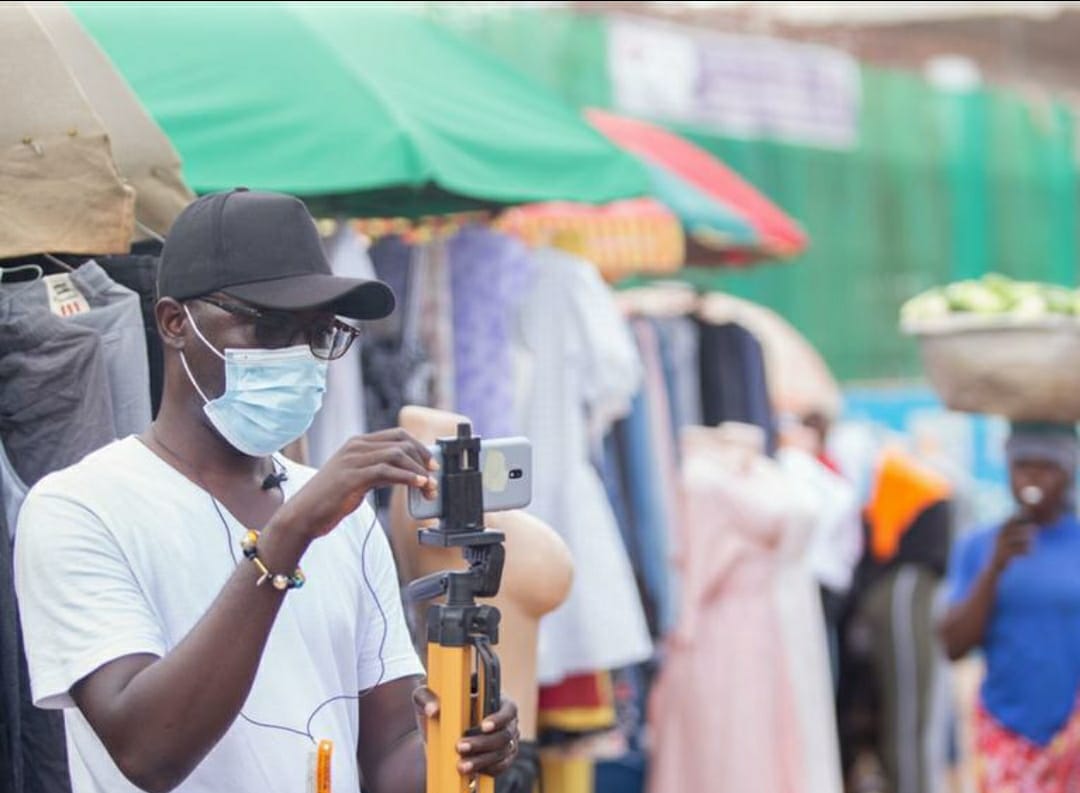
Behind every online skit or video production lies a rigorous production workflow: filming, multi-track editing, rendering, cloud backup, and multi-platform uploading.
This is where faster, low-latency mobile networks are proving critical.
High-definition video files demand substantial upload bandwidth. On congested or unstable links, uploading a multi-gigabyte project can stall for hours, taking valuable time away from post-production and publishing schedules. On robust 4G and 5G networks, upload times drop substantially, helping creators maintain rapid production turnarounds.
This dynamic coincides with soaring data usage nationwide. According to official data from the Nigerian Communications Commission, internet data consumption reached a record high of 1.50 million terabytes in the month of May 2026 alone. NCC market metrics for the period show that 4G accounted for 54.30 per cent of internet subscriptions, while 5G reached 4.49 per cent of connections.
The data highlights a clear structural trend: Nigerian internet users are pivoting decisively toward high-speed, data-heavy digital services.
Faster networks do not inherently make devices burn through data faster; rather, they make high-bandwidth services seamless to execute. High-resolution streams load without buffering, multi-gigabyte files transfer in minutes, and low-latency livestreams run stably where network conditions permit.
For audiences, this evolution brings immediate visual benefits. Modern social platforms automatically elevate video playback resolution when they detect stable, high-throughput connections. Stronger connectivity allows Full HD and 4K streams to run continuously, which naturally increases the volume of data downloaded per minute compared to standard-definition playback.
For creators uploading work, the same principles apply. A 4K video contains vastly more data than an equivalent 720p or 1080p render. High-speed networks provide the pipeline capacity to move those large files rapidly, enabling creators to preserve high visual quality without production delays.
Subscribers who find their data balances decreasing more rapidly on upgraded networks are typically seeing the effect of higher automatic resolutions and frictionless media loading, rather than background network leakage.
Engr. Gbenga Adebayo, Chairman of the Association of Licensed Telecommunications Operators of Nigeria, has described telecoms operators as the “infrastructure of infrastructures,” pointing to how commercial activity across media, commerce, and finance depends on network resilience.
That dependence is vivid in the creator space. A June 2026 industry assessment placed Nigeria’s active creator and digital influencer base at over 250,000 individuals. For this cohort, network connectivity serves as industrial production machinery rather than casual entertainment.
The benefits are also reaching wider creative enterprises, such as fashion designers transferring high-resolution lookbooks to international buyers and production studios collaborating on remote commercial shoots, cementing mobile broadband as a foundational driver of Nigeria’s digital export economy.
Lukman Omikunle wrote from Lagos.
Disclaimer
Comments expressed here do not reflect the opinions of Vanguard newspapers or any employee thereof.