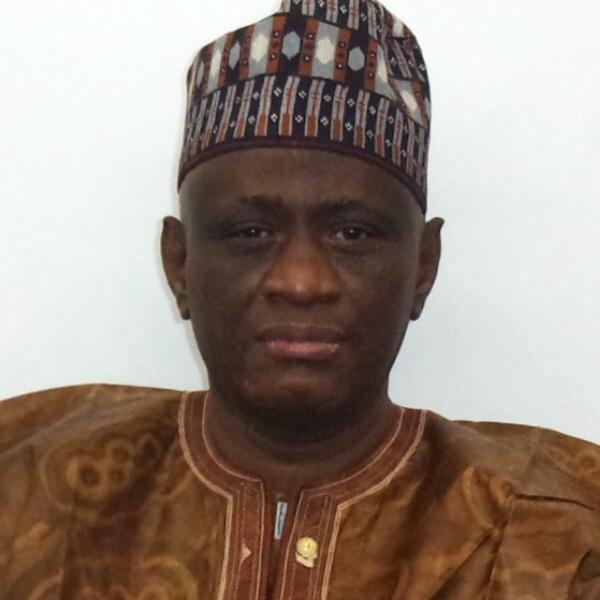
By Aboubakr Kaira Barry
President Bola Ahmed Tinubu deserves full credit for taking on some of the hardest economic reforms Nigeria has seen in a generation. When he assumed office in May 2023, he met an economy held together by quick fixes: multiple exchange rates that distorted every price, a fuel subsidy costing billions while mostly helping those who needed it least, and foreign reserves under serious pressure. Instead of kicking the can down the road, his administration unified the exchange rate, removed the fuel subsidy, rebuilt foreign reserves above 40 billion dollars, and helped push Federation revenues in some months to nearly double their level a year earlier. These are tough decisions that previous governments avoided. They have made Nigeria’s macroeconomic position more credible.
Yet, for most Nigerians, life has not yet improved. Real income per person is projected to grow by only about 0.6 percent in 2025. Debt repayments are now competing with health, education, and infrastructure for scarce resources. More money is coming into government accounts, but citizens are not seeing enough change in schools, hospitals, roads, or power. To understand this gap, we have to look at what happens to public money after it is collected. That is where a global tool called PEFA becomes important.
PEFA – the Public Expenditure and Financial Accountability framework – is the international standard for measuring how well governments manage public funds. Created in 2001 by the World Bank, IMF, and other partners, it scores countries on 31 indicators of public financial management. The grades run from A (excellent) down to D (inadequate). A D* does not just mean poor performance; it means there was not even enough information to do a proper assessment.
In 2022, Rwanda scored an average of 3.12 out of 4.00 and ranked first among 32 African countries assessed. Nigeria’s most recent score, from 2019, was 1.67, placing it 27th. And that 2019 result likely overstates where Nigeria stands today. Since then, the Central Bank expanded emergency lending from about 6 trillion to 22 trillion naira outside the formal budget. COVID-19 procurement fraud has been confirmed by Nigeria’s own anti-corruption agency. No major public financial management law has been passed to tighten the system. In other words, the 2019 PEFA is not our baseline; it is our ceiling.
The scores also show where the real leaks are. Rwanda earns strong grades on payroll control, procurement, and the integrity of its financial data. Nigeria scores D across all three. This means ghost workers can stay on the payroll undetected. Contracts can be inflated without consequence. Money can move into and out of suspense accounts – a classic route for misappropriation – without clear answers. Transparency International’s Corruption Perceptions Index tells a similar story: Rwanda sits in the mid-40s globally, while Nigeria was ranked 150th in 2022. The corruption index shows the outcome. PEFA shows the institutional doors through which the money escapes.
The uncomfortable truth is this: sending more money through a broken system does not improve services. It only increases leakages. President Tinubu’s macroeconomic reforms are the necessary first step. But they are only the beginning. The next phase is to fix the “plumbing” of public finance so that each extra naira of tax or oil revenue has a better chance of turning into real services.
The good news is that some meaningful reforms do not require a constitutional amendment. Three practical steps stand out.
First, the President should establish a Reform Tracking Office inside the Presidency focused on public financial management. Its role would not be to sign cheques or run budgets. Its core job would be to track promises and results. Every quarter, it would publish a simple scorecard: which reforms in budgeting, accounting, procurement, and oversight were promised, and which were actually delivered. When reforms stall, that failure becomes visible at the very top. This visibility creates pressure for action.
Second, Nigeria needs an independent budget watchdog, similar to the United Kingdom’s Office for Budget Responsibility. This body would not write the budget. Instead, it would review the assumptions behind each year’s fiscal plan – oil prices, growth forecasts, revenue projections – and publish its findings openly, without needing clearance from the executive. At present, budgets can be built on unrealistic assumptions, and no official institution is required to call them out in public. An independent watchdog would not solve every problem, but it would make it harder to hide bad numbers and easier for the public and parliament to see the truth.
Third, the Federal Government can use existing tools to encourage better financial management by states. States have constitutional autonomy, but Abuja still has leverage.
One tool is the Federation revenue-sharing formula, overseen by the Revenue Mobilisation Allocation and Fiscal Commission. Today the formula relies on population, land mass, and equality. A small share could be linked to how well states manage their finances. States that publish audited accounts on time, grow their internally generated revenue, and pass funds properly to local governments would receive a slightly higher share. Those that do not would receive a slightly lower share.
Another tool is the approval of state borrowing. The Debt Management Office currently focuses mainly on whether a state can repay. That condition can be strengthened. Before approval, states should be required to show that their accounts for the last two years have been audited and published, that they have not been diverting local government allocations, and that they follow international public sector accounting standards.
Finally, transparency can be used as a powerful incentive. National Economic Council meetings bring the President and governors together. At these meetings, the Presidency could publish a “league table” ranking each state on key indicators: revenue performance, audit compliance, local government remittances, and debt sustainability. That scorecard should be made public and shared with civil society, the media, and partners like the World Bank and IMF. No governor wants to be seen at the bottom of such a list. Public rankings can create competition and pressure where formal rules are weak.
The gap between Nigeria’s 1.67 PEFA score and Rwanda’s 3.12 is not just technical. It is the distance between money collected and services delivered. It is the teacher who is a ghost worker, the contractor who inflates costs, the health centre that never receives the funds allocated to it. President Tinubu has already shown that he is willing to make hard choices on fuel subsidies and the exchange rate. With his current political capital, he can now make equally bold choices on public financial management.
If he does, he will move beyond stabilizing the macroeconomy. He will help build a Nigeria where the money raised in the name of the people is actually spent for their benefit.
By Aboubakr Kaira Barry, Managing Director, Results Associates, Bethesda, Maryland, USA
Disclaimer
Comments expressed here do not reflect the opinions of Vanguard newspapers or any employee thereof.