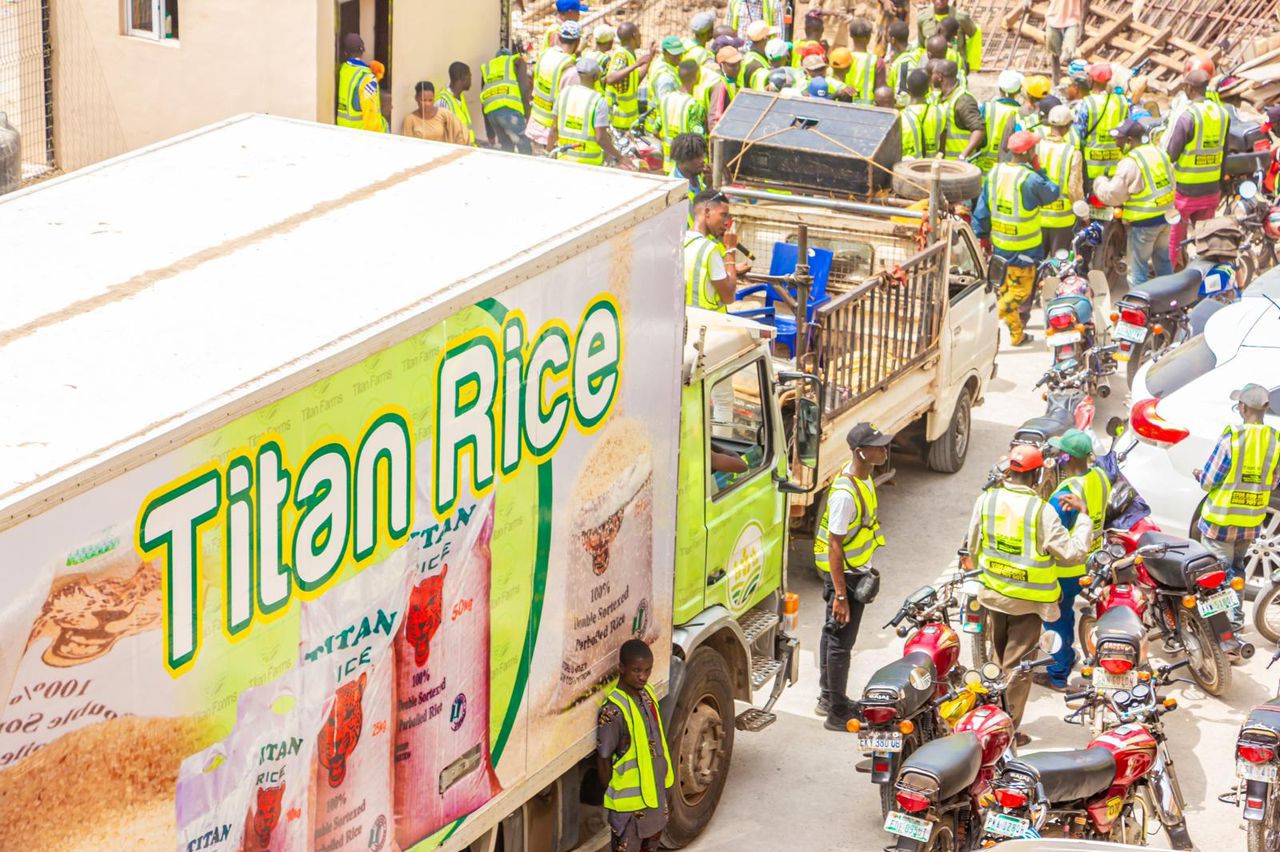
In an agribusiness landscape long shaped by informality and fragmented trade, Gbenga Eyiolawi is pursuing a quieter but more deliberate transformation. Through Titan Farms Nigeria, he is advancing a vision of food distribution built on structure, coordination and long-term systems thinking. It is an approach that industry watchers say is steadily redefining how producers connect to markets, replacing uncertainty with predictability and scale with order.
For decades, Nigeria’s food economy has operated through loose and often inefficient linkages. Small-scale producers sell through multiple layers of middlemen, logistics remain inconsistent, and visibility across the supply chain is limited. While the system moves significant volume, it frequently does so at a cost inefficiencies, quality challenges and unstable incomes for producers are common outcomes.
Eyiolawi’s response has not been to upend this ecosystem, but to organise it. Rather than displacing existing actors, Titan Farms Nigeria positions itself as a coordinating platform, bringing aggregation, logistics and distribution into a single, coherent framework. The goal is not a series of isolated transactions, but a system that works repeatedly and reliably.
At the centre of this strategy is the Food Hybrid model, a distribution framework developed within Titan Farms Nigeria to address supply-chain inefficiencies at scale. Unlike conventional trading models that focus solely on buying and selling, Food Hybrid integrates producers, transporters and market channels into a structured process designed for expansion across regions.
By standardising aggregation points and coordinating logistics flows, the model reduces duplication and uncertainty—two of the most persistent cost drivers in Nigeria’s food system. The emphasis is on predictability, clarity around where produce originates, how it moves, and when it reaches the market. In a sector where uncertainty is often built into pricing, this represents a meaningful shift.
Those familiar with Titan Farms Nigeria’s operations describe Eyiolawi’s leadership style as one that favours durability over quick wins. Instead of chasing short-term, spot-market opportunities, the company has invested in refining processes, building long-term relationships and stress-testing its model under real operating conditions.
This shows a broader evolution in approach from operator to architect. As one sector analyst put it, “The aim is not just to trade food, but to design a system others can depend on.”
The effects of this structured approach extend beyond Titan Farms Nigeria itself. By integrating small and mid-scale producers into coordinated distribution channels, Food Hybrid helps stabilise supply and improve access to markets. Better logistics coordination also reduces spoilage, a longstanding challenge in Nigeria’s food economy.
These outcomes align closely with national priorities around food security, value-chain development and employment creation. They also demonstrate how private-sector leadership can advance public goals without relying heavily on subsidies or intervention-driven models.
While Titan Farms Nigeria has begun positioning the Food Hybrid framework for international markets, including the United Kingdom, domestic scale remains the anchor. The system being taken abroad is one that has been tested and refined within Nigeria’s demanding operating environment.
For Eyiolawi, this sequencing is deliberate. Building depth at home, he maintains, is essential to credibility abroad. A model that can function amid Nigeria’s logistical constraints, price volatility and dispersed production base is better prepared to adapt to more regulated markets.
Now, as Nigeria’s agribusiness sector continues to evolve, Titan Farms Nigeria’s approach offers a compelling blueprint for structured growth, one that places coordination, institutional thinking and long-term value creation above transactional scale alone.
In using Titan Farms Nigeria to build a structured food distribution system, Gbenga Eyiolawi is contributing to a broader reimagining of how food moves across the country. It is a vision that suggests the future of agribusiness will belong not only to those who control volume, but to those who build systems designed to endure.
Disclaimer
Comments expressed here do not reflect the opinions of Vanguard newspapers or any employee thereof.