By Abraham Great
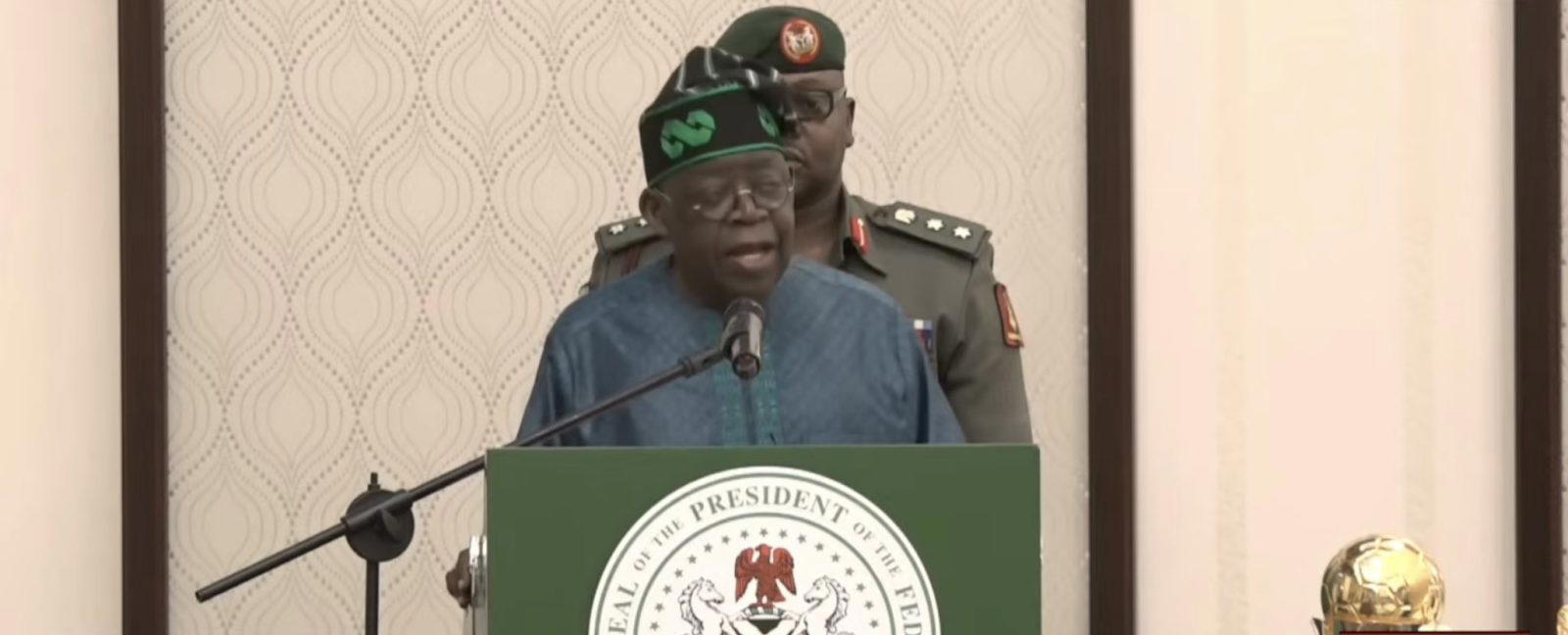
Your Excellency, thank you for all your strides, efforts to steady the Nigerian ship, and hawking Nigeria from Continent to Continent.
I write to you as a son of the land, burdened with the realities of our dear nation yet overflowing with hope for her future. Nigeria may not prosper as it should until leadership gives deliberate and unwavering attention to the following four foundational matters.
A Genuine and Unambiguous National Census: It is deeply concerning that, in 2025, the largest black nation on earth is still grappling with the basic task of accounting for her people. Budgeting is the lifeblood of any thriving nation, and without accurate population data, planning, forecasting, and equitable distribution of resources remain impossible. As the saying goes, “You cannot manage what you cannot measure.”
The last comprehensive Nigerian census was conducted in 2006-nearly two decades ago.
According to UNFPA, an accurate census is one of the most essential tools for poverty reduction, healthcare, infrastructure development, and national security. South Africa, with a population of just over 60 million, completed a digital census in under 18 months using GPS, biometrics, and mobile data collection tools. Nigeria must rise to the same challenge.
I recommend that Nigeria, with the support of reputable global institutions such as the United Nations, World Bank, and African Union, conduct the most extensive and technologically advanced census in our history. This exercise should span at least 15 months, ensuring inclusivity, transparency, and accuracy.
Re-establishing a Comprehensive Civic Data and Identity System: One defining trait of developed nations is their ability to track the lifecycle of every citizen-from birth to death, marriage to migration. Unfortunately, in Nigeria, birth and death records are inconsistently captured, and civic data systems remain fragmented. We must restart the process of comprehensive biometric registration for every citizen, covering: – Births and deaths; Marriages and divorces; National identification and residential addresses; Fingerprint and facial recognition databases.
This initiative serves multiple purposes: It establishes a unified citizen databank, enabling real-time governance decisions. It distinguishes citizens from immigrants or undocumented aliens, improving border and internal security. It supports inter-agency data sharing, empowering intelligence, health, tax, education, and law enforcement operations. It drives effective urban and rural planning-from the Local Government to Federal levels. It improves demographic classification, essential for resource allocation and it also enhances Nigeria’s global profile, increasing passport mobility and fostering stronger bilateral relations. Countries like Estonia and Singapore have achieved near-total civic digitization. Even Ghana launched its national biometric ID system-GhanaCard-with impressive success. Nigeria must not be left behind.
Fixing Electricity and Infrastructure Deficits: Abraham Maslow, in his Hierarchy of Needs, places physiological needs-like food, water, and shelter-at the very base. For a modern economy, electricity has become an indispensable addition to that base. Without power, no industry can thrive, no business can scale, and no economy can compete globally.
Nigeria’s current power generation capacity hovers between 4,000-6,000 MW, grossly inadequate for a population exceeding 220 million. By comparison, Brazil-another developing giant-generates over 180,000 MW to serve a population of 215 million. Nigeria must aim for nothing less than 160,000 MW of generation capacity if we are to industrialize by 2050, when our population is projected to surpass 450 million.
Our power strategy must reflect intentionality, ambition, and the will to partner globally. From solar mini-grids to hydropower dams, private capital and multilateral funding are available if Nigeria shows clear governance and execution frameworks.
As former U.S. President Barack Obama once said, “Electricity is the lifeline of the modern economy.” Let us not wait another decade to turn the lights on.
Rebuilding National Values and Institutional Integrity: At the moment, Nigeria appears adrift in terms of shared national values. Our younger generations are being raised in a culture dominated by frivolity, materialism, and short-term gratification. Service delivery, both public and private, lacks excellence. Federal agencies, airports, borders, and seaports mirror mediocrity, corruption, and apathy rather than efficiency, dignity, and pride.
We must take cues from nations that rebuilt their core values post-war and post-colonialism such as Japan, Singapore, South Korea, and China. These countries embedded values like honesty, discipline, service, and innovation into every fiber of their national institutions. In Japan, for example, cleanliness and punctuality are taught from nursery school to corporate boardrooms. In Singapore, integrity in public service is non-negotiable.
Our schools, religious institutions, families, and government must unite to create a National Value Reorientation Program, backed by measurable metrics and inter-ministerial implementation. Excellence, not mere survival, should be the standard.
Your Excellency, I implore you to pay close attention to these four pillars. As your son, Dr. Abraham Great, I have long believed in your capacity-dating back to my interactions with your confidant, the Professor Ropo Sekoni, and my privileged exposure to the strategic conversations that shaped your gubernatorial journey. I have read, digested, and internalized your Renewed Hope Agenda and the Guiding Policy Document for your first four years. I believe the time has come to make the Nigerian people your foremost priority-not just in words but in bold, measurable actions.
May history remember you not only as a leader but as the transformer of a generation. Yours in patriotic hope, Dr. Abraham Great.
Great is a British-Nigerian entrepreneur, author, business strategist, and public affairs analyst.
Disclaimer
Comments expressed here do not reflect the opinions of Vanguard newspapers or any employee thereof.