By Richard Wanjohi & Tuoyo Amuka
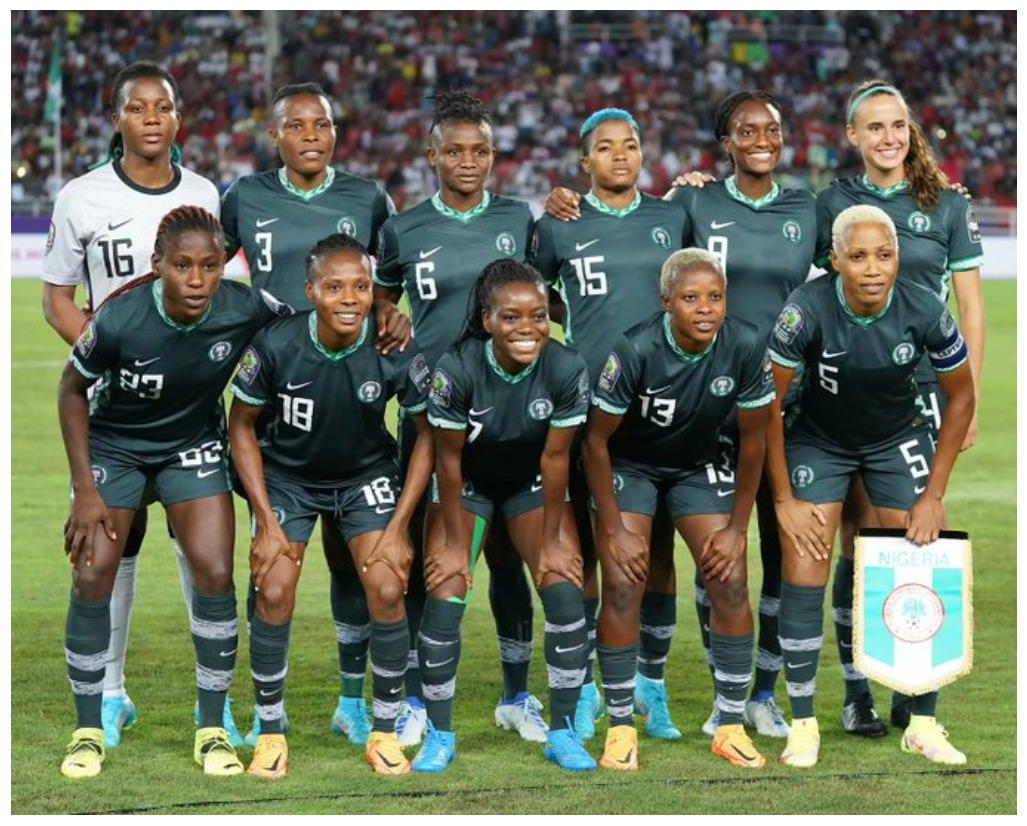
The electric air of Rabat’s Stade Olympique crackled with history. Before 21,000 roaring fans – half draped in Moroccan red, half in Nigerian green – Africa’s premier women’s football spectacle reached a fever pitch. Hosts Morocco, chasing their first-ever Women’s Africa Cup of Nations (WAFCON) title, had stunned the nine-time champions Nigeria with two ruthless first-half strikes. Captain Ghizlane Chebbak’s 12th-minute rocket and Sanaâ Mssoudy’s icy finish in the 24th minute sent shockwaves through the Super Falcons. By halftime, Morocco led 2-0, their dream of hoisting the trophy on home soil palpably close.
But the Super Falcons, architects of a staggering continental legacy (10 titles from 13 tournaments, 61 WAFCON matches with just 7 losses), refused to yield. What followed was a 45-minute masterclass in resilience that will echo through African football folklore.
The Comeback
At the 64th Minute, VAR detected defender Nouhaila Benzina’s handball. Esther Okoronkwo, ice in her veins, buried the penalty, scoreline (1-2). Okoronkwo then turned provider, slicing through midfield to feed Folashade Ijamilusi, who slotted home the equalizer. With the clock ticking to the final whistle, cometh the hour, cometh the hero. Substitute Jennifer Echegini, lurking near the penalty spot, met Okoronkwo’s whipped free-kick with a thunderous volley.
3 Nigeria – 2 Morocco!
Cue pandemonium…
Nigeria’s goalkeeper Chiamaka Nnadozie was nominated as the Golden Glove winner despite conceding twice early, and preserved the lead with a gravity-defying save in stoppage time. When the whistle blew, Nigeria’s players collapsed in tears of joy – champions for an unprecedented 10th time. Tournament MVP Rasheedat Ajibade lifted the trophy as fireworks lit the Rabat sky, a coronation of sheer will overcoming despair.
The Super Falcons’ 10th title defies dominance; it’s institutional mastery. Their record (45 wins in 61 WAFCON matches, consistent semi-final appearances since 1998) reflects deep-rooted talent pipelines and psychological fortitude honed over decades. Yet, this victory felt different. Overcoming a 2-0 deficit against a motivated host nation required tactical adjustments and mental strength exceeding previous triumphs. It signals a dynasty evolving, not resting.
Morocco’s journey to their first final – powered by Chebbak’s Golden Boot-winning 5 goals – underscores the North African’s state rising investment. The record crowds (45,562 attended their semi-final) and state-of-the-art facilities leveraged their 2030 Men’s World Cup bid infrastructure. Their heartbreak, however, highlighted lingering gaps: controversial VAR decisions sparked debate, exposing the need for consistent officiating standards continent-wide.
WAFCON Roared, But Who Was Listening?
The 2024 Women’s Africa Cup of Nations (WAFCON) came and went like a whispered anthem—roaring with talent, pride, and emotional intensity, yet barely audible beyond the continent. Nigeria, Africa’s undisputed queens of the game, lifted their 12th title in Casablanca with the sort of dominance that should command headlines.
Instead, the global media flinched. While Europe’s women’s championship is celebrated with the fervor of a revolution—every pass dissected, every sponsorship deal elevated as a feminist milestone—WAFCON, though older than the UEFA Women’s Euro, was once again left fighting for scraps of recognition.
CAF’s 45% increase in prize money—raising the champion’s reward to $1 million and pushing the total purse to $3.475 million—was a bold commercial signal. Add to that the presence of FIFA President Gianni Infantino and CAF’s Patrice Motsepe, and the message was clear: WAFCON matters. At least on paper. But beneath the surface of this show of solidarity and growth lies an ecosystem grappling with stark inequalities.
The contradictions are everywhere. Nigeria’s stars, like Jennifer Echegini and Rasheedat Ajibade, ply their trade in Europe’s top leagues—part of a brain drain that reflects the stunted growth of under-resourced domestic competitions. Their brilliance on the pitch shines a light on what’s possible, but also on what’s missing at home: functioning leagues, livable salaries, and professional pathways for the next generation. Nigeria’s victory is a beacon, yes—but also a mirror, reflecting a system still struggling to keep its best talent within its borders.
A Continent’s Game Ascendant
WAFCON 2024 was, if anything, a case study in both progress and neglect. Morocco dazzled with showpiece venues, showing what political will and investment can build. But that experience wasn’t universal. Many teams trained on substandard pitches and managed logistics on shoestring budgets. Officiating, often inconsistent and sometimes controversial, exposed a governance gap—one that cries out for serious investment in referee development, VAR implementation, and administrative transparency.
The broader context is even more damning. UEFA Women’s Euro enjoyed packed stadiums, sophisticated production, and consistent media coverage across the globe. WAFCON, by contrast, remains under the radar—not because of a lack of talent, but because of systemic neglect. Major broadcasters passed on rights or buried the matches deep in hard-to-find digital channels. Sponsors hesitated, unsure how to “position” themselves in African markets they’ve never bothered to understand. And African media houses, often underfunded and overstretched, couldn’t match the narrative muscle of their European counterparts.
Still, the football itself? Fast-paced. Emotionally rich. Politically potent. Nations like Zambia, South Africa, and the hosts Morocco were chasing goals— breaking stereotypes, reimagining what it means to be a woman, an athlete, and an African on the world stage. These aren’t just games. They’re statements of existence, of resistance, of pride.
Nigeria’s “Mission X” cemented their legacy as Africa’s benchmark. Morocco’s run proved new powers can rise. With expanded broadcasts, rising investment, and unforgettable moments like Echegini’s winner, WAFCON 2024 gave us more than a tournament – it was a statement. African women’s football has arrived on the global stage, brimming with talent, passion, and untapped potential. The challenge now is ensuring this momentum translates into sustainable growth from grassroots to governance, making the entire continent a winner.
WAFCON deserves more than applause after the final whistle. It deserves more than to be treated like a continental obligation or a scouting ground for European clubs. It deserves sustained investment, serious visibility, and a seat at the global football table. It deserves history documentaries and pundits who can pronounce the players’ names. African women’s football isn’t waiting for permission. It’s thriving despite the neglect. But imagine what could happen if the world actually paid attention.
Because if this tournament has shown us anything, it’s that Africa’s women aren’t asking for permission anymore. They’re demanding the spotlight!
Disclaimer
Comments expressed here do not reflect the opinions of Vanguard newspapers or any employee thereof.