•Say era of delay in medical lab results is over
By Chioma Obinna
Medical laboratory scientists and healthcare experts have called on practitioners across Nigeria to embrace Artificial Intelligence (AI) and digitalisation, describing them as game-changers in the delivery of effective and timely healthcare services.
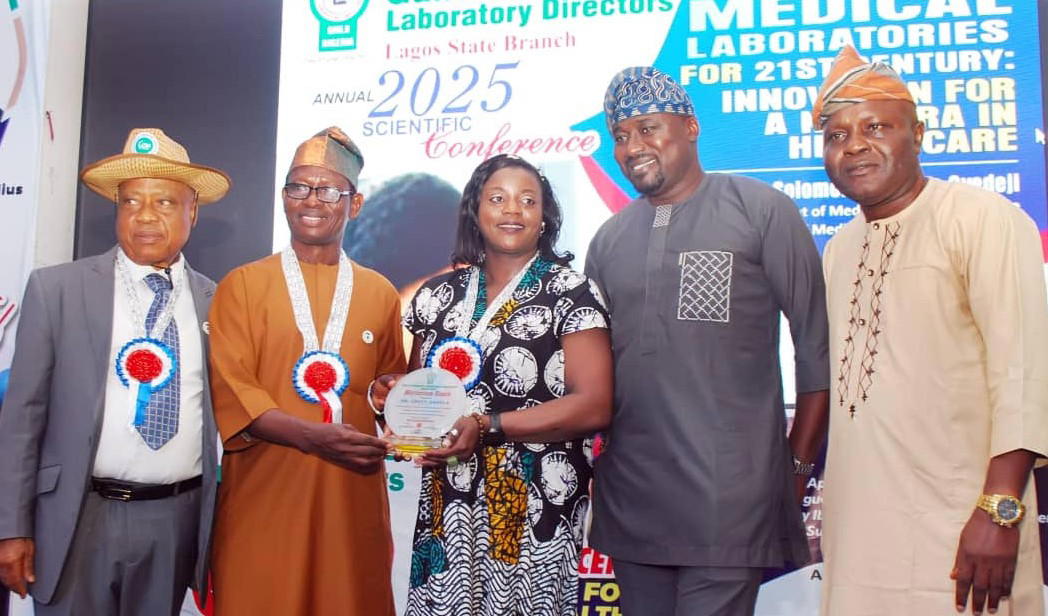
The experts spoke at the 2025 Annual Scientific Conference of the Guild of Medical Laboratory Directors (GMLD), held in Lagos, themed “Transforming Medical Laboratories For 21st Century: Innovation For A New Era In Healthcare.
The two-day programme brought together leading medical laboratory professionals, healthcare practitioners, and stakeholders to explore the future of diagnostic services in Nigeria.
In his submission, the Chairman of the Board of Fellows Association of Medical Laboratory Scientists of Nigeria, Bona Nlemadim, noted, “I qualified as a medical lab scientist over 40 years ago. Where we were then is not where we are today.”
Nlemadim explained that the integration of AI and other technological innovations had dramatically enhanced medical practice.
“In those days, people had to wait for a couple of days to get their results. But now, we have point-of-care facilities that provide almost immediate results,” he said. “This has led to faster diagnosis and quicker treatment.”
However, he also addressed concerns about the role of machines in replacing human expertise. “Machines cannot take the place of human beings. First of all, humans design machines,” he emphasised.
“Machines can aid, they can speed up the job, but they cannot replace the medical lab scientist. We must embrace this digital age, as we are now in a time when paper-based results are becoming obsolete.”
While commending the progress in the field, Nlemadim also called for greater government investment in healthcare infrastructure.
He pointed out that while Nigeria’s healthcare system was evolving, there were still significant challenges, especially regarding funding and power supply.
“The government has a lot to do. The budget is lean, and they are not providing enough facilities or equipment for this digital age,” he lamented.
He further explained that the lack of reliable power was a major obstacle for healthcare providers, particularly medical laboratories. “If you have all the equipment but no power, they are as good as nothing,” Nlemadim said. “This is why many are investing in solar power, but the government must also take responsibility for providing consistent electricity.”
Nlemadim also stressed the importance of the government’s involvement in providing modern equipment and facilitating training for healthcare professionals. “The government needs to do more in the health sector. Health is wealth, and it is only when you have a healthy population that the government can rest easy,” he asserted.
Speaking, the Chairman of the GMLD Lagos State Branch, Julius Adekoya, corroborated Nlemadim’s call for embracing digitalisation and AI in healthcare.
Adekoya emphasised that AI had revolutionised laboratory practices, significantly reducing turnaround times for test results.
“Gone are the days when patients were asked to come back after three or four days for results,” he said. “Now, with the help of AI and automated systems, we can get results in just a few hours. This has reduced the time for diagnosis and treatment, saving lives in the process.”
Adekoya also underscored the importance of professional development and the need for laboratory directors to stay updated with the latest technology.
“As we update our professional knowledge, we must also understand the business side of the profession,” he said. “Technology not only helps in reducing workload but also improves the efficiency and accuracy of the healthcare system.”
On his part, the keynote speaker and the Head of the Department of Laboratory Services at the University of Lagos, Professor Kolawole Oyedeji, called for greater collaboration among healthcare practitioners.
“The best thing now is for us to go digital. We must move from compartmentalised diagnosis to a fully integrated healthcare system,” Oyedeji said.
He highlighted the importance of IT departments in laboratory services, emphasizing the need for collaboration between public and private health practitioners to ensure rapid diagnostics and personalized treatments.
“Integration of advanced technologies, data analytics, and automation will lead to precision medicine and better patient outcomes,” he added.
In her remarks, President of the Health Writers Association of Nigeria, HEWAN, Mrs. Vivian Ihechu, acknowledged the critical role medical laboratories play in healthcare, pointing out the numerous challenges, including a shortage of skilled personnel, inadequate infrastructure, and insufficient resources.
“Insufficient funding, inadequate staffing, and limited access to training hinder the ability of medical laboratories to provide high-quality services,” Ihechu noted.
Speaking, the representative of the Medical Laboratory Science Council of Nigeria (MLSCN), Offutalu Paulinus Nnamdi, said they have established three ISO-accredited laboratories and encouraged public and private labs to pursue global accreditation standards. “This is the way to go,” the Council’s representative said.
Offutalu, who is the Head of MLSCN South West zonal office in Lagos, said MLSCN has made strides to improve the quality of medical laboratories in the country by establishing ISO-accredited laboratories. These include the External Quality Assurance Laboratory in Zaru, the Calibration Laboratory in Abuja, and the Public Health and Infection Diagnostics Laboratory in Lagos. The MLSCN’s commitment to global standards aims to position Nigeria as a leader in transformative healthcare.
“We are encouraging both private and public laboratories to pursue international accreditation,” said a representative from the MLSCN. “This will ensure that we meet the highest global standards for proficiency testing and quality assurance.”
Disclaimer
Comments expressed here do not reflect the opinions of Vanguard newspapers or any employee thereof.