Herders
…wants grazing reserves converted into community ranches
By Gabriel Ewepu
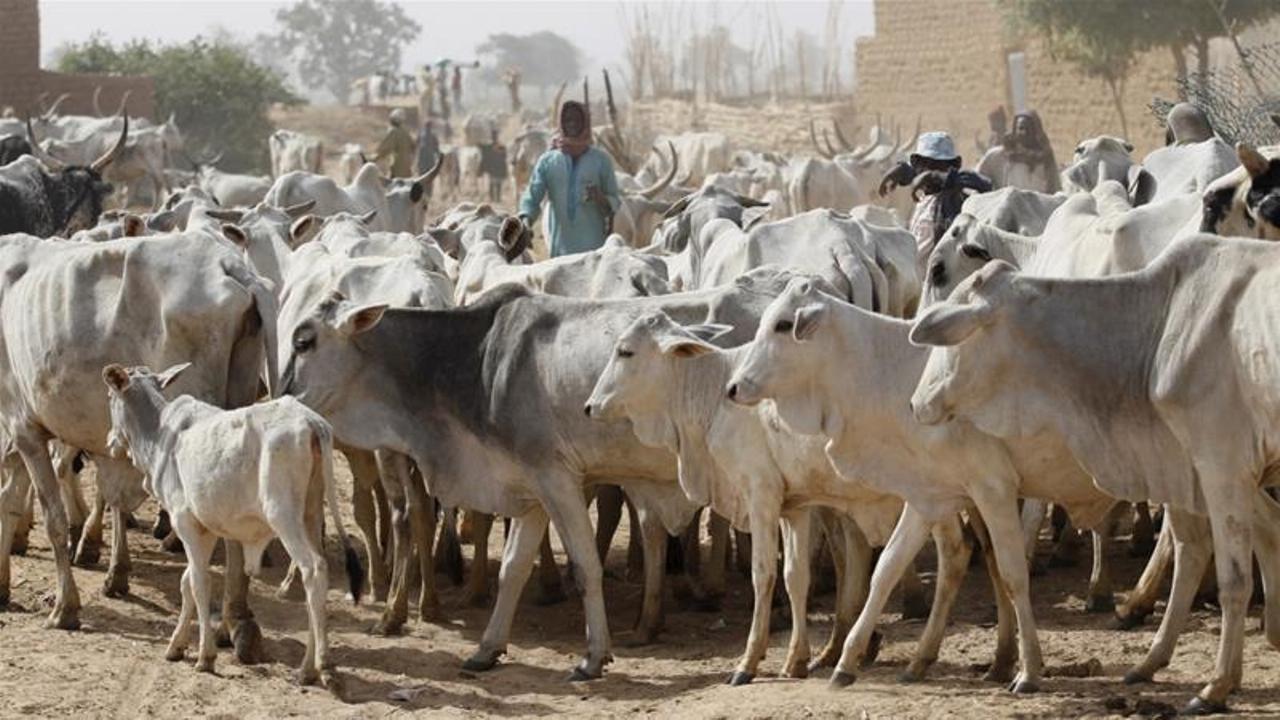
ABUJA – WITH high expectations from the newly created Ministry of Livestock Development by President Bola Tinubu, the foremost herders’ organisation, Miyetti Allah Cattle Breeders Association of Nigeria, MACBAN, Tuesday, asserted that herders cannot afford building ranches.
While speaking with Vanguard, the National President, MACBAN, Baba Othman Ngelzarma, said ranching has many models, and the model that people mostly talk about is the acquiring of land and providing necessary facilities, which the smallholder farmers cannot venture into because of high cost.
According to Ngelzarma, based on the circumstances surrounding the ownership of the cows, which is basically a family affair, the government should consider such peculiarities in its policy formulation.
He said: “Ranching has so many models but once you mention ranching, what comes into mind is for somebody to go and buy land, or buy his own water and grass for his cows.
“Our pastoralists cannot do that. The reason is 70 per cent or over of them are smallholder farmers who cannot afford the ranching because it is capital intensive.
“More than 70 per cent of them are smallholder farmers that have not more than 50 or 100 cows belonging to the whole family and not to one person but to the whole family. So you cannot expect them to go and sell their cows and buy a land for ranching because by the time they will sell the cow, provide the grass, water, the cows must have been exhausted.
So because the majority of them are smallholder farmers who cannot afford capital intensive ranching, you have to evolve a model that can suit those peculiarities and to them, the quantity of the cow matters much to them than the quality.
And the pride is always for you to get so many cows because it is the number of the cows that determines your importance in society. So there is a class status created in the cow ownership. So quantity matters much more than quality.
There is a class status attached to the ownership of the cow. More cows you have, more important you are in the society you live. They get them through inheritance. It is a business, a way of life, a source of livelihood for them.
The desire is always for them to also die and leave so many cows for the children to eat and continue the same life.
So these are some of the important peculiarities that must be understood by policy makers before they sit down to evoke a model of settlement.
So under the circumstances now, if you ask about a model of settlement, what can you do? These guys cannot venture into capital intensive ranching. So how can you settle them? This is the question that comes to mind. So bring a lot of affairs together and see how.
To me, we already have designated areas that we call grazing areas that have lots in them. Put together, they cover about 5 to 6 million hectares of land in the country today. There are some encroachments, if you minus the encroachment out of 6 million, you realize the total encroachment put together may not be more than 1 million hectares of land, you still have about 5 million hectares of land lying idle across the country, across the northern part of the country. There is only two grazing reserves in the southwestern part of the country, which are in Oyo and Ogun States.
Convert the grazing reserves in the north into community ranches. What do I mean by that? Fence the entire grazing reserves, not by building walls but with local fencing; plant trees around it, demarcate the area that you designate as grazing reserve, confine them to stay in that area by providing pasture and water in that area. Once there is pasture and water they won’t go anywhere.
So, and it is only when you get their large numbers in one place that is when you will have the opportunity to impart knowledge into them on how animal husbandry is going modern.
They need to be educated on how cows’ health can be maintained, support their own pasture production, trained on how to propagate the pasture during the rainy season.
Disclaimer
Comments expressed here do not reflect the opinions of Vanguard newspapers or any employee thereof.