By Efosa Taiwo
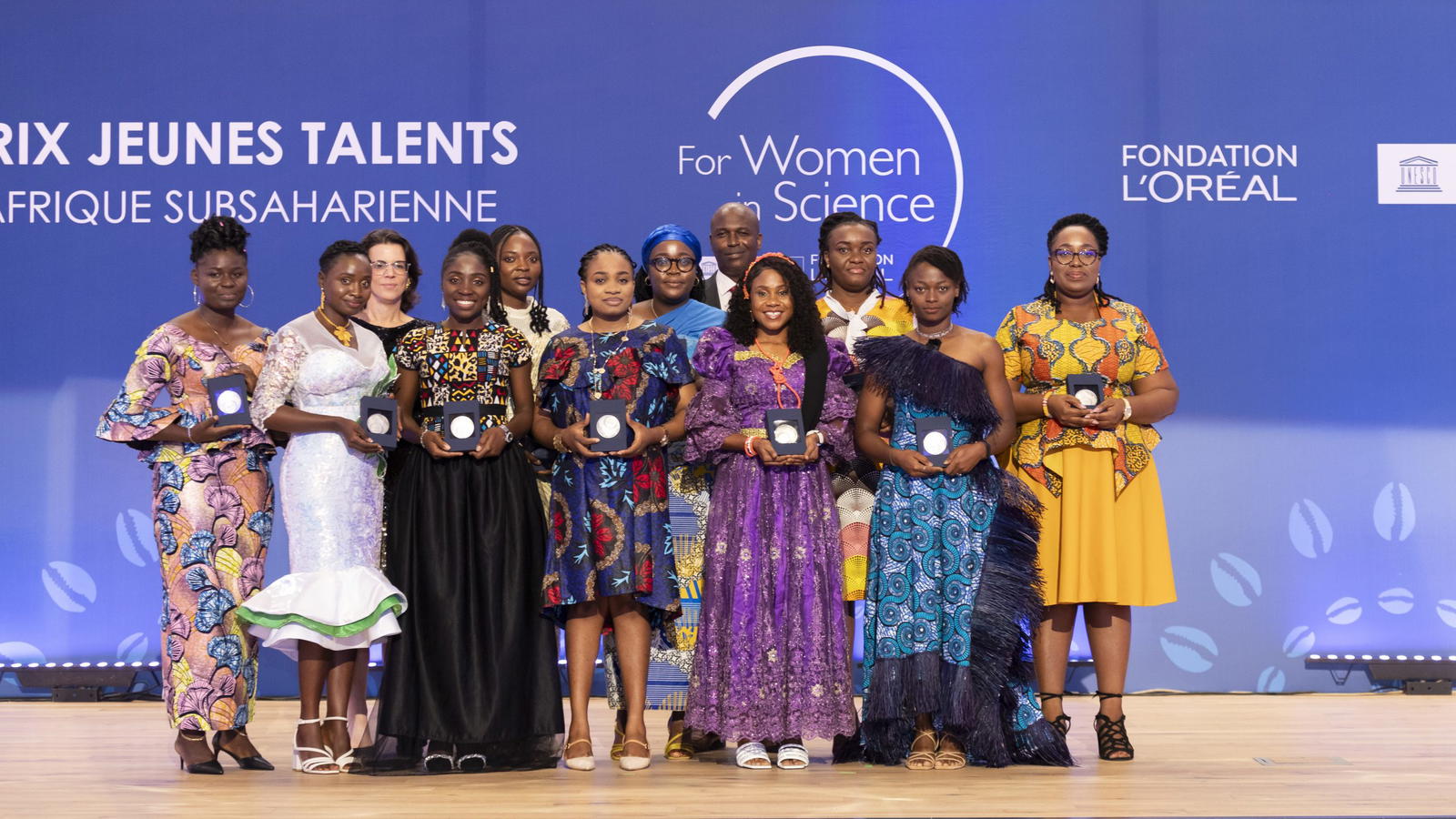
Five Nigerian scientists, Mary Idowu, Opeyemi Ojueromi, Blessing Olagunju, Joyce Etura, and Magdalene Udobi, are among the 30 winners of the 15th L’Oréal-UNESCO For Women in Science Young Talents Sub-Saharan Africa Awards.
The program recognizes their groundbreaking contributions to science and sustainable development in Africa.
Idowu was awarded for her efforts to promote sustainable agriculture and build resilience among farmers facing urban expansion and climate change. Ojueromi’s research focuses on using citrus-peel enriched yogurt to treat malaria. Olagunju was honored for her work in improving water quality in Nigeria, while Etura’s research targets preeclampsia, a dangerous pregnancy condition characterized by high blood pressure. Udobi’s work advances understanding of genetic pathways to breast cancer, contributing to better diagnostics and treatment.
The winners were selected from nearly 800 applicants across 15 African countries by a jury chaired by Professor Aggrey Ambali, Head of Technical Cooperation and Program Financing at AUDA-NEPAD.
The awards ceremony, held on December 10, 2024, in Cotonou, Benin, celebrated not only the recipients but also the 15th anniversary of the program, which has supported 240 researchers from 34 African nations since its inception.
Alexandra Palt, Vice President of the Fondation L’Oréal, highlighted the importance of women’s inclusion in science, stating, “The challenges awaiting the world and the African continent are significant. Yet, we are merely at their threshold.
“To address those challenges, we need science more than ever; however, women who wish to pursue scientific careers are battling headwinds of obstacles while they can bring adapted perspectives, boundless innovative capabilities, and unwavering commitment to everyone’s development.
“Herein lies the reason why we have been supporting women scientists in Sub-Saharan Africa for 15 years, alongside with UNESCO, to help them develop their leadership and design a more inclusive future. Much ground remains to be covered, and our efforts must remain steadfast.”
UNESCO’s Assistant Director-General for Natural Sciences, Lidia Brito, emphasised the transformative potential of science in tackling Africa’s challenges.
“One of the greatest strengths and potential of the African continent is youth. For young people, science presents a unique opportunity. It addresses their needs by fostering innovation, entrepreneurship, and essential skills development. Science-based education and training programmes equip youth with the tools necessary to thrive in a rapidly evolving world. By investing in science and championing innovation, African societies can empower the next generation to drive economic growth, create jobs, and tackle pressing environmental challenges. UNESCO is committed to working alongside its partners to support this shared vision and unlock the continent’s full potential,” Brito said.
The program offered financial grants of €10,000 for PhD candidates and €15,000 for post-doctoral researchers, alongside professional training in leadership, communication, and negotiation.
Past recipients, such as Dr. Neema Mduma from Tanzania, have credited the award with enhancing their careers.
“It boosted my confidence and my sense of belonging to a global community of women scientists. It also paved the way to foster new collaborations and enhanced my leadership skills, encouraging me to take on new challenges. From the moment I received this award, I am very proud to have been appointed as a member of the team elaborating the 2050 Vision for Tanzania’s development. This is a unique opportunity to apply my expertise in artificial intelligence and education to national development and inspire more young women to see the difference they can make in science,” said Mduma.
Disclaimer
Comments expressed here do not reflect the opinions of Vanguard newspapers or any employee thereof.