•Nigeria reports 15,824 measles, 589 yellow fever cases in 6 months
•Vaccines safe, beneficial, UNICEF experts insist
By Chioma Obinna
Amidst her busy schedules every Saturday, Damilola Ade, a mother of three, had cleared everything on her table to ensure her children benefit from the much-advertised supplementary immunisation campaign by the Lagos State Primary Health Care Board.
Her youngest child, Bayo, is a bright-eyed toddler, but his laughter is often overshadowed by a persistent cough and frequent fevers.
Damilola knows that Bayo’s suffering is a direct result of his lack of vaccination.
Like many families in Nigerian communities, Damilola faces significant challenges in accessing healthcare services. The nearest health clinic is a long walk away, and transportation is often unreliable. Apart from her husband’s indifference to vaccination even when Damilola manages to reach the clinic, the limited resources and staff shortages also make it difficult to get the necessary care.
Damilola’s fear of the unknown is another obstacle. She has heard rumours about vaccines being harmful, and her cultural beliefs have instilled a certain scepticism about modern medicine. These misconceptions, coupled with a lack of information, have prevented her from seeking out vaccinations for her children.
Bayo’s health has deteriorated over time. His frequent illnesses have made it difficult for him to grow and develop normally. Damilola watched helplessly as her son suffered, knowing that his condition could have been prevented with a simple vaccination.
Beacon of hope
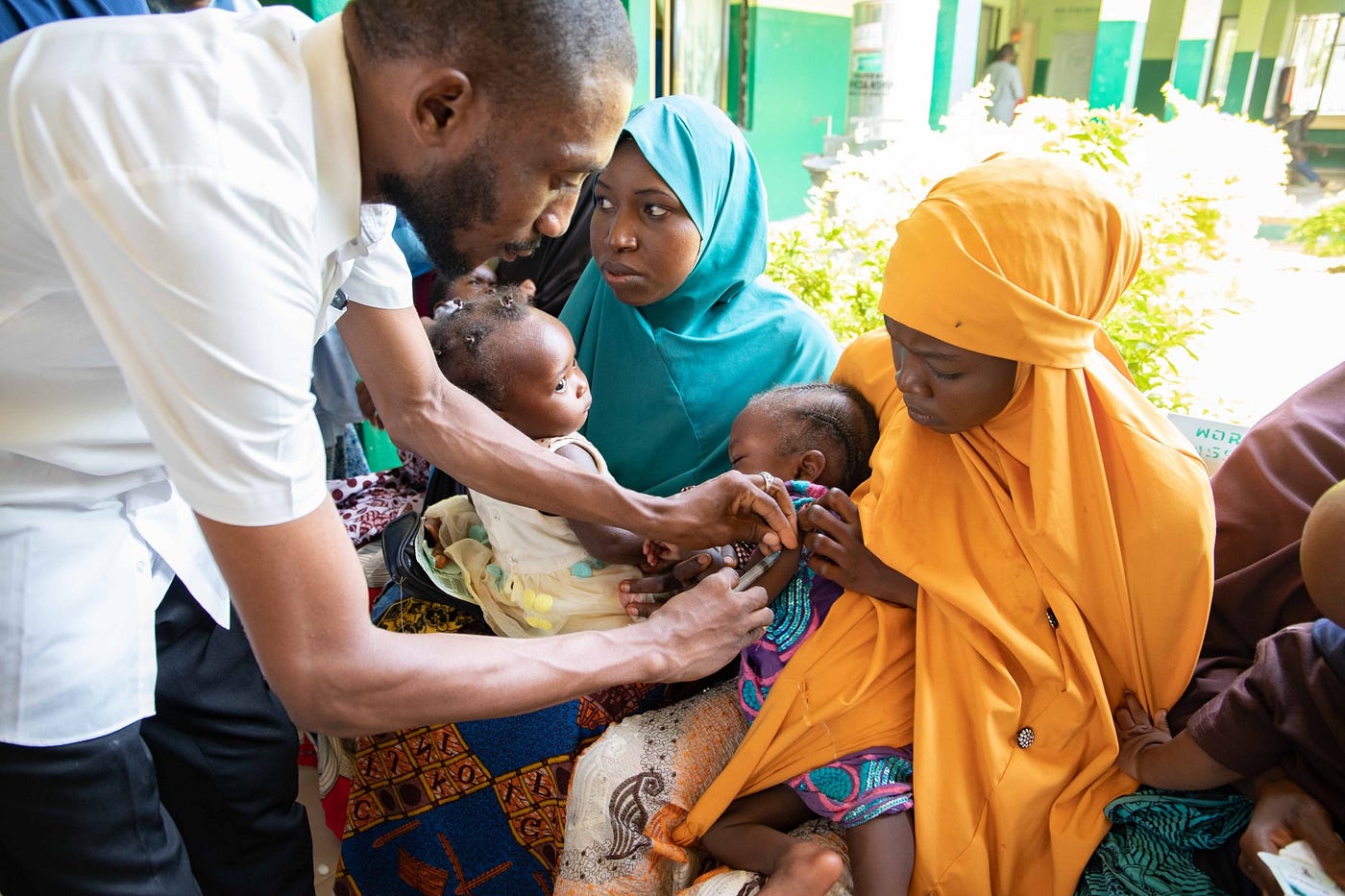
A turning point came when Damilola attended a community outreach programme organised by the Lagos State Primary Health Care Board. There, she learned about the importance of vaccination and the risks associated with preventable diseases.
Determined to protect her child, Damilola made the difficult decision to seek out vaccinations for Bayo.
However, the awareness created by last week’s immunisation campaign awakened her consciousness. According to Damilola, she had heard about community health workers who are working tirelessly to reach zero-dose children like Bayo on the radio.
“I stayed home and abandoned my markets to meet these people. I was told the health workers would vaccinate them free of charge. My son has only been given one or two vaccines since he was born. He did not take measles vaccines.”
Due to the determination of Damilola and the help of the vaccinating team from the state Ministry of Health in collaboration with UNICEF and other partners, Damilola’s child was immunised against childhood killer diseases like measles and yellow fever, among others.
According to experts, when a child completes the required immunisation, such a child is protected against these killer diseases, and he or she has optimal health.
However, it is no longer news that childhood immunisation rates have declined over the years, especially after the COVID-19 pandemic that disrupted health services and closed clinics.
Today, over 2.3 million Nigerian children are not vaccinated, putting millions of others at risk.
In line with global steps to close these gaps, UNICEF has joined efforts with partners like Gavi, among others, to vaccinate millions of Nigerian children and restore immunisation progress lost during COVID.
Damilola’s story is a stark reminder of the urgent need to address the issue of zero-dose children in Nigeria.
Findings have shown that from 1st January 2024 – to 30th April 2024, a total of 589 suspected cases of yellow fever have been reported from 288 LGAs in 36 states, including the FCT.
Also, in 2023, a total of 19,470 suspected cases of measles were reported in Nigeria, and 8,380 of the confirmed cases did not receive any dose of measles vaccine, and 89 deaths were recorded.
From January to July this year, 15,824 suspected cases were reported while 8,345 cases were confirmed. Sadly, out of the confirmed cases, 6,114 did not take measles vaccines.
Yobe topped the chart with 1 072 cases, Adamawa with 948, Kastina with 574, Osun with 529 cases and Borno with 5,034.
Again, 5,365 of all confirmed cases were aged children aged 9 and 59 months. Also, a total of 69 deaths were recorded among confirmed cases.
In a chat with Good Health Weekly, the Immunisation Programme Coordinator of Lagos State Primary Health Care Board, Dr Akinpelu Adetola explained that as a signatory to global eradication and elimination strategies for polio, measles, and yellow fever, Nigeria has made significant public health strides but still faces challenges with outbreaks.
Adetola said measles, yellow fever, and polio are key strategies to combat the outbreaks, improve immunity, and work towards the elimination of the diseases.
He further explained that the immunisation campaign is crucial due to the high risk of outbreaks from low vaccination coverage and potential infection migration from neighbouring regions.
He added that recent outbreaks of measles, diphtheria, and yellow fever underscore the urgent need.
Speaking on the latest campaign, he said: “The campaign will protect vulnerable populations, including children under five, migrant communities, and those with immunity gaps, from the devastating effects of these diseases. It will significantly reduce mortality rates which aligns with the State Government’s T.H.E.M.E.S.”
Adetola explained that just two doses of measles were required to prevent some of these cases and the deaths from the outbreaks.
He said: “1st dose to be given at 9 months and the 2nd at 15-18 months adding that two doses offer 97 percent effectiveness at preventing the disease
The expert said 95 percent coverage is required to prevent infection in communities, adding that when there is a large amount of virus in circulation, breakthrough infection can occur in vaccinated people.
Speaking on Human Papillomavirus (HPV) vaccines, Adetola said available data indicate that the incidence of cervical cancer in Nigeria is about 33/100,000 and that it has been estimated that about 14,089 new cases are diagnosed every year (38/day).
Stating that persistent HPV infection is implicated in 99 per cent of cases, he lamented that Nigeria is responsible for about 50 per cent of new cases and deaths from cervical cancer in West Africa.
He said Lagos State introduced the single-dose HPV vaccine into its routine immunization programme to combat cervical cancer.
Safety of vaccines
According to the Chief of the UNICEF Field Office for the Southwest, Celine Lafoucriere, immunisation is a fundamental right of a child and no child should be left unimmunised.
Calling for the scale-up of routine immunisation for children in Nigeria, she said it would help protect them against preventable diseases.
Lafoucriere who spoke at a recent Media Dialogue To Enhance Routine Immunization And To Reduce Zero-dose Children, said vaccines are crucial to child health and development.
“Vaccines are an essential fundamental right to every child and they remain critical to improving health outcomes and reducing inequalities.”
She lamented that despite the benefits of immunisation, a huge number of Nigerian children are not vaccinated, which puts them at risk of contracting various preventable diseases.
She noted that most of the unvaccinated children in the country live in hard-to-reach areas and are often marginalised, giving them little chance of survival when hit by preventable diseases.
“We still have a very pressing challenge in Nigeria where 2.3 million children still have received no vaccines at all.
These are called the zero-dose children and are mostly in marginalized areas, hard-to-reach areas and vaccines remain essential to their health.”
She said collective action is key to the success of the immunization drive.
According to the Permanent Secretary of Lagos State Primary Healthcare Board (LSPHCB), Dr. Abimbola Bowale, vaccines have very minimal side effects. “Of course, if somebody puts a needle in your body, you are bound to have pain on that side; there could be some sort of redness that could mean some form of fever issues; if that happens, it shows that the vaccine is working. All over the world, it’s been proven by data that vaccines are safe, they are effective and they also help in ensuring that the community is free from all forms of communicable disease.”
For Dr. Oluwatoni Adeyemi, Senior Special Assistant to the Lagos State Governor on Health, the fear of vaccines should be dismissed among Nigerians. “I know that some adults might be skeptical about vaccines generally, based on what they see on social media or what they’ve heard in the past, but I would like to tell you that some of those things are myths and misconceptions.
“These vaccines have been tested, they are safe, and they’ve been proven to be very effective to protect the children and adults.“
As Lagos and other states continue to strive for a healthier and more equitable future for Nigeria, we must prioritise the needs of zero-dose children.
Disclaimer
Comments expressed here do not reflect the opinions of Vanguard newspapers or any employee thereof.