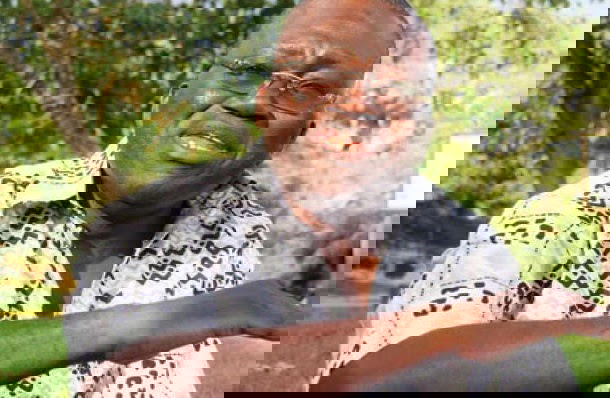
Issa Aremu
By Issa Aremu
“A just wage for the worker is the ultimate test of whether any economic system is functioning justly.” — Pope John Paul 11
AS the National tripartite negotiation is under way for a new National Minimum Wage, “Minimum Wage”, MW, has regrettably assumed notoriety as a frequently misused concept. The point cannot be overstated: Minimum wage is a technical labour market concept. The International Labor Organisation, ILO, is the oldest specialiSed agency of United Nations, UN. Established in 1919, ILO’s primary mandate “promotes social justice and internationally recognised human and labour rights” in the world of work. It was not accidental that ILO was created exactly two years after the great 1917 Bolshevik socialist revolution in Russia led by Vladimir Lenin.
ILO was established to curb the spectra of social upheavals as inevitable fall-outs of the ancient regimes of indecent work and slave labour. The goal is globalisation of minimum labour standards, that include minimum wage, minimum working age (there was once gruesome labour regime of child labor that oiled the mills of the first industrial revolution). ILO sets to moderate the hitherto primitive labour market which through primitive exploitation of workers and accumulation of capital invariably pushed labour into “dangerous” and “subversive” political ideas of revolutions.
Hence, ILO’s founding mission of promotion of labour peace through just and fair conditions of work as indispensable success factor for global prosperity. Since its formation, it has initiated a number of conventions and recommendations for its 187 member states on wages and wage administration. They include Protection of Wages Convention, 1949 (No. 95), Minimum Wage Fixing Convention, 1970 (Protection of Workers’ Claims (Employer’s Insolvency) Convention, 1992: Equal Remuneration Convention, 1951, among others.
What then is Minimum Wage? The Committee of experts of the Governing Body of ILO at its 168th Session had concluded that the minimum wage “represents the lowest level of remuneration permitted, in law” paid hourly, daily or monthly. The subsisting National Minimum Wage Act of 2019, defines the minimum amount of money an employer of labour is required to pay the lowest paid worker monthly as N30, 000.
No other forms of wages are so legally protected, which differentiates minimum wage from any other wage awards or wage agreements. The recent commendable and responsive presidential N35,000 wage award by President Bola Tinubu for six months in the wake of the labour protests that trailed fuel subsidy removal remains a wage award for the federal employees. Presidential wage award is NOT a national minimum wage precisely because it is not legally supported and not earned by all workers of the Federation.
National Minimum wage is the legally permissible pay below which no private or public employer should pay or below which no private sector or public sector worker should earn. Of course employers can and (even encouraged) to pay above legally permissible minimum. Edo and Lagos states already pay as much as N42,000. Federal employees earn above the legal minimum, while most private employers through collective bargaining for living (as distinct from minimum) pay already exceed the legal minimum. It is self evident that the purpose of minimum wage is to protect the most vulnerable workers, often in precarious work.
National Minimum wage often impacts positivity on mass of unorganised work force. It protects workers in unorganised sectors against unacceptable miserable low pay. Every business, small or big, is established to maximize profits, by minimizing costs, the significant component of which is wages. We are living in an (un)interesting times of economic crisis occasioned by collapse of the real economy and wholesale financialisation in which, banks, some oil and gas companies, nonetheless still post huge profits amidst mass income poverty.
Without legally permissible minimum wage, some of these employers would still pay slave wages anyway. Many employers still do have them: workers whose pay can hardly make them live basic subsistence lives, hence the need for legally permissible minimum pay. National Minimum Wage is also a constitutional issue. Both 1979 and 1999 constitutions of Nigeria put labour, just like capital and financial matters, on the exclusive Federal list.
The 1999 Constitution emphasizes that the State shall direct its policy towards ensuring “the promotion of a planned and balanced economic development; and that a reasonable national minimum living wage, old age care and pensions, and unemployment, sick benefits and welfare of the disabled are provided for all citizens”. Federal and state governments must therefore realise that they are not just employers of public employees, but they have the constitutional responsibility to protect the vulnerable workforce through enforcement of the MW Act. It is unacceptable and clearly illegal that some state governments and private employers that employ not less than 50 workers to default on the subsistence pay. Indeed prompt compliance and improvement on legally permissible must be a critical success factor for good governance. The hope is that the new tripartite negotiation will ensure effective monitoring and enforcement of the Minimum Wage Act with respect to sanctions for non-compliance.
Definition only explains it, it however doesn’t tame Minimum wage, MW, as a concept. MW has different features in different occupations and different countries. The labour movement at regional levels had long struggled for region wide minimum wages as it was in the Western Region in the 50s. Indeed some progressive politicians of social democratic persuasion during the First and Second Republics had audaciously campaigned for decent work that involved minimum pay below which no worker would earn. Such as the late Chief Obafemi Awolowo, the Premier of the defunct Western Region. Such as the late Alhaji Abubakar Rimi and and Alhaji Balarabe Musa, Second Republic first democratically elected governors of Kano and Kaduna respectively. However, the first national minimum wage as we know it today was in 1981 under the late President Shehu Shagari.
Precisely because yours comradely has been involved (apology to Odumegu Ojukwu), in the past decades, I bear witness that the on-going tripartite National Minimum Wage negotiation is the 6th of such since independence of the Federal Republic. Apart from 1990 minimum wage adjustment under the military regime of General Badamasi Babangida, all NMW reviews took place under democratic governments using the time-tested instrumentality of tripartism. Five Tripartite Committees on National Minimum Wage, TCNMCs, took place in democratic dispensations (1981: President Shehu Shagari, 2000:President Olusegun Obasanjo, 2011: President GoodLuck Jonathan, 2018: President Muhammadu Buhari and 2024: President Bola Ahmed Tinubu). Minimum wage tripartite negotiations often involve bargaining, social dialogue and compromises on affordability and ability to pay by employers and employees alike.
Negotiation is a democratic value that thrives where there’s constitutionalism, freedoms of association and assembly. Only democratic dispensation guarantees unfettered negotiations. Military dictatorships of various hues once repressed Nigeria’s labour market with respect to minimum wage through obnoxious wage freeze, wage deflation policies as subsidy removal and Naira devaluation. Thus all tripartite stakeholders must reaffirm commitment to democracy for sustainable wage improvement through social dialogue, not arbitrary non- negotiated “wage awards”, or “wage reviews”. Minimum wage also assumes stable national macro economics of secured employment, single digit inflation and stable exchange rate.
•Comrade Issa Aremu Director General, Michael Imoudu National Institute for Labour Studies (MINILS) Ilorin
Disclaimer
Comments expressed here do not reflect the opinions of Vanguard newspapers or any employee thereof.